For San Diego’s diverse Asian communities, Lunar New Year celebrations last all month

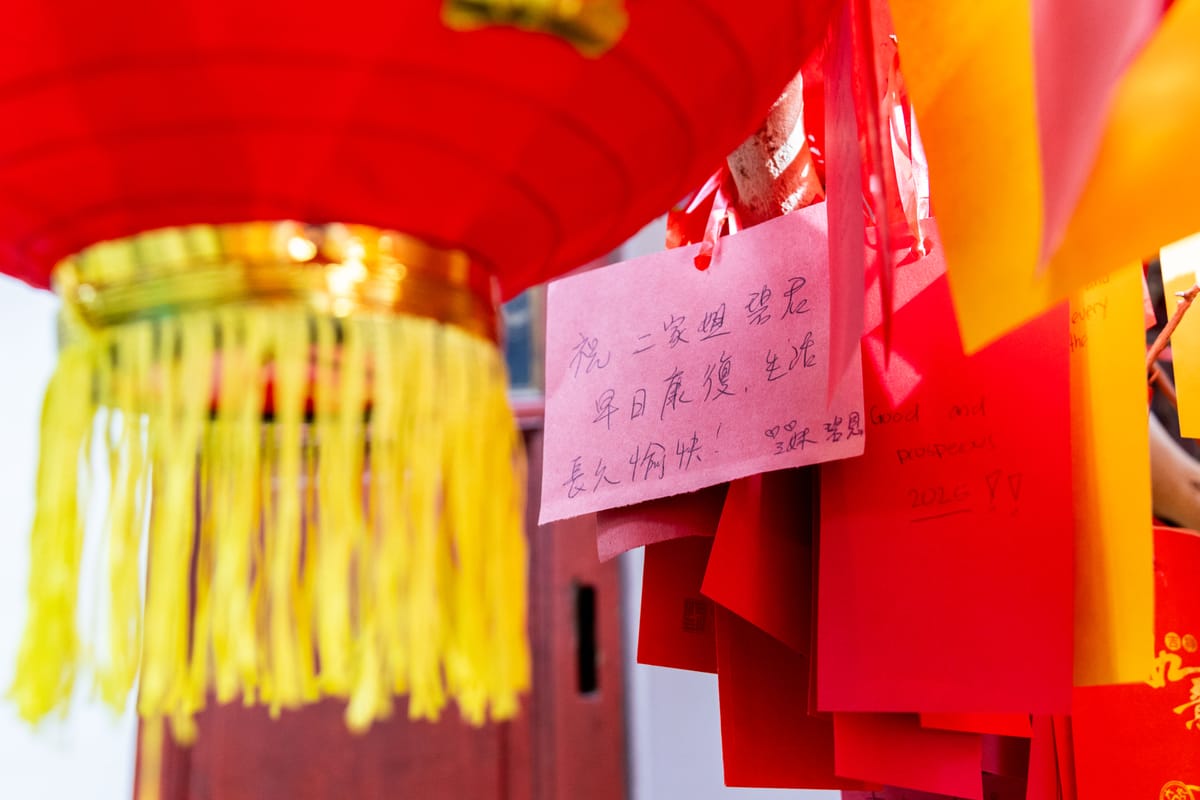
Multiple communities, including Chinese and Vietnamese, will be celebrating the Year of the Fire Horse on Feb. 17, and they’re making sure to make space for sharing traditions.
Written by Maya Srikrishnan, Edited by Lauren J. Mapp
Several Asian cultures celebrate the Lunar New Year, embracing similar themes of the holiday, but practicing their own traditions. In San Diego, many of those different cultural communities come together to celebrate the holiday in unique ways.
Although the new year is officially on Feb. 17 this year, celebrations in San Diego last the entire month of February.
The celebrations locally extend beyond the new year itself, both due to the festivities often being relegated to weekends — since people often don’t have time off to celebrate in the U.S. — and to ensure that the multiple East and Southeast Asian communities in San Diego that celebrate can participate in each other’s events.
Several communities in San Diego, including the Chinese, Korean and Vietnamese, celebrate the Lunar New Year, which in 2026 will be the Year of the Fire Horse. The horse is a powerful symbol, embodying traits like strength and vitality, according to the Chinese Consolidated Benevolent Association. It is said to herald in passion, dynamism and transformation, according to the Doan Foundation.
 Daylight San Diego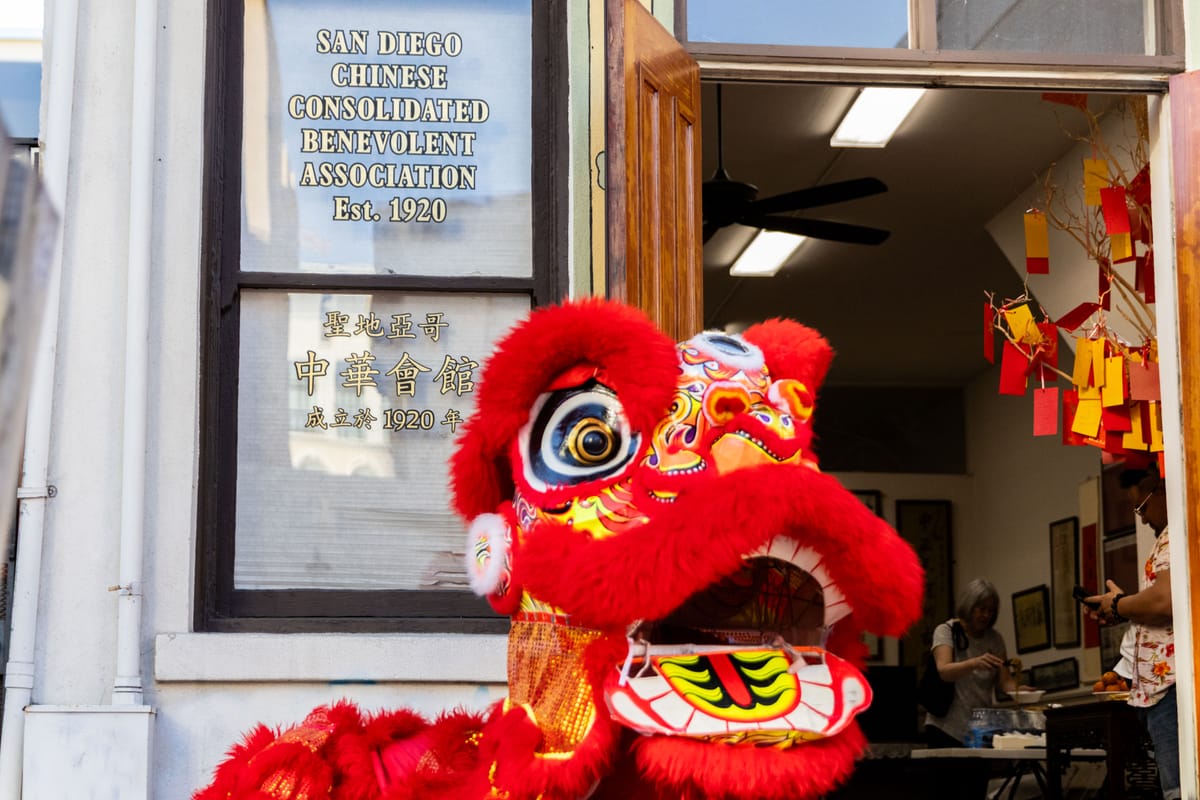
Dennis Doan, president of the Doan Foundation, recalls being a child in the 1990s, participating in some of the first larger-scale Vietnamese Lunar New Year — or Tết — celebrations outside of the Linda Vista Library. Prior to that, he said, the major Lunar New Year celebrations in the region mostly reflected Chinese traditions.
“They filled up a tent in the parking lot of the library,” Doan said.
During the two-day event, there would be lion dance groups and local Vietnamese families would make food at home to bring and sell, while kids would run around with lanterns, he said.
But as the Vietnamese community dispersed — split between Linda Vista, areas further north, like Mira Mesa, and further east, like City Heights — things began to shift. Each geographic Vietnamese community started hosting its own celebration, with often conflicting schedules and far distances for people in the other neighborhoods to travel.
Today, that has largely changed. Vietnamese and Chinese organizations, in particular, ensure their major Lunar New Year events happen on different weekends. They not only attend each other’s festivities, but often create space for each other in the ones they host, seeking vendors and performers from other Asian American and Pacific Islander communities.
“In Vietnam, we don’t have a lot of holidays,” said Tram Lam, executive director of Little Saigon. “During the Lunar New Year is when the family takes time off and spends time together. We take at least three days and up to 15 days if we can afford it.”
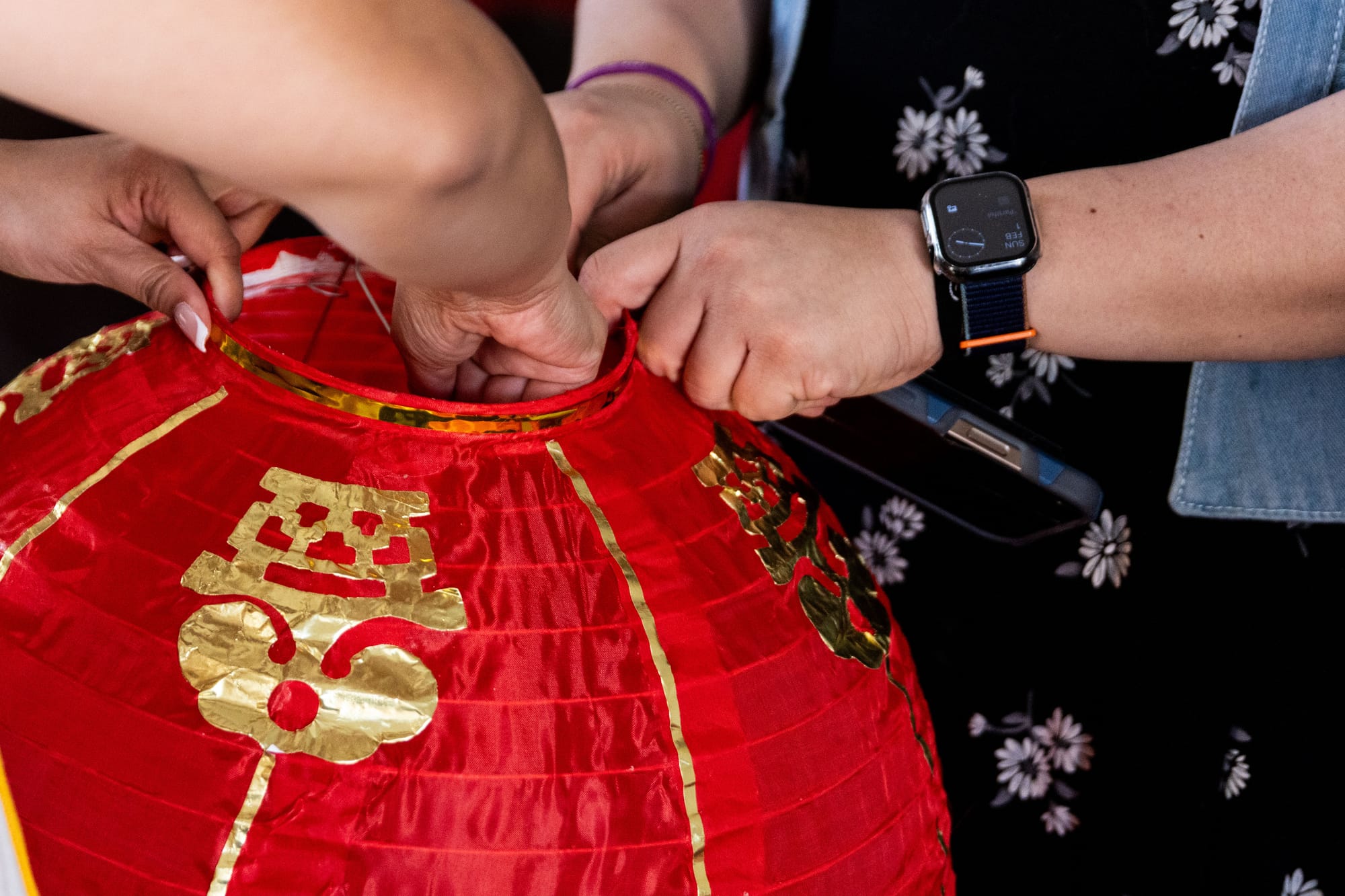
Traditionally, to prepare for Lunar New Year, families clean, buy new clothes for their kids and bake traditional cakes like Bánh Chưng and Bánh Tét, both of which are made of sticky rice. They visit family and friends at their homes — and family and friends visit them at theirs. The exchange of New Year's wishes often includes gifting and receiving red envelopes filled with cash.
“Here it’s a lot different,” Lam said. “Here, we have to go to work and do the festivals on the weekend. When I was little, the festival would go on the whole 15 days. Here, we have so many things. The concept of waiting for the new year for new clothing — you can do that anytime. It’s more readily available. We still do a deep cleaning for the holiday. We still eat. But we don’t bake the cake anymore, we just buy them.”
Lam noted that people can purchase traditional Vietnamese cakes at Asian supermarkets, like 99 Ranch, or even at some Costco locations.
“We are going back to the culture, but in a more modern way,” she said.
The largest annual Tết festival in San Diego is free and will be held at Liberty Station. From Feb. 20 through 22, the event features traditional performances, food and cultural activities.
“We have a lot of different Lunar New Year celebrations. One in Balboa Park, downtown, Liberty Station,” Lam said. “Here, because we are so diverse and exposed to a lot of other cultures. It’s diversity and connectivity. That is one of the great things about San Diego. We have so many cultures and we’ve been exposed and get to learn and embrace them. If you’re talking about a festival in Vietnam, it’s just us, so we don’t get to learn about all these differences.”
The Chinese Consolidated Benevolent Association San Diego has hosted a San Diego Chinese New Year Fair in downtown San Diego annually since 1983. This year, the event will start on Feb. 28 and run through March 1.
Kathleen Dang, the association’s board secretary and member of the fair planning committee, said even though the fair has its roots in the Chinese Lunar New Year, they will have vendors and performances from other cultures.
“All the communities will go to everyone else’s events,” Dang said. “These big festivals downtown, in Balboa Park, the Tết festival in Liberty Station, that everyone goes to attend. Every community celebrates them. There’s no feeling of exclusion. We intentionally plan and coordinate internally with the other communities so none of the really big festivals are on the same weekend.”
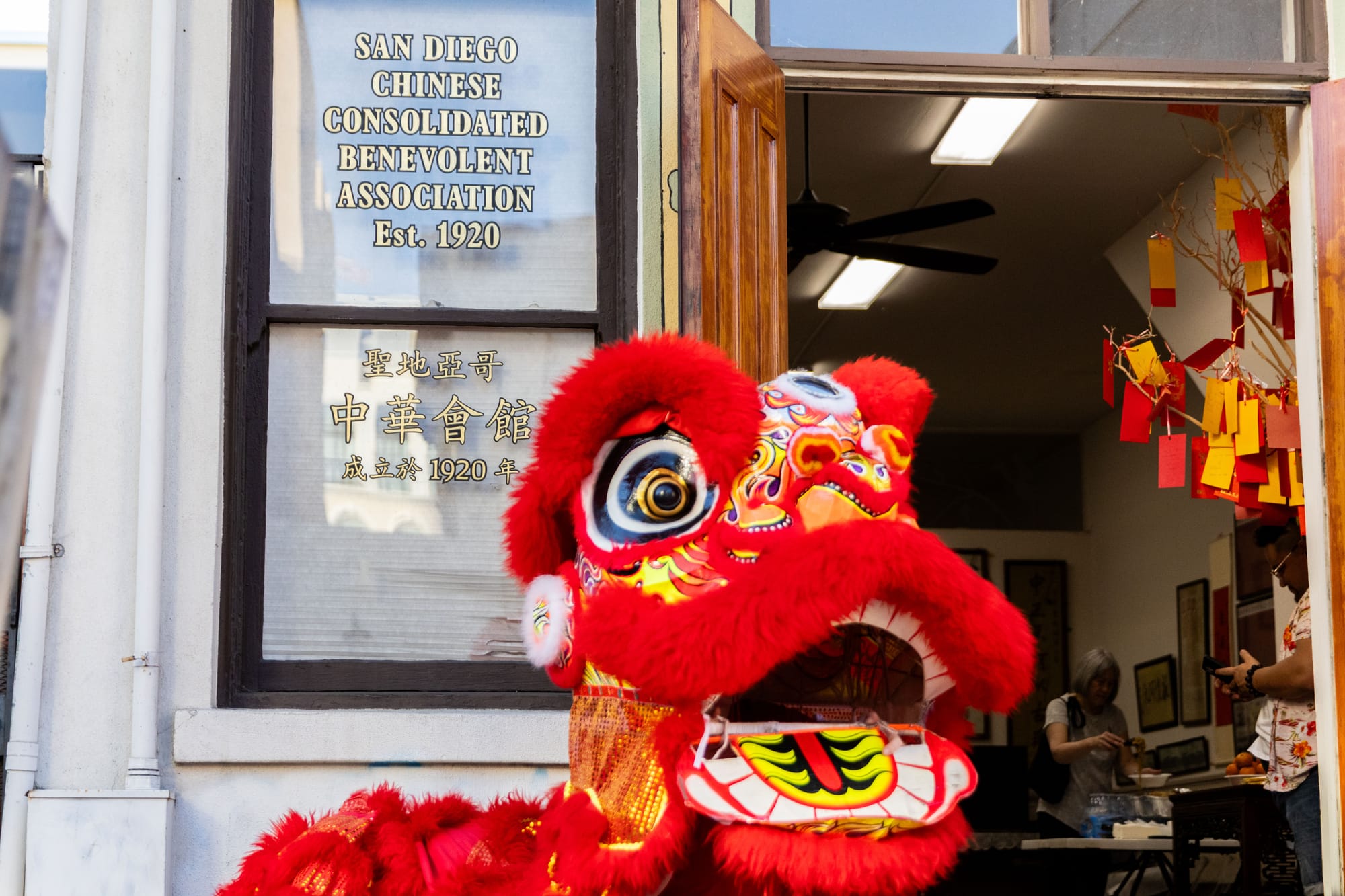
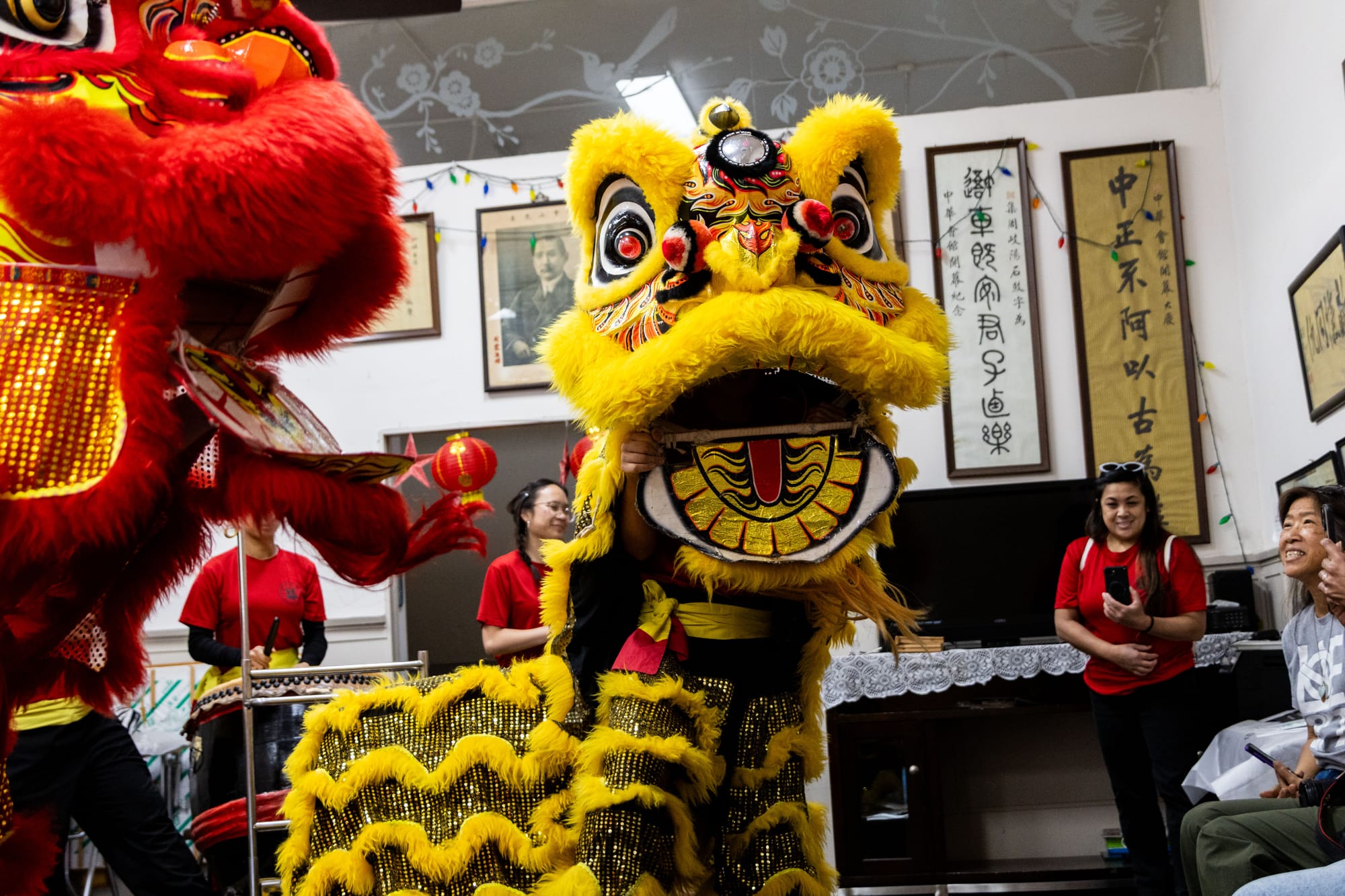
Traditionally for the Chinese New Year, the celebration lasts 15 days, Dang said. Activities take place each day, including family reunions and visits, people coming together for meals and festivities like fireworks and cultural performances. Lion dancers perform to bring good luck to the community.
“I was raised in City Heights, where there are churches and temples for Chinese and Vietnamese communities,” Dang said, describing how she celebrated the Lunar New Year in San Diego growing up. “The first couple of nights, we spend time with family. On the weekends you go to temple or church, or take the weekends to go to the community festivals. It’s very expansive.”
But Doan wants to take the convergence of San Diego’s diverse Asian communities to the next level.
This year, that ambition will manifest into Convoy Rising, a Lunar New Year kickoff celebration on Feb. 8 from 3 to 8 p.m. Convoy Rising aims to feel like a night market-style festival with food, artisan goods, a premier lion dance exhibition and cultural showcases that highlight different traditions of the Lunar New Year.
“That’s why I wanted to create Convoy Rising,” Doan said. “There’s often a focus on Chinese and Vietnamese during Lunar New Year. People forget that we’re not the only ones who celebrate in this community.”
Convoy stands as one of the largest Pan-Asian business districts in the country. For Doan, it was where his family always went to feel at home. It’s also centrally located, which will make it easier for people from around San Diego to attend.
“When I created it, I felt there was a need in the Convoy community that there be an anchor cultural event since we’re a cultural district,” he said. “I am well-versed in the Lunar New Year, have been involved with lion dancers. I also have connections with Laotian and Thai communities and will throw in some K-Pop influence. It’s a little taste of every culture.”
In April, several other Asian communities, including Thai, Lao and Cambodian, celebrate their new year.
“Everyone is so busy during the year, so you have that mandatory period of time that you plan with your family, with your relatives who are a little more distant and friends in celebration,” said Emily Chen, a board member of the San Diego chapter of the non-profit Taiwanese American Professionals. “The significance of bringing everyone together and hoping and wishing for each other to have a productive and great new year, whether the year before is good or bad.”
Chen grew up celebrating the Chinese Lunar New Year in Taiwan until she moved to the United States after high school. She did her graduate studies in San Diego, then spent more than a decade on the East Coast prior to returning.
“When I came here, I realized that in Taiwan, there is this series of events and everyone is into it because it's national,” Chen said. “Here, it became more regional and local. Being in a region with a more Asian population, not just Taiwanese and Chinese, there are different ways of celebrating the new year with similar themes.”
She said the openness, cultural understanding and cultural exchange that exists in San Diego allows them to celebrate in community in a unique way.
“That sense of community — that is really what I see in San Diego,” Chen said. “We see ourselves more of a community rather than individual groups. And I think Lunar New Year is a great way of overlaying that. We want to join and celebrate.”
If you’re looking for ways to celebrate the Lunar New Year in San Diego this month, here are some ways to do so.