
San Diego City Council votes to keep using Flock automated license plate readers

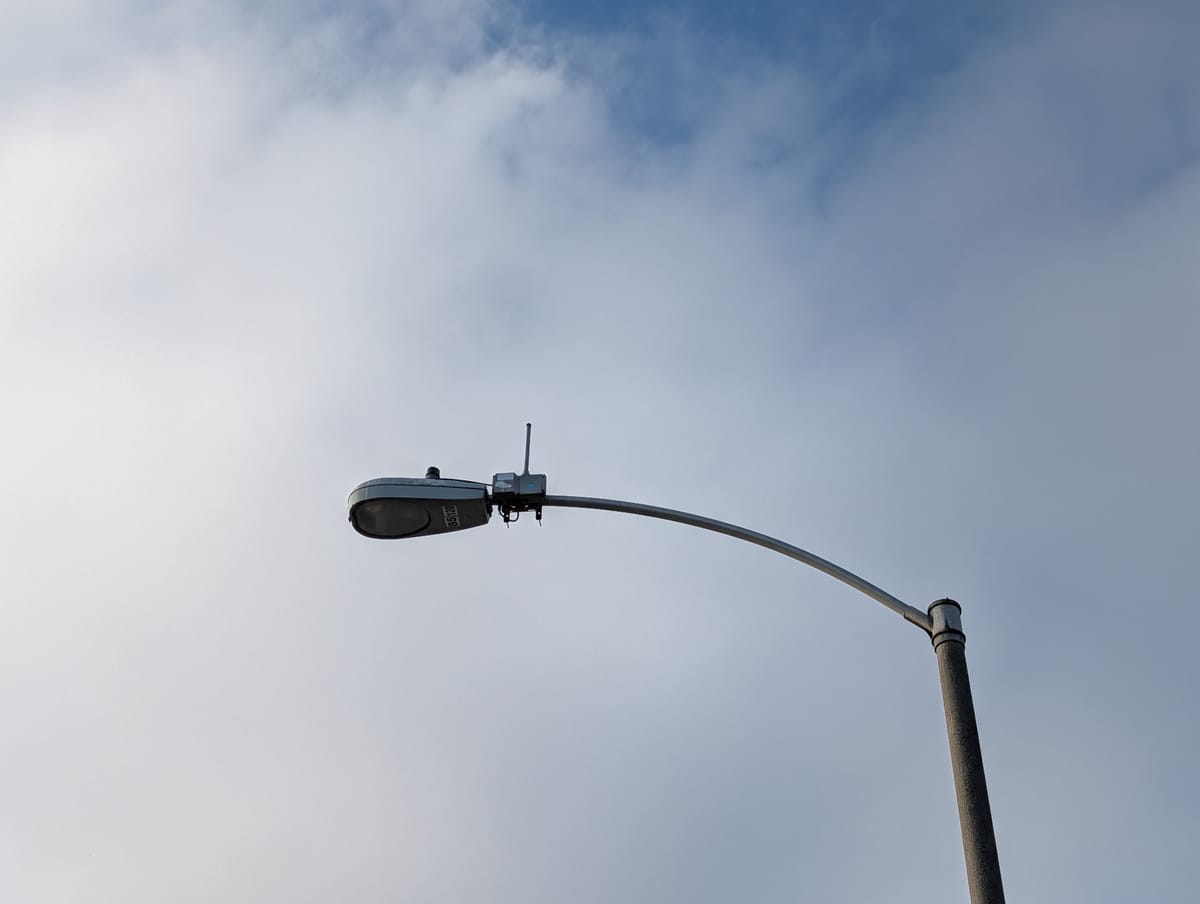
The council approved updated use policies, which are required for the local government to use surveillance technologies, during a contentious vote on Tuesday.
Written by Kate Morrissey, Edited by Lauren J. Mapp
The San Diego City Council voted Tuesday to keep using automated license plate readers from Flock Safety.
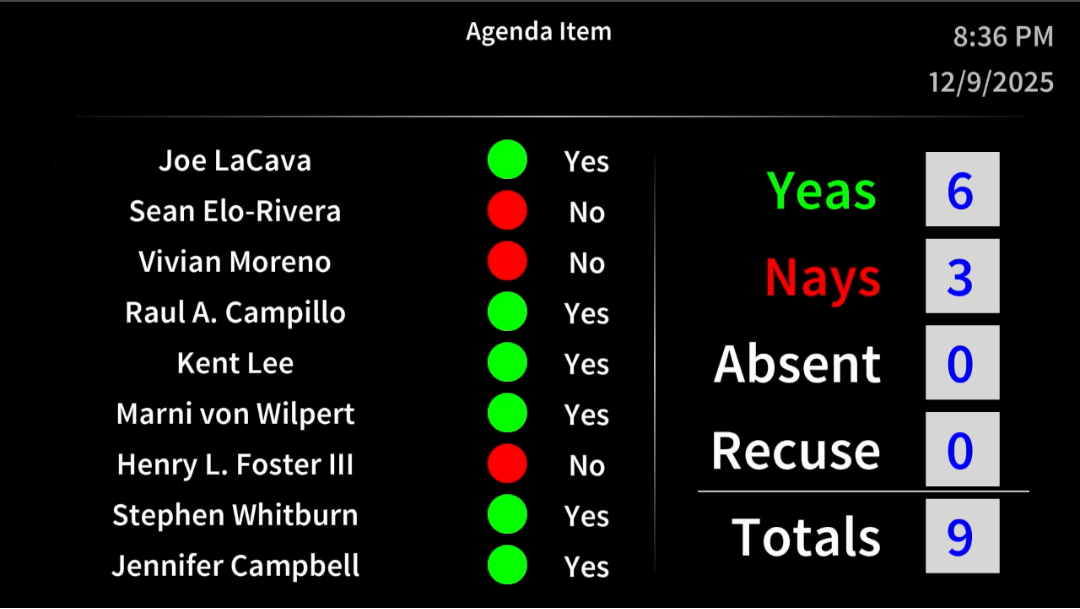
The council approved an updated use policy for the San Diego Police Department to use automated license plate readers in a 6-3 vote. Without an approved use policy, city staff said at the meeting, SDPD would have to shut the readers down.


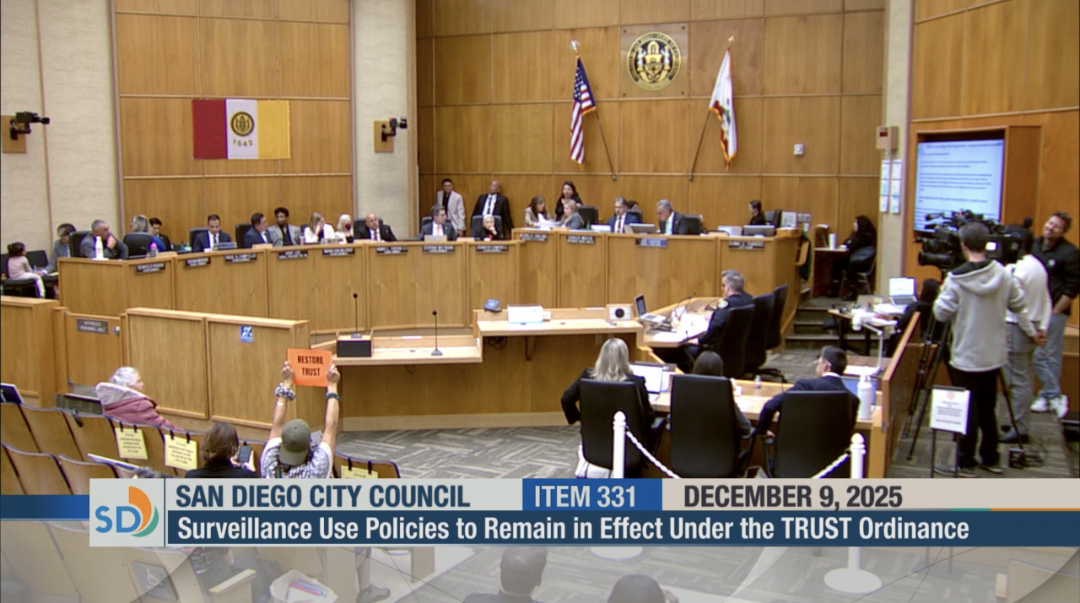
In a meeting that lasted more than six hours, the council heard from hundreds of San Diegans — in person, via Zoom and through online comments — who opposed use of the surveillance technology and a smaller number who supported it. Many of those who do not want the city to use Flock readers said they were worried the federal government, and in particular Immigration and Customs Enforcement, would find a way to access the data collected by the readers.
Council members Sean Elo-Rivera, Henry Foster III and Vivian Moreno voted against the use policy while the rest of the council voted in favor.
“I as a councilmember have to weigh public safety in many scales here,” said Councilmember Marni von Wilpert, who sits on the Public Safety Committee.
She said she did not have any examples of ICE using San Diego license plate reader data.
Foster critiqued the original contract with Ubicquia, the smart street light vendor that subcontracts with Flock Safety for San Diego's license plate readers. He learned from city staff during the meeting that shutting off the Flock technology would not save the city any money based on how the contract was written.
A former San Diego police officer, Jeff Jordon, helped set up that initial contract and now works for Flock Safety.
The department also revealed in June that it had mistakenly allowed other California law enforcement agencies to access the city's reader data even though that is prohibited by the city rules.
“For me this is about trust,” Foster said. “My expectation is that the San Diego Police Department will ensure that our contracts are followed just like we ask every other department to do the same. I think the public expects us to do the same.”
Elo-Rivera also said he did not trust Flock Safety.
In August, the state of Illinois accused the company of violating its laws by allowing the Department of Homeland Security to access reader data. Flock Safety later said it shut down a pilot program with the department. The Electronic Frontier Foundation found that Texas deputies used Flock data in an abortion investigation.
“Everybody deserves to feel safe,” Elo-Rivera said. “As tense as this conversation is, I don't know that we have another item where everyone is as united around the goal of feeling safe as this particular item. Working to make everyone feel safe is one of the most sacred responsibilities that we have in government. It isn’t easy because everyone experiences safety in a different way.”
Police Chief Scott Wahl defended the department's use of the technology, calling it one of the most important that it uses. He said having license plate readers means that officers only pull over the car involved with a crime, not other similar-looking cars.
“The automated license plate reader system serves as a force multiplier allowing officers to focus time where it is needed most,” Wahl said. “That is efficient, precision-based policing.”
He said the number of stolen vehicles has decreased by a little more than 20% since the city implemented the license plate readers.
During his questioning, Elo-Rivera pointed out that nationally, car theft has gone down by a similar percentage.
“We're not superseding everyone. We're on a national trend,” Elo-Rivera said. “There are a lot of reasons to attribute to that including car manufacturers upgrading systems. For us to say ALPRs are the reason why is not accurate because we can't prove it.”
In-person attendees spilled into the council's overflow room. They snapped and gave thumbs ups when they heard points they agreed with and gave emphatic thumbs down when they disagreed — including during the final vote.
Megan Ybarra said that she was worried about increasing public transit costs pushing people to commute in cars instead, meaning they have to drive past Flock Safety readers.
“Stolen people harm San Diego more than stolen cars,” Ybarra said.
Jay Goldberg said the fact that the head of Flock Safety referred to activists like him as terrorists concerned him.
“Being seen in public is different than being stalked in public over time by a network of surveillance sensors,” he said.

Cathy Abarca of the San Diego Police Foundation argued that the updated use policy, which requires more frequent audits of system usage, among other rules, should be enough to satisfy community concerns.
“Act on the facts, not hypotheticals,” Abarca urged the council. “ALPR saves lives and solves crimes.”
But many residents told the council that if they voted to keep using the readers, they would be siding with the Trump administration.
Ana Ramos-Ontiveros, an organizer with Alliance of Californians for Community Empowerment, said the council should instead invest in solving issues like housing.
“Under no circumstances will we support a company that has already proven to us that they cannot be trusted,” Ramos-Ontiveros said. “When we address the root causes of crime, crime goes down. You know what it all boils down to? Poverty.”
Homayra Yusufi of the Partnership for the Advancement of New Americans told the council that they were “speaking out of both sides of [their] mouth” with claims of supporting immigrants while going forward with this technology use.
“The data has already been shared,” Yusufi said. “That is why we are here right now.”
“Are you with Peter Thiel and the Trump administration?” she added. “Is that who we're going to side with today? We are all vulnerable. Maybe today it's immigrants and women, but every San Diegan is vulnerable to the Trump administration.”