Balancing faith and daily life during Ramadan


As the holy month begins, San Diego Muslims fast, pray and gather — all while maintaining school and work schedules.
Written by Lauren J. Mapp, Edited by Maya Srikrishnan
Author’s Note: This story includes an interview with Imam Taha Hassane, who is married to Daylight Board Member Lallia Allali.
With the rising of the crescent moon Wednesday morning comes a month of fasting, nightly prayers and communal meals to honor Ramadan for San Diego’s Muslim community, along with opportunities for neighbors, classmates and coworkers to better understand and support those observing the holy month.
Ramadan — the ninth month of the Islamic lunar calendar — is considered the holiest time of year by many Muslims, said Imam Taha Hassane from the Islamic Center of San Diego.
Because it follows the lunar cycle, starting and ending at sightings of the crescent moon, the holy month is about 11 days earlier each year. Over the course of 33 years, the month moves through every season and returns to roughly the same place on the calendar.
The 30-day period is honored by abstaining from food and drink between dawn and sunset as an act of spiritual devotion. In the evenings, Muslims typically break their fast with dates and water at the start of iftar, the meal eaten after sunset during Ramadan, before their evening prayers.
“We engage in the law of spirituality,” Hassane said. “We pray for a long time. We recite the Word of God, the Quran. And so that's why Ramadan is a time of increasing spirituality.”
Muslims also honor the month by giving back to their communities through donations and volunteer work.
“Part of our social services here at the Islamic Center is to help low-income families, to help disabled community members and to help also asylum seekers who don't have a source of income,” Hassane said.
While celebrating at home and with community, many Muslims are also balancing the spiritual demands of Ramadan with school, work and daily responsibilities outside their households. Because the holy month falls outside of typical holiday breaks in the United States, most people observe it while also maintaining their regular schedules.
At schools across San Diego County, administrators have worked with Muslim community leaders to provide alternatives for students who are fasting, Hassane said. That can include allowing students to visit the library during physical education classes instead of participating in strenuous activities, or making teachers aware that some students may not be eating lunch.
California law requires employers and schools to give reasonable accommodations to people during Ramadan, according to The Council On American Islamic Relations, which suggests requests be filed in writing.
CAIR recently posted a guide on requesting accommodations at school or work during Ramadan. The guide includes a letter template and examples of specific accommodation requests, like time off to celebrate Eid al-Fitr, having a space to pray, substituting or swapping shifts and a flexible schedule to observe nightly prayers and iftar.
Beyond fasting and prayer, Ramadan is a time of gathering. Mosques across San Diego County host nightly communal iftars where hundreds of people come together to break their fast. Hassane encourages Muslim families to extend invitations to evening meals with people from other faiths.
“Take the opportunity to share with them. What's the significance of Ramadan? Why do we fast? What's the purpose of fasting?,” he said.
Nisreen Khatib — a HEAL Palestine San Diego community board member — said that Ramadan is her favorite time of the year and that growing up, it was always very festive in her home.
“My parents did a great job of making it a special month for us,” the 35-year-old North County resident said. “As a little kid, you get special privileges. You're staying up late. You get your favorite foods.”
As an adult, Khatib, her husband and their friends have made a tradition to go out for suhoor — a predawn meal during Ramadan — at 2 a.m. for breakfast. She displays a crescent moon and star decoration, adorns her house with lanterns and uses ornate dishware and table settings.
Although they are too young to participate in fasting, Khatib is also finding ways to make the month special for her two children — a 2-year-old boy and 6-month-old girl. She got them a calendar to track the days of the month with toys and treats, set up a playhouse mosque as a dedicated prayer and reading corner, and borrowed 30 days worth of Ramadan books from the library to read with them.
“[It's] just something to make it fun, to build that excitement, because, really, Islam is a very peaceful and loving religion,” Khatib said. “That's how I was raised about it, and I want to continue that for my kids to know how to love the religion and to know that like this is a benefit in your life, not a hardship.”

Kids aren’t expected to start fasting during Ramadan until they reach puberty, and Hassane said that usually brings a sense of excitement inside Muslim households. Before reaching that age, some children may try fasting half a day or giving up a meal like breakfast or lunch.
“We are so excited to fast to the point that we couldn't wait until we reach the age of puberty,” he said. “I don't remember the exact day when I fasted the whole day, but I remember that every time I tried to fast, my family did something for me just to encourage me to start fasting the whole day.”
Ramadan culminates in Eid al-Fitr, a celebratory holiday that begins at sunset on the final day, marking the end of the monthlong fast with communal prayers, festive meals and acts of charity.
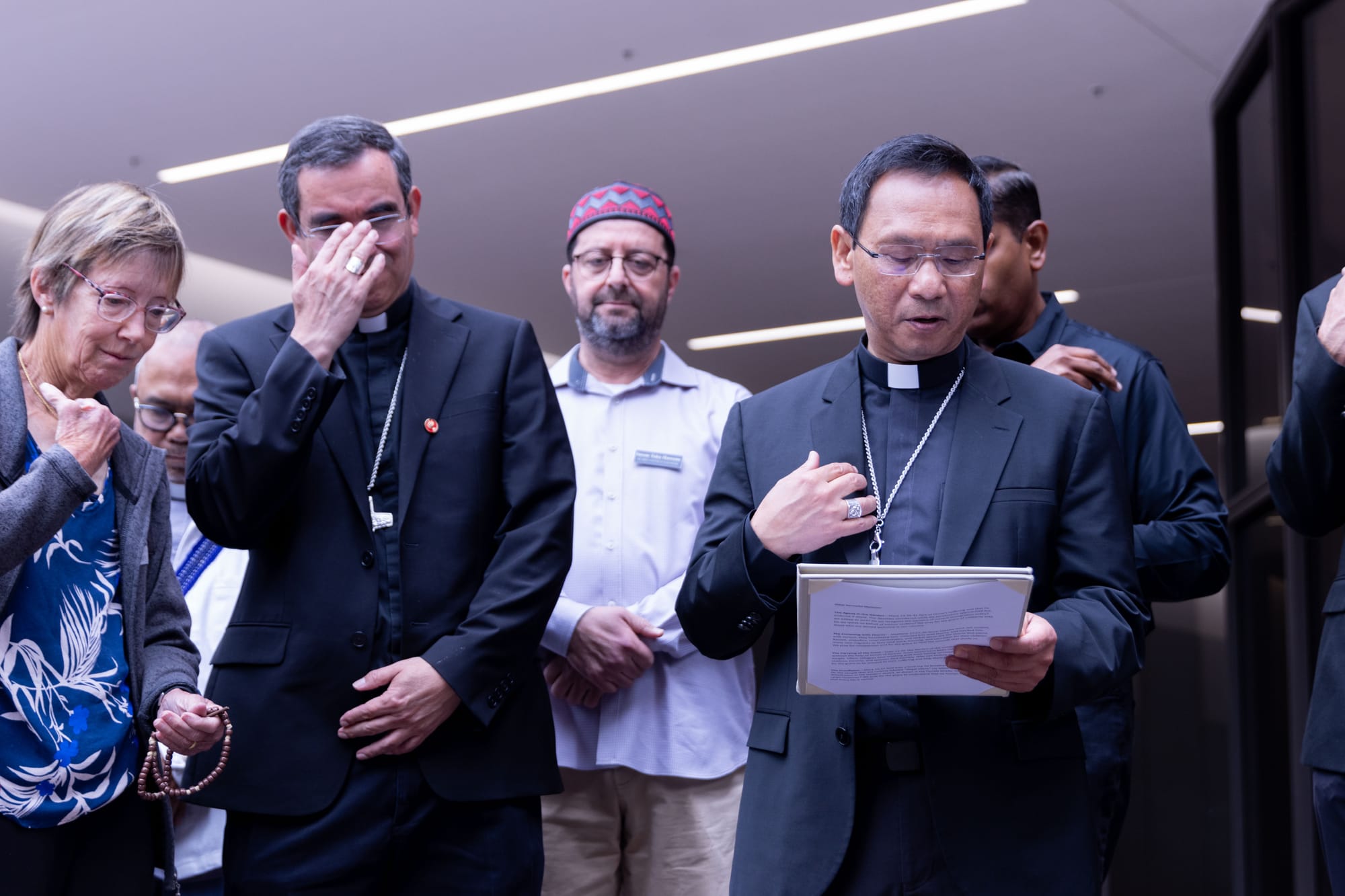
For Hassane, Ramadan carries childhood memories of discipline and care. He remembers fasting during the summer months in the 1970s, when the days were longer and the heat made abstaining from food and water more challenging.
“It is a little bit challenging to fast during or under these circumstances, versus fasting in the winter, where days are shorter and the weather is cool so we don't feel hungry or thirsty,” he said.
For neighbors, classmates and coworkers who want to show support, Hassane suggests small gestures of awareness and respect.
“You may greet your Muslim coworker in Ramadan, like 'Ramadan Mubarak,' for example, blessed Ramadan,” he said. “If you want to be sensitive while your coworker is fasting and it's lunch time, it's better to go somewhere else and have your food and not eat in front of them.”
Khatib also highlighted that while many Muslims fast during the month, some people may not do so for various reasons, including pregnancy.
“If somebody you come across who you know is Muslim who's maybe practiced in the past but isn't practicing today, unless you're super close to them, don't ask why they're not fasting that day — there could be something personal going on,” she said.
She said that sometimes she has difficulty giving work presentations during Ramadan, especially toward the end of the day, so she understands why someone may choose to break their fast early.
“Religion Islam should be a guiding factor in your life, it should be adding benefit to your life,” Khatib said. “And if what the religion is asking you to do is showing you hardship, then you need to find another way to do it and still achieve the principle behind what the ask is.”