Bird watchers and conservationists cultivate support for native plants through scavenger hunt

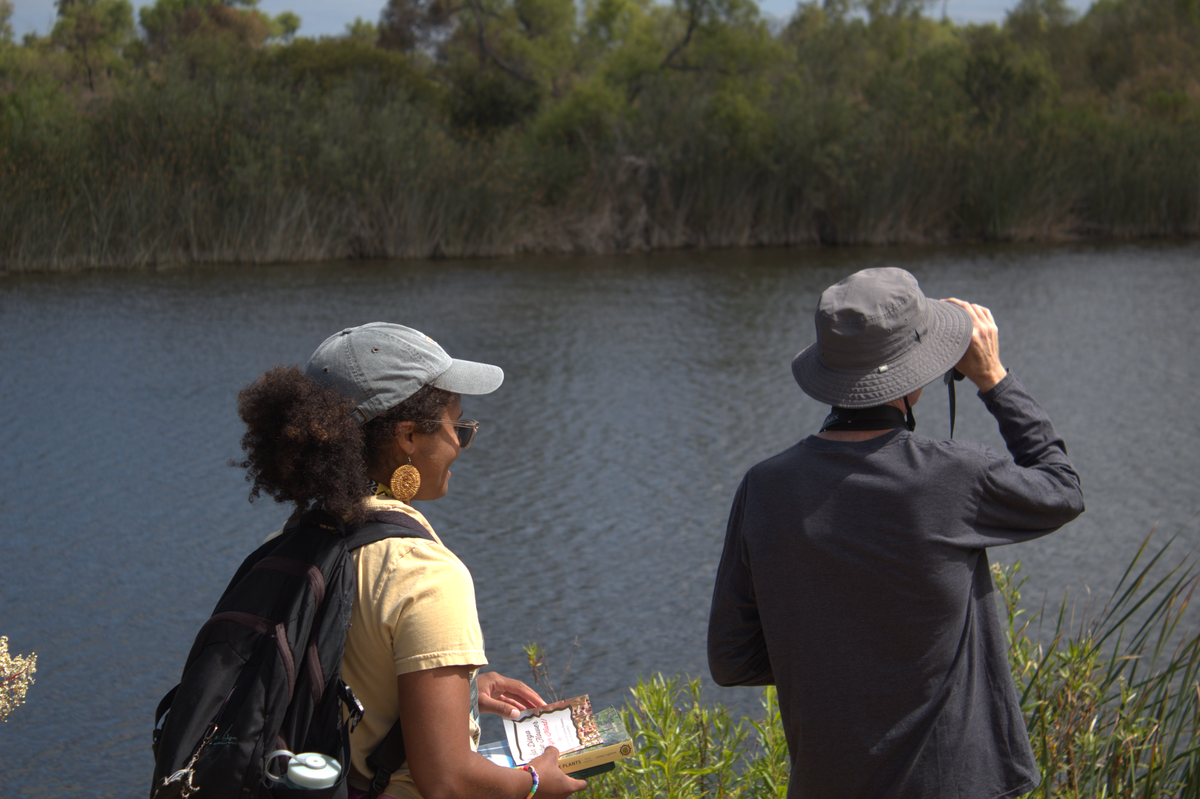
San Diego Bird Alliance hosted a native plant scavenger hunt at Otay Valley Regional Park where attendees embarked on a self-guided tour to learn more about the importance of San Diego’s native birds and flowers.
Written by Rami Alarian, Edited by Kate Morrissey
San Diego naturalists sprawled across Otay Valley Regional Park last week equipped with binoculars, cameras and environmental booklets to identify and educate themselves on San Diego's native plants.
Starting at a ranger station, a small group of birders made their way through a self-guided, native plant scavenger hunt hosted by San Diego Bird Alliance on June 28. The organization's conservation coordinator Eugenia Marchenko said the group hoped to use the event to promote attendance at Otay Valley Regional Park and to get people more involved with the conservation of native plants.
“We drive past all of this all of the time, but it doesn’t really capture you the same way unless you are standing there touching the plant and looking at the plant,” Marchenko said. “And that really helps you understand what a robust, native plant community we have in San Diego.”

The organization offered a resource table at the entrance of the park with loanable binoculars, magnifying glasses and written material about native plant species. San Diego Bird Alliance staff encouraged attendees to discover the park at their own pace. For each plant they found, participants could receive illustrated stickers that depicted the plant itself and a bird or insect species that relied on it.
At the resource table, scavenger hunters found plant pamphlets that detailed which native plants to find, the plants’ scientific names, where they most often grow and fun facts about the plants’ relationships to San Diego native birds and insects.
The first flower on the list, the Blue-eyed Grass, the official flower of the city of San Diego, grows in meadows and grassy woodlands and attracts Spring Azure Butterflies.
While walking through the park, attendee Rosalyn Rivas found Black Sage, one of the listed plants. She quickly pulled out her phone to identify and log the species.
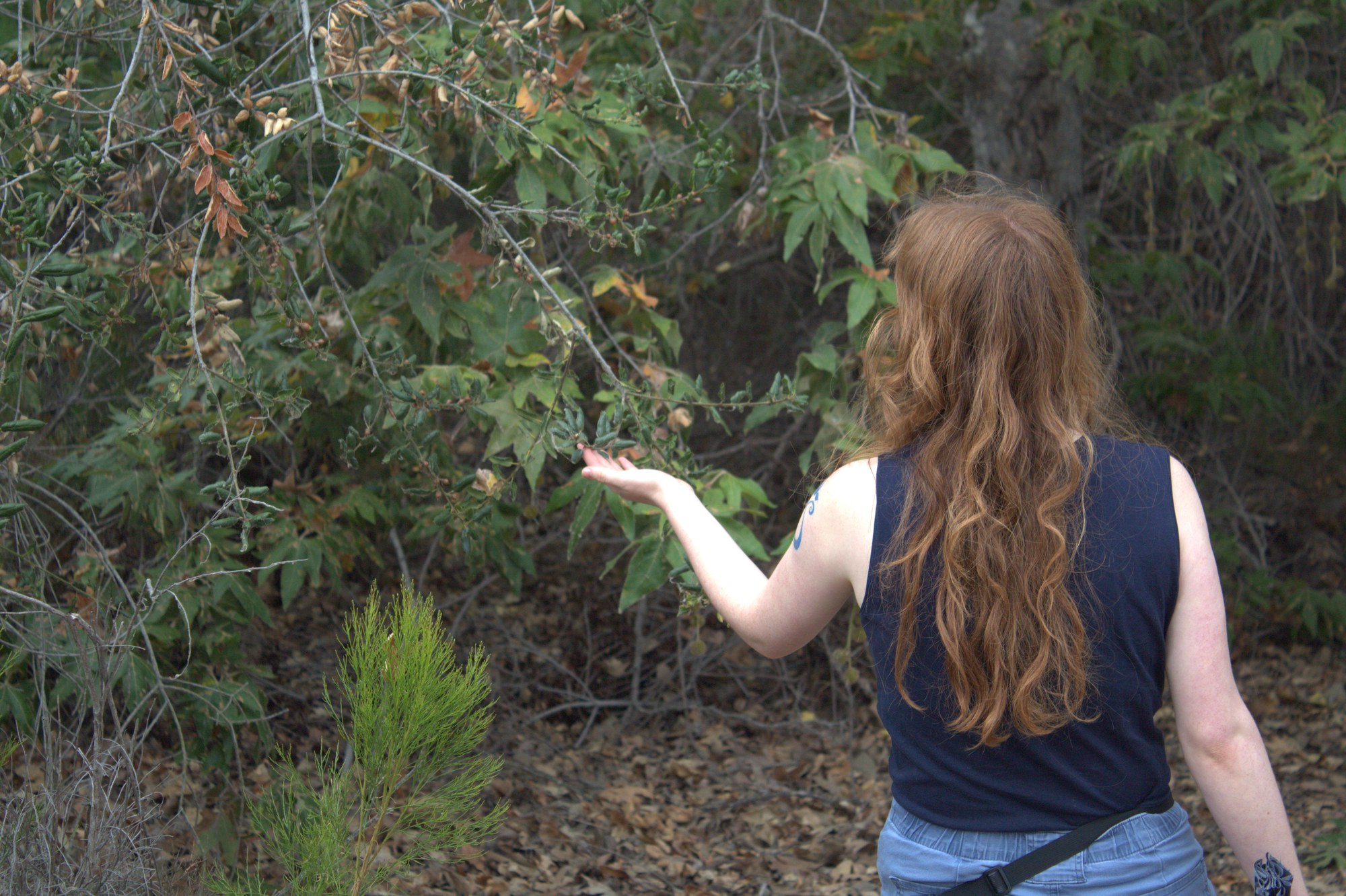
After other attendees held up sprigs of the sage to smell and feel, they, too, pulled out their phones, cameras and booklets to classify the plant and capture pictures of it.
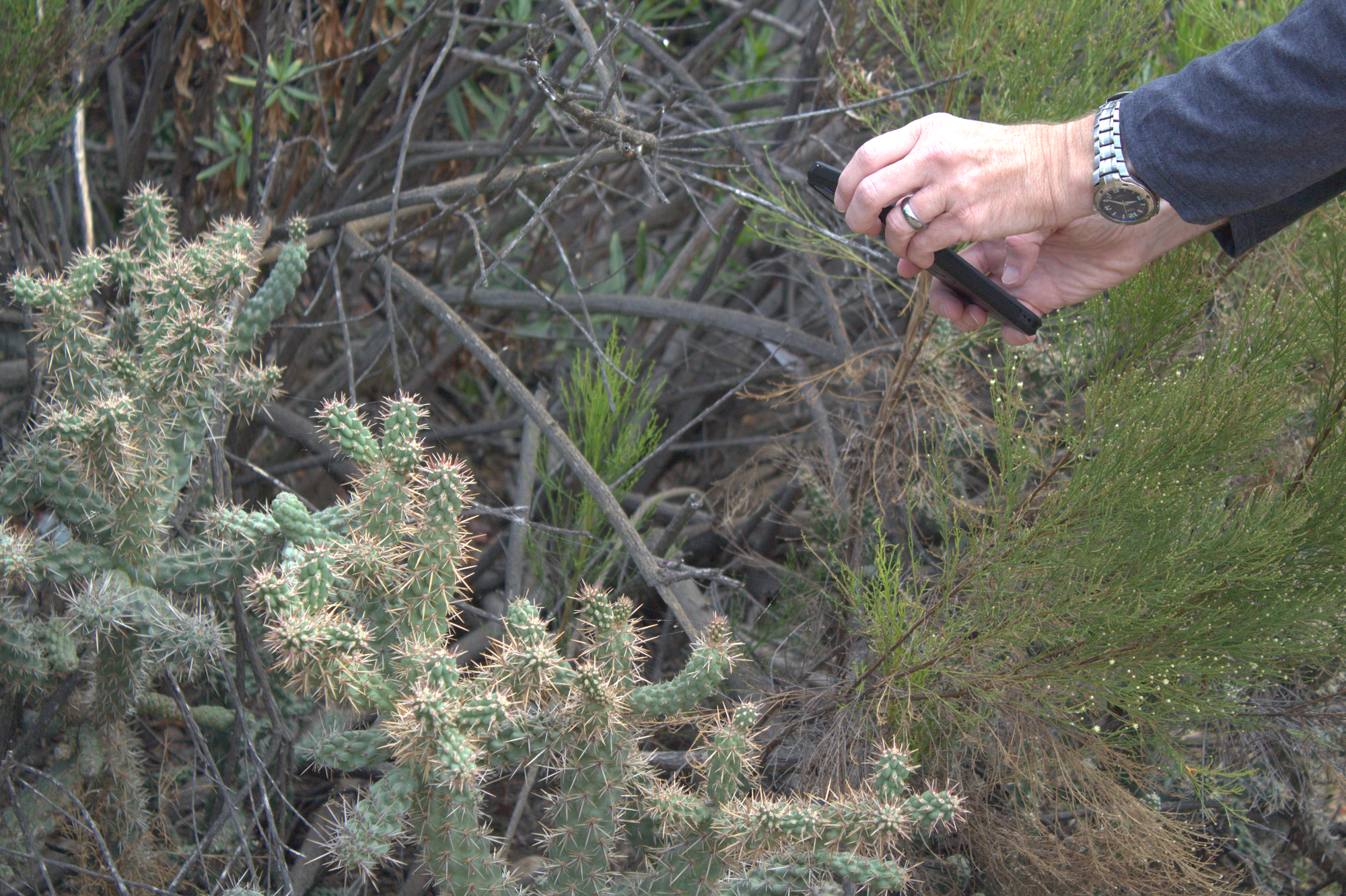
Rivas, who carried a San Diego plants field guide, differentiated lookalike specimens based on the shape of petals and shared her findings with the rest of the group.
“We can all kind of work together to learn from one another," Marchenko said. “Birders are always really excited to share their knowledge. They are the least intimidating community.”
During the walk, birdwatchers saw the Cassin’s Kingbird, the Pied-billed Grebe and the Hooded Oriole.
“San Diego County is the most biodiverse county in the nation,” Marchenko said. “We have a lot of year-round and migrating bird species, and they rely on those native plants.”
San Diego county is home to over 1,700 native plant species and more than 520 bird species.
According to Marchenko, land development has created a fragmented ecosystem for birds. Planting more native plants can increase connectivity as well as provide food, shelter and nesting materials, making a better home for San Diego's birds.
Charlyne Klironomos, a student studying animal health and behavior who attended the event, said she and her partner were trying to learn more about native plants to create a native plant and bird garden in their own backyard.
“We’re trying to live a conservative lifestyle,” Klironomos said. “I’m trying to learn as much as possible to help conserve our ecosystem.”
Marchenko, who has been with San Diego Bird Alliance for over four years, said events like the scavenger hunt help get the public to care about birds and park spaces. San Diego Bird Alliance hosts events nearly every week all across San Diego with many centered around nature conversation and education.
“I think that’s the most important part, because if we can get people to care, then we can achieve those other goals of getting more plants into park spaces,” Marchenko said.
Marchenko said if people fall in love with native plants enough, they might be more inclined to contact their local representatives to encourage them to plant more native species in public spaces.