Meet some of the leaders behind San Diego’s environmental movements

Those steering the fight for sustainable communities and climate action say San Diegans must believe in the power of the people to enact positive environmental change.
Written by Sam Barney-Gibbs, Edited by Maya Srikrishnan, Lauren J. Mapp and Kate Morrissey
Local environmental activism can begin in one's backyard or far from home — through academic study, career necessities or simply talking to peers — before fully taking root on San Diego's streets.
In light of Earth Month, four community leaders shared how they found their current work in environmental activism and advocacy, build grassroots movements, navigate moral existential questions, push through systemic oppression and cross borders to pursue their passions. Though they say the effort can be daunting, they hope their stories show others that the right resources and communities can help people meaningfully participate in San Diego's environmental spaces.
Masada Disenhouse
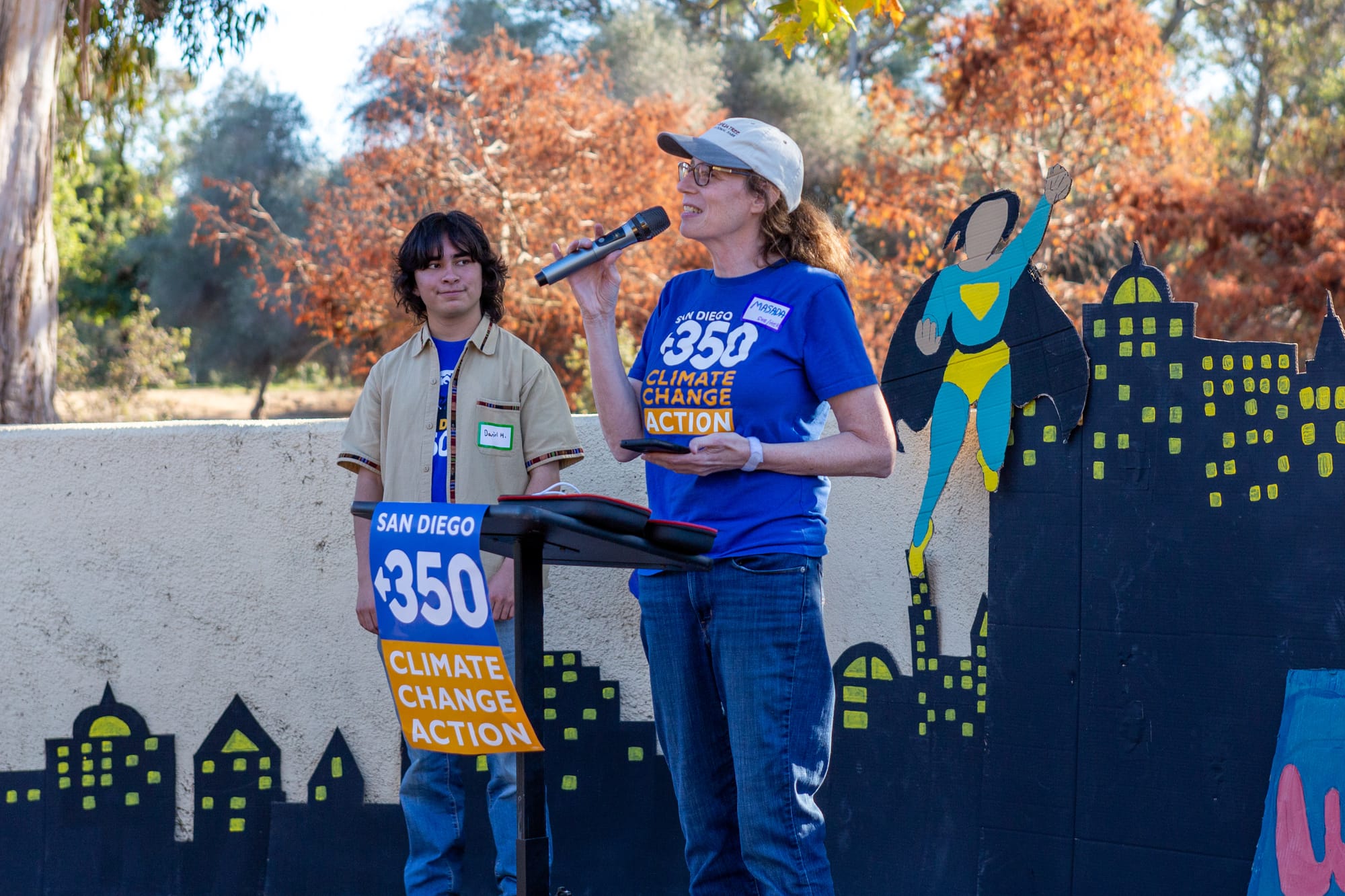
Masada Disenhouse first worked in environmental justice in New York City in the late ‘80s, providing free upgrades to low-income housing so residents could have more efficient and comfortable homes while also saving money to make their living situations more sustainable.
One day in 1992, her boss handed her a copy of a climate change report from the Intergovernmental Panel on Climate Change — the second-ever completed report.
As someone who could be found camping and playing outdoors as a child, the details of the report stunned her.
“I can’t believe this is happening, and no one’s talking about it,” Disenhouse recalled thinking at the time.
This launched her passion for climate action, leading to work with the Green Party’s presidential campaign for Ralph Nader in 2000 . She moved to San Diego for a change of scenery in 2010 and swiftly got involved in state-wide climate politics advocacy.
The following year, she helped organize a demonstration with about 400 people in Balboa Park to bring attention to climate change. At the time, she said, there weren’t many people working in climate activism and advocacy in San Diego, so some of the organizations that worked on the demonstration formed San Diego 350, where she is now the executive director.
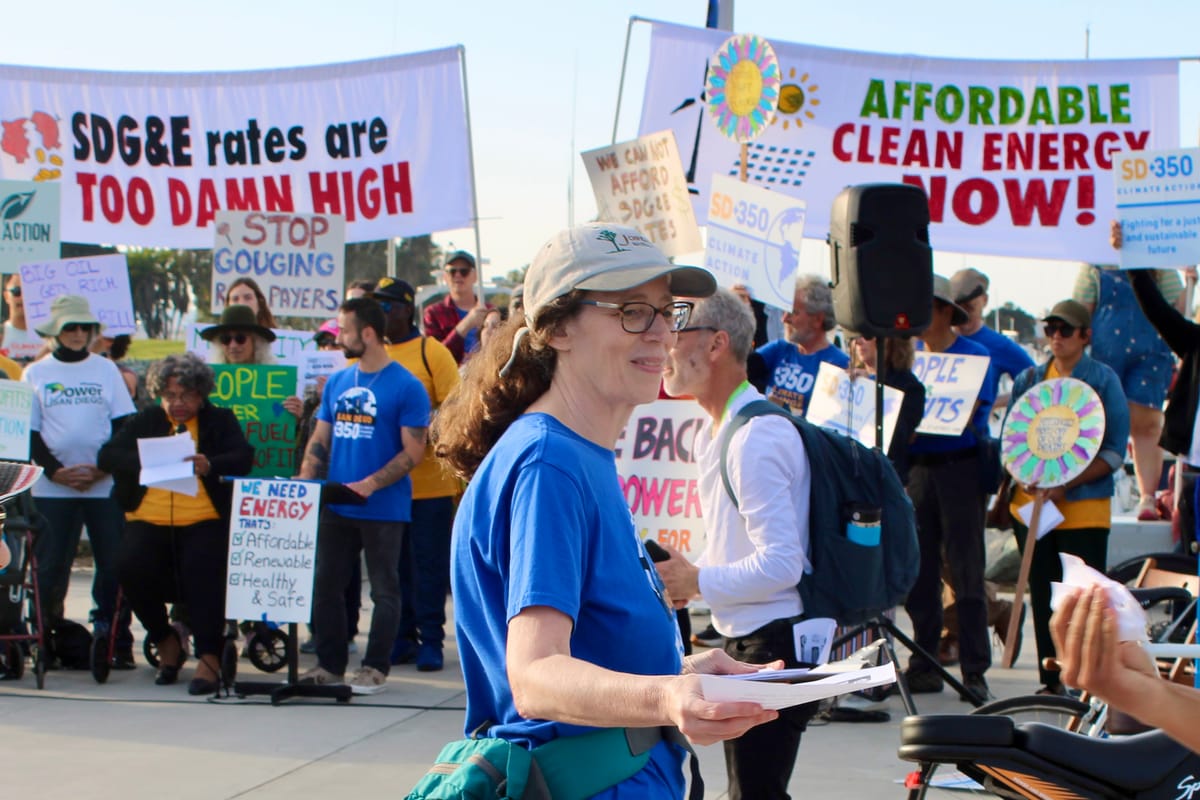
She said there’s been a surge in environmental demonstrations since Donald Trump’s first presidential election in 2016.
Disenhouse said a lot of people feel overwhelmed by grief and anxiety as they feel the federal administration’s behaviors — including environmental actions — become more authoritarian and uncontrolled.
“Seeing the power of people come together and push back on Trump and demand climate action, seeing that come to fruition after months of organizing, feels really empowering,” Disenhouse said. “Being around like-minded people, and working with them toward the same goals keeps me sane and hopeful.”
But Disenhouse believes most in the power of her leadership development work.
“I feel like I can work on policy all day, but if I can recruit, train and develop the leadership skills of 100 people, then those 100 people are all out there doing the work on their own,” she said. “And I've definitely trained and mentored way more people at this point.”
Isaiah Glasoe
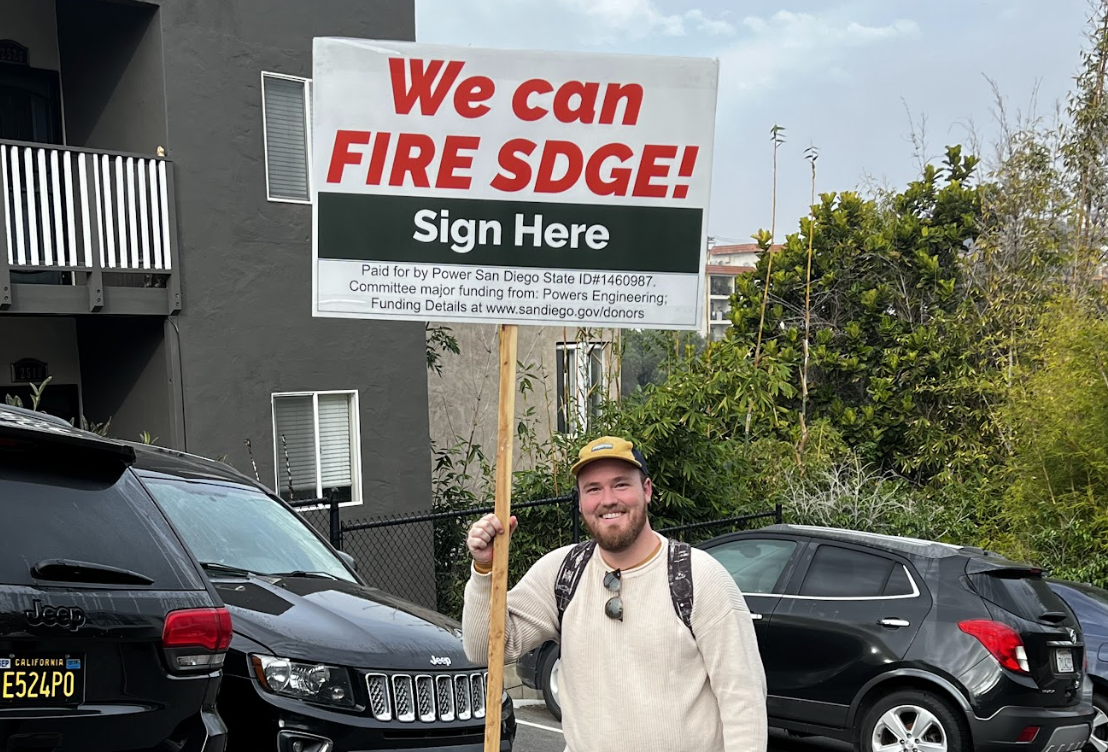
After Isaiah Glasoe spent January 2023 out of town, not using his utilities, he came home to an exorbitant bill from San Diego Gas & Electric, the city’s sole and private utility company.
He immediately took to Reddit to voice his outrage, and San Diegans responded in solidarity. A couple of hundred people joined his petition to stop paying SDG&E bills in protest, which ultimately connected him to the public power activist community.
He doesn’t see himself as an environmental activist specifically, but a general one, as social, environmental, economic and political issues are too interconnected to specify a singular label.
To him, environmental activism is a moral issue.
He’s now a program coordinator for Public Power San Diego, an organization that advocates for community-owned and clean electric power, but his first jobs included selling house cleaning items online, making films and managing small property.
Going on 30, Glasoe said working in activism, he’s currently making the least amount of money that he has ever made, but it’s the only career he feels morally right engaging in.
“Fossil fuel executives get compensated an insane amount, and they're actively destroying the planet, while community activists or organizers make just enough to survive, sometimes not enough to survive,” Glasoe said.
Through his utility justice networking, Glasoe met the Debt Collective, which buys mass amounts of debt to relieve the burden on families who can’t afford to pay it off. With nearly 30% of San Diegans in energy debt, this became an issue Glasoe couldn’t ignore.
He reached out to the Tenants Council of San Diego, who connected him with a single mother of two kids who worked two jobs just to get rent paid and food on the table. As part of his intermediary role, he gave her $2,000 from the collective to pay off her debt.. He said this grew his love for organizing and educating people on utility justice.
“We’re always in competition for the highest [energy bill] rate in the nation,” Glasoe said. “I've grown up here my whole life, and I cannot afford to live here. My family's thinking about moving out of San Diego, and I know a lot of San Diegans are facing a similar thing.”
Tanisha-Jean Martin
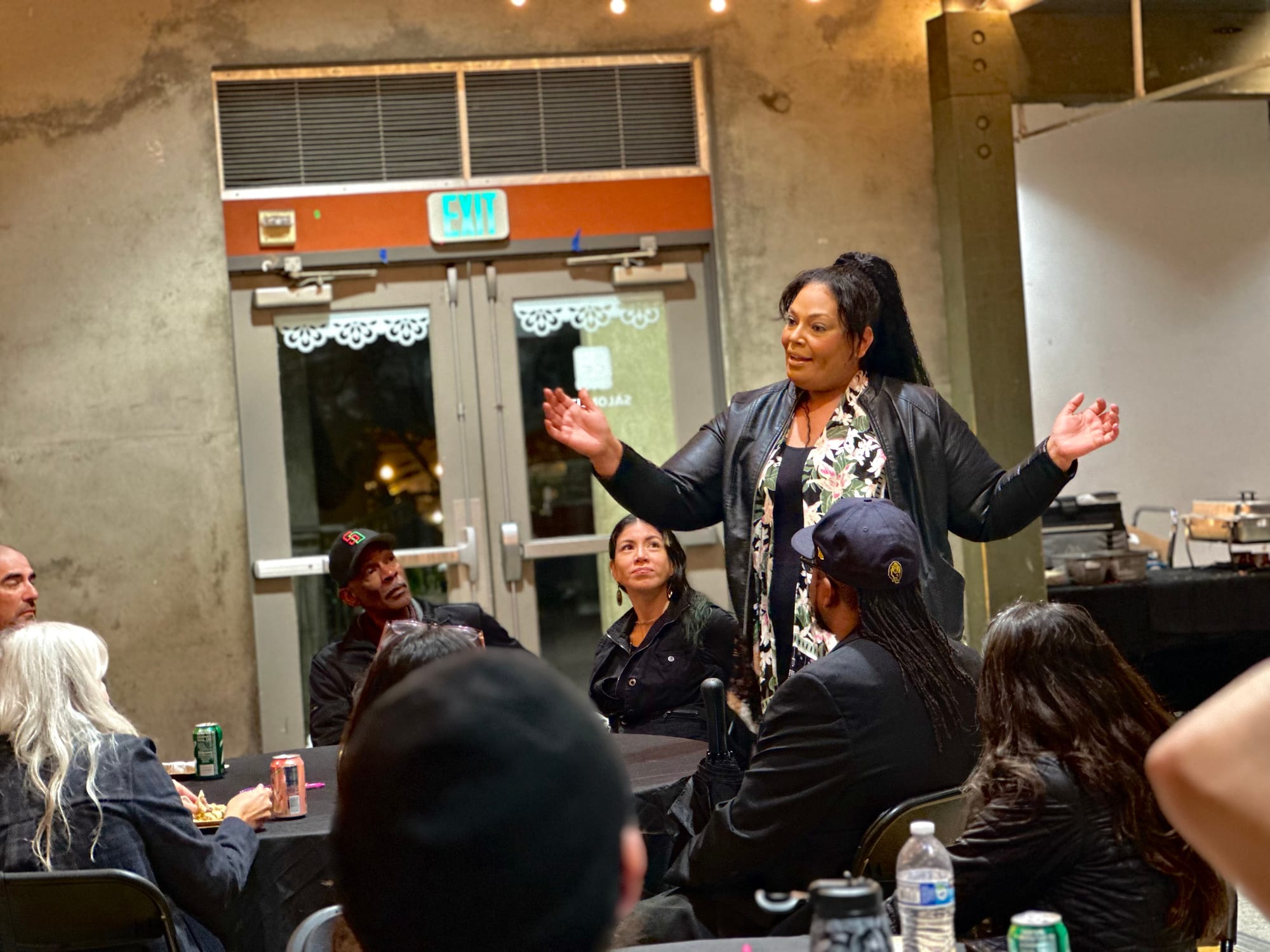
Tanisha-Jean Martin said she’s been a statistic ever since her youth. She became a teen mom, experienced domestic violence while in a relationship with a gang member and was diagnosed in her early 20s with stage 4 cancer.
She said being in the hospital gave her “nothing but time” to analyze her life.
“If I survive this, what do I do with myself? What do I do next?,” Martin said to herself as a sick 23-year-old.
Growing up in southeast San Diego, Martin said she spent her childhood surfing, loving the ocean, playing softball and supporting green spaces. She even landed her name in a headline for catching the biggest fish of the day when she was 6.
Martin took her passion for the environment into her studies, graduating from San Diego State University as a first-generation college student with majors in geography, sociology and political science.
She said struggling as a student to find on-campus stores that would accept her electronic benefit transfer card led her into activism.
Her work inspired people at California State University, Long Beach, which was one of the first college campuses to permit the use of EBT cards for campus goods.
“Even though I didn't win that battle, the war was won because students can use their card all over the nation. But it took a voice, and I know it's my voice that changed the situation,” Martin said. “There's something precious in making sure we're using our voice when we notice something needs to be changed.”
She said the inequity she experienced at school also became evident to her in San Diego’s environment, including the lack of trees in South County compared with North County and the freeways and developments that broke up neighborhoods and displaced communities.
She said the promise of free food — at a time when she needed it most — got her involved in environmental initiatives by attending school and community meetings.
Martin now holds many titles, some of which include the founder and owner of consulting firm ECOfirmative, climate community director and environmental justice consultant for the San Diego Urban Sustainability Coalition and chair of the city’s Climate Advisory Board.
Through a variety of positions she’s held in city government, Martin has spoken at conferences, including the CSU Water Resources and Policy Initiatives Conference, where she said she was one of the only Black women in the room.
“I'm a voice that's not being heard,” Martin said. “There's too many of us that look like me talking about social issues, but there's nobody really like me talking about environmental issues. So, this is a space that I can grow in.”
She now feels a responsibility to engage underserved San Diego communities in environmental education.
She said if she doesn't do it, she doesn't know who else will.
Martin calls herself a disruptor of a bad system and a solution-finder.
“The planet takes care of us,” Martin said. “If we don't take care of it, it will stop.”
Serena Pelka
Serena Pelka grew up in the Canadian border town of Windsor Ontario. She said living in a border city showed her how environmental issues are shared across communities, meaning people must enact climate action in an intersectional way through science, politics and immigration.
“Just because there's a border drawn in the sand by humans doesn't mean that environmental impacts are cut off there,” Pelka said.
After abandoning a business degree for one in environmental governance, Pelka said she learned from many Indigenous instructors, who helped to inform her intersectional views on and greater passion for environmental advocacy.
She moved to San Diego in 2016 for an internship at the Kroc Institute for Peace and Justice at the University of San Diego, leading to a fellowship with the school. Soon after Trump took office in 2017, she worked for refugee and immigration advocacy organizations while also volunteering to door-knock for the ACLU.
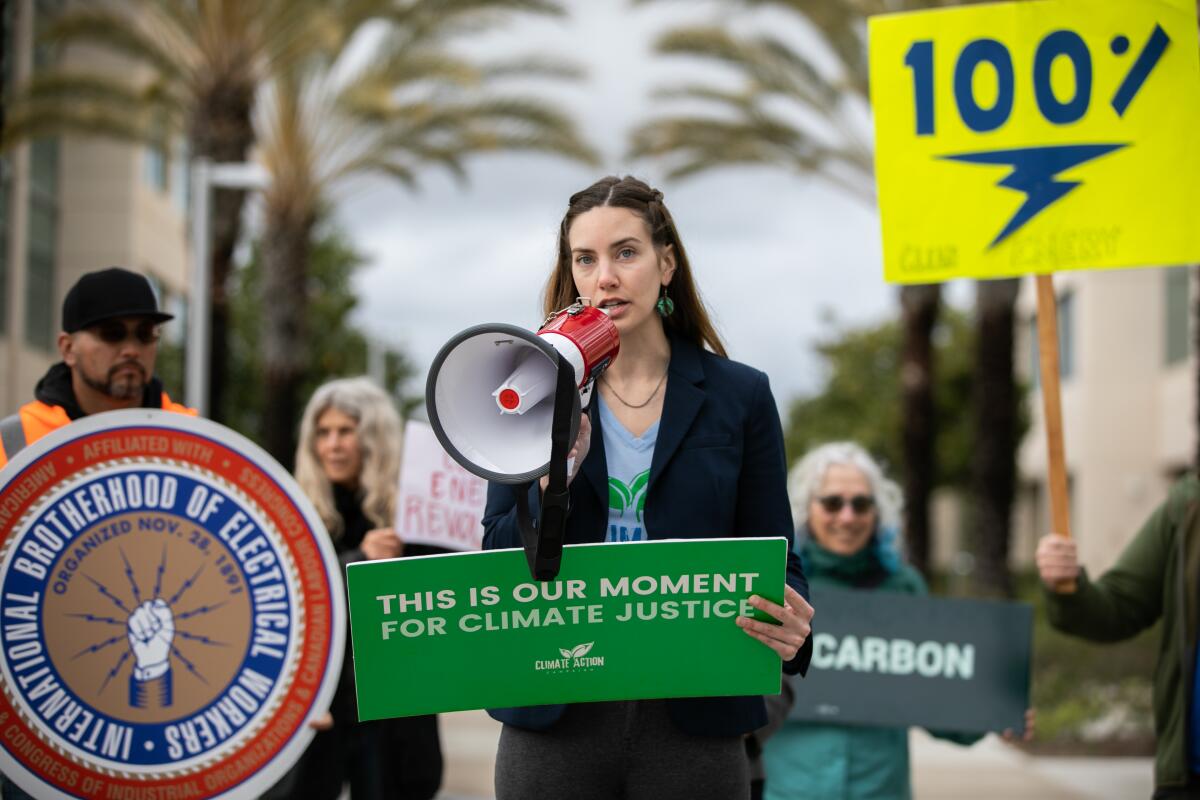
She’s now a senior policy advocate at Climate Action Campaign, an environmental policy-focused nonprofit, where she is most proud of her work with San Diego youth.
She’s seen how young people can work on and think about climate change in empowering and strategic ways. An electrification solutions adoption program — where students work with their school districts to commit to clean energy — fulfills her most, she said.
Working in climate activism and advocacy means “playing the long game,” Pelka said, fighting for systematic change that, even with some political wins, won’t actually result in relief for weeks, months or years.
“Initially, that can feel disheartening,” Pelka said. “What keeps me moving forward [are] my neighbors, my friends, my family — the people that I feel like we're collectively fighting for a better future for.”