San Diego Asian Film Festival screening of 'Hoop Like This' challenges who belongs on the court

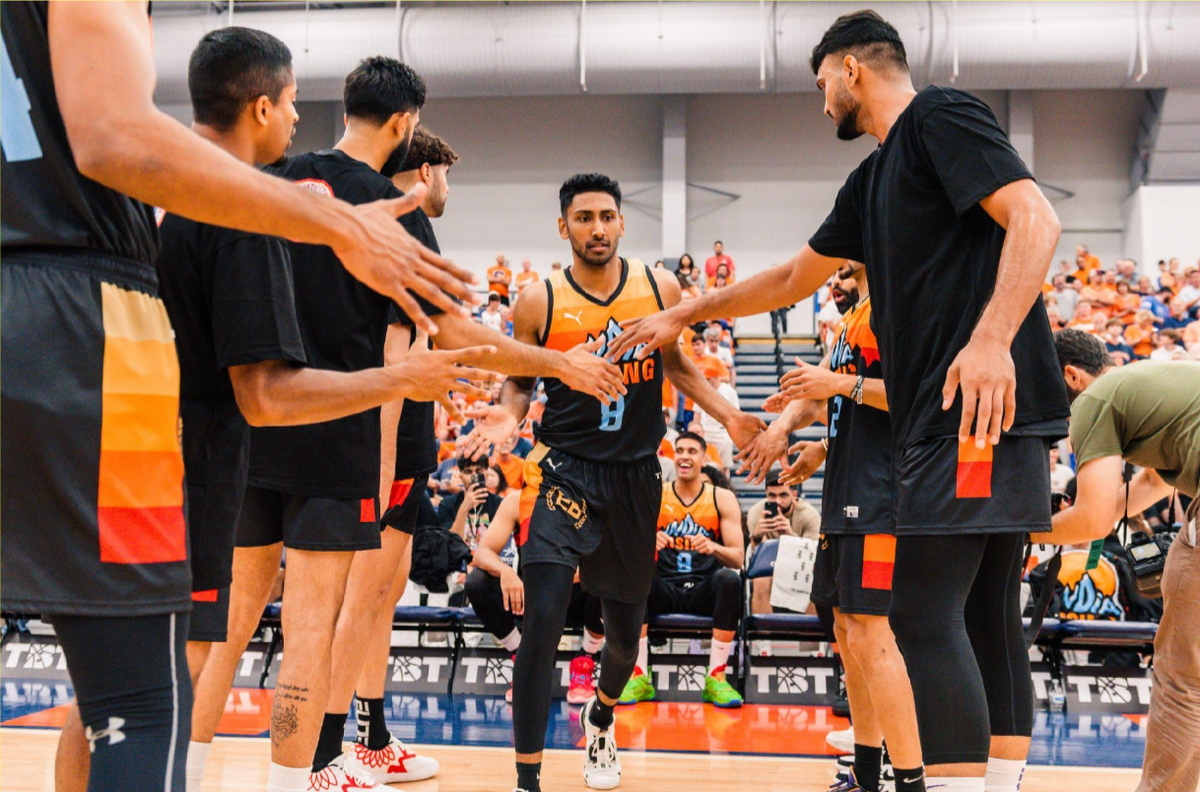
Ahead of two screenings as part of the festival, director Shubhangi Shekhar said “Hoop Like This” explores the dreams, setbacks and shared identity behind India Rising, a basketball team that brought together players of Indian heritage from around the world.
Written by Emma Chen, Edited by Kate Morrissey
For years, South Asian basketball players have faced an obstacle that talent alone cannot overcome — convincing the world they belong on the court.
For Gautam Kapur, a former NBA employee, changing that perception meant bringing together India Rising, a team of Indian-origin basketball players from around the world, and giving them a platform to showcase their abilities.
Their journey takes center court in “Hoop Like This,” a documentary directed by Shubhangi Shekhar that will screen at UC San Diego’s Suraj Israni Center for Cinematic Arts on Thursday, Nov. 12, as part of the 27th San Diego Asian Film Festival. The screening is free and does not require a ticket. The festival is hosting a second screening on Friday, Nov. 13, at 7:55 p.m. at UltraStar Cinemas Mission Valley with general admission tickets priced at $15.
“The film is a high-energy, crowd-pleasing celebration of community,” said Brian Hu, artistic director of Pacific Arts Movement. “Underdog sports movies are a dime a dozen, but they're usually individual tales. ‘Hoop Like This’ feels like a movement.”

Kapur assembled India Rising to compete in The Basketball Tournament, a nationally televised, single-elimination competition featuring professional and former collegiate players vying for a $1 million prize.
But for Kapur and his team of athletes, the stakes extend far beyond the money.
“India Rising is just about showing the world that Brown athletes exist,” Kapur said in the documentary.
Shekhar said the film project began with a shared interest in expanding South Asian representation. Kapur was working to create opportunities in sports while she was pursuing similar goals in entertainment. When he approached her for advice about documenting the team, she offered to film it.
“And kind of, you know, one thing led to another, and four years later, we have a documentary,” Shekhar said in an interview with Daylight San Diego.
The documentary traces India Rising’s beginnings in 2022, when Kapur recruited Indian-origin players from across the globe to compete together on ESPN. Many had built professional basketball careers in different countries, yet few had opportunities to represent their shared heritage on an international stage.
Creating the team required far more than finding skilled players, according to Shekar. Kapur navigated recruitment, fundraising, international travel and visa complications while attempting to bring together athletes who had never played alongside one another.
Unlike established alumni teams whose players shared years of experience, India Rising brought together athletes from different countries and basketball systems. Their shared heritage provided a connection, but building a competitive team required practice time, facilities and financial support, according to Shekhar.
The documentary does not shy away from difficulties within India Rising itself. Disagreements over playing time, team chemistry and leadership threaten the group’s progress, revealing the challenges of building a competitive team around a shared cultural identity.
During one training camp practice, tensions boiled over when a player broke from a planned play, prompting the coach to stop the drill and confront him for not following instructions. The player defended his decision as instinctive, sparking a heated exchange as both sides argued over how the play should have been executed.
The confrontation raised fears that the team could unravel before the tournament. Later, a local Indian family invited the players over for a home-cooked meal. Away from the court, the gathering helped ease tensions and reminded players of the community they hoped to represent.
“It’s cool to have a theoretical dream,” Shekhar said. “It’s really hard to make that a reality.”
Those pressures extended behind the camera. Shekhar invested her own money in the documentary and relied on family members to help arrange transportation and lodging during filming in India. For footage in Taiwan, she hired a local videographer to capture Kapur’s visit and the basketball community there.
“How do you invest early? How do you see potential when it hasn’t fully been realized yet?” Shekhar said.
The documentary follows the team’s efforts to rebuild after its first tournament loss and return in 2023. Kapur travels to countries including India and Taiwan, uncovering basketball communities that have flourished despite limited professional opportunities and recognition.
Shekhar said including the team’s first tournament loss helped show the persistence it took to return the following year and win a game.
“I think what makes a good movie is seeing the ups and the downs, kind of really getting behind the curtain,” she said. “Otherwise it’s just a sound bite. ‘Oh, they won.’”
The film also explores the cultural expectations that have shaped the athletes’ experiences.
Several players reflect on growing up in communities where pursuing careers in medicine, engineering or other traditional professions was often encouraged over professional sports. Others recount experiences of discrimination and the pressure to prove themselves in environments where people frequently overlook.
Inderbir Singh Gill, a point guard, recalls confronting stereotypes about Indians owning gas stations or driving taxis, as his father worked as a taxi driver. Gill said when he was younger he would ask his father to drop him off two blocks from school so his classmates wouldn’t find out what his father did for a living.
Some players challenge the assumption that academic achievement and athletic ambition must be separate paths. Shekhar said the players balance basketball with demanding career and academic pursuits. Forward Sai Tummala works as an orthopedic surgeon while point guard Varun Ram studied business at Stanford University. Forward Gokul Natesan pursued a computer science master’s degree at Colorado School of Mines while playing professionally.
Their conversations about coding during basketball practice became one of Shekhar's favorite examples of the film’s ability to complicate familiar stereotypes.
“There’s just more to them than being the nerdy, smart kid,” Shekhar said.
Gill says in the documentary that he feels frustrated by his inability to represent India internationally despite being born there.
In the documentary, Sikh athletes say they have faced discrimination tied to their religious appearance, including challenges surrounding use of religious headwear during competition.

For Shekhar, the question of belonging is personal. Growing up in the Midwest, she was the only girl and the only person of color on her YMCA basketball team. She eventually stopped playing in middle school, an experience she connected to feeling like an outsider.
“If I had this representation when I was younger, I probably would have stuck with the sport longer,” she said.
Following India Rising gave her a personal stake in the athletes’ success, she said. As a filmmaker pursuing a career without many role models who shared her background, she recognized something of her own experience in their determination.
“And so if they’re showing up for something that they don’t even know how it’s going to turn around, I can show up, too,” she said.
Shekhar hopes younger South Asian viewers, particularly those considering unconventional careers, leave with the confidence to pursue their ambitions after seeing the film.
“I hope people realize that just because there isn’t a role model in a space, you can be your own role model,” she said.
Updated on Nov. 11, 2026 at 5:24 p.m. to spell out Pacific Arts Movement.