
San Diego woman says her credit card information was stolen while she was in ICE custody


Hanne Engan, whom ICE arrested at her green card appointment, said her diabetes quickly escalated while at Otay Mesa Detention Center due to medical negligence.
Written by Kate Morrissey, Edited by Lauren J. Mapp
When Immigration and Customs Enforcement officials showed up at Hanne Engan's green card appointment in downtown San Diego, they didn't just take her away from her husband.
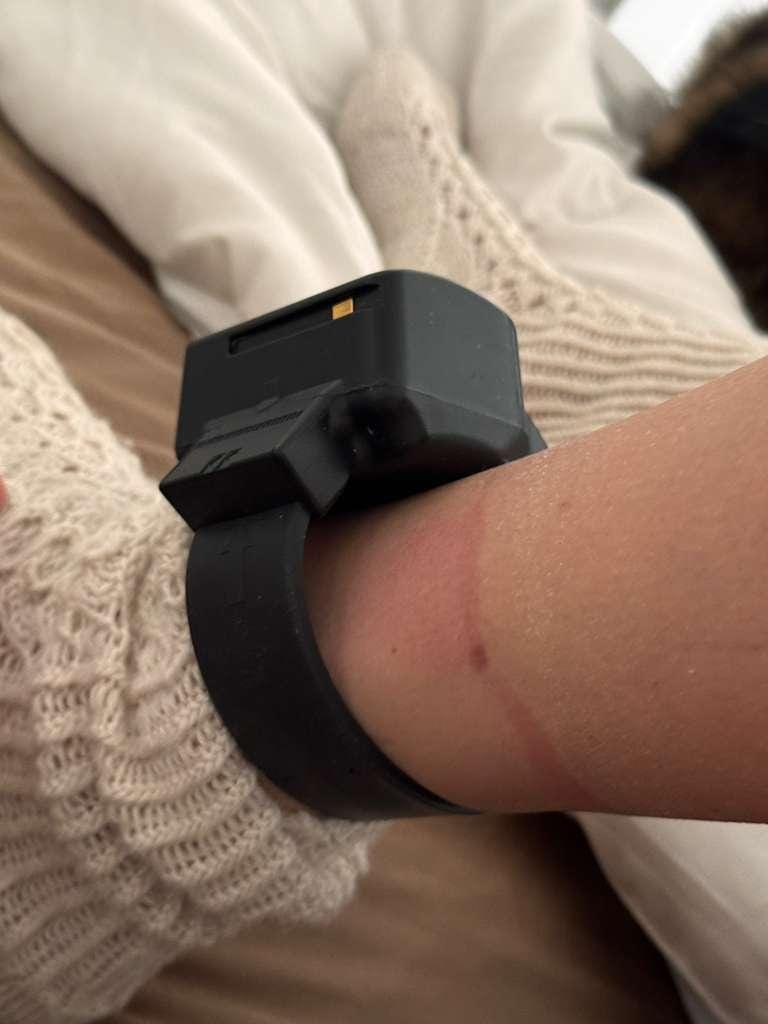
She said they also separated her from the monitor she wears to help her manage her Type 1 diabetes — and the insulin she takes multiple times a day for it. She has since made several TikTok videos to share details about her time in custody.
“I'm lucky everything ended up being OK for me, but it was just — it's scary how they treat people,” Engan told Daylight. “I know I'm one of the lucky ones.”
ICE said that its officers arrested Engan because her student visa had expired.
“A pending green card application does not give someone legal status to be in our country,” the agency said via an unnamed spokesperson.
The spokesperson said that Engan's claims about negligent medical care were false and that she was given insulin at “appropriate times.”
Prior to last year, the agency did not typically arrest the spouses of U.S. citizens at their green card appointments. The agency also typically doesn't provide comment on detainees’ medical records due to privacy laws.
CoreCivic said that it could not comment on the medical record of any individual because of privacy rules.
“The generalized claims and allegations that this individual has shared are simply not true,” spokesperson Ryan Gustin said.
“Any medical devices or equipment that are in someone's possession at intake are provided to our medical personnel to manage as medically appropriate,” he added.
Gustin noted that the National Commission on Correctional Health Care reaccredited the facility in February.
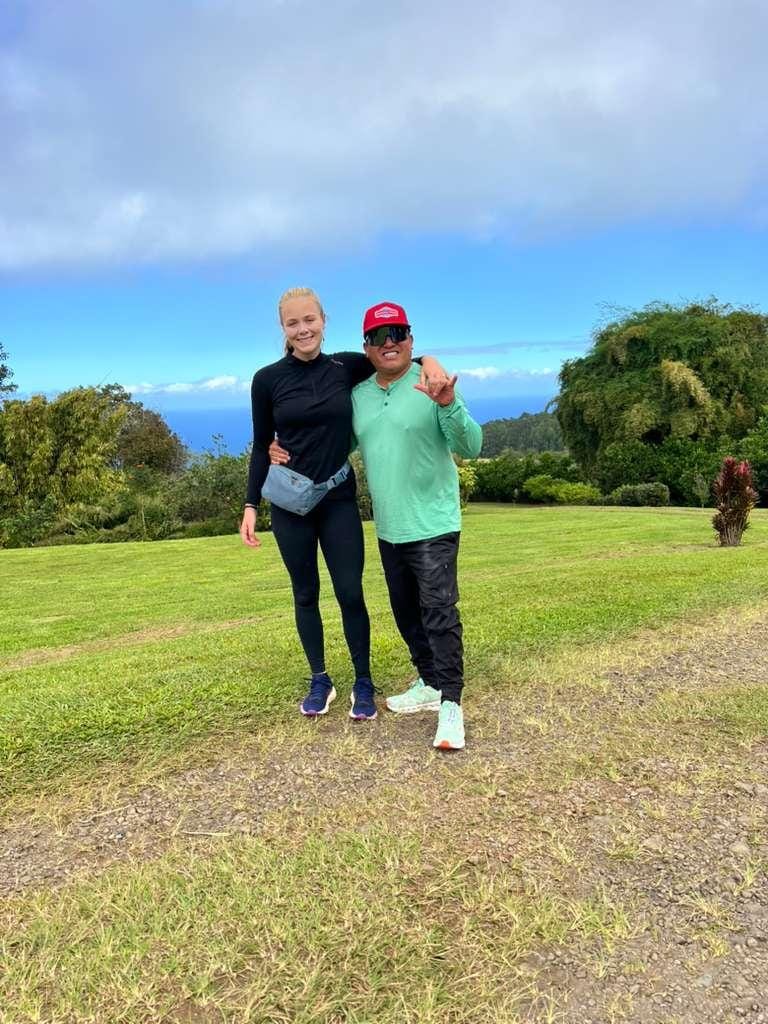
Engan, originally from Norway, moved to San Diego County in 2022 for school. While she was studying, she met her future husband playing volleyball. They married in late 2024 and applied for her green card.
In November 2025, Engan went to her green card interview without knowing that ICE officers had started arresting people at their U.S. Citizenship and Immigration Services appointments the week prior. She and her husband didn't have an attorney, so even when ICE officers came in at the end of the interview, Engan said she didn't understand at first what was happening.
“I just thought, ‘OK, they want to ask some questions. That's fine,’” Engan recalled. “They came into the room, and they didn't ask any questions. They just said they're here to arrest me, and that's it.”
She said the officers gave the couple two minutes to say goodbye. She said they cried and told each other, “I love you,” before the officers took her away.
She remembers the five-point shackles that bound her wrists, waist and ankles cutting into her skin because she had dress shoes on that didn't protect her from the heavy metal. She remembers the ICE officers counting the number of “bodies” they had arrested.
“It was insane just talking about us like we were a quota and not human beings,” Engan said.
She said she and the three Mexican women arrested alongside her held hands and cried together as they waited in a holding cell in the basement of the federal building. Later, three more women, including a Canadian woman who spoke English, joined them. Engan said she felt relieved to be able to talk to someone.
It was at the federal building that she said officers wouldn't allow her to access the insulin in her purse, which she has to take before every meal, and she wasn't allowed to wear her monitor.
She said officials fed them chips and sandwiches with old meat, but she didn't eat because she was terrified of what would happen to her body without her insulin medication.
“I get very very sick if I eat without insulin,” Engan said. “I could actually die, so it's not an option.”
She said the women had no access to soap and had to beg for toilet paper.
In the early morning hours of the following day, she said, officials transported some of the women to Otay Mesa Detention Center. They waited in the transport van until 5 a.m. with no access to a bathroom for several hours, she said.
When they finally reached the intake holding cell, Engan said, the television repeated the same infomercial for a pharmaceutical product for an hour. The cell, she said, was filthy and also didn't have toilet paper. The sink didn't work, and the women asked for water but did not receive any, she said.
Gustin disputed Engan's story.
“All the holding cells have working water fountains and are supplied with toilet paper,” Gustin said. “If the toilet paper needed to be replaced, our staff would have quickly addressed that issue.”
Engan described the facility as unbearably cold. She said she was forced to take a cold shower and then given only a t-shirt to wear until much later in the day when she finally received a sweater. Gustin said that the showers at the facility have both hot and cold water.
Engan said she saw a nurse and told him about her diabetes, but the nurse said she would have to see a doctor before she could get an insulin prescription in the facility.
Officials took her to the housing unit where she would be held and showed her to her bed — a thin mattress on the floor. She said the facility was so overcrowded that each of the sleeping areas, which are intended to hold eight people, had two extra mattresses on the floor to increase the number to 10.
She would spend much of the next week crying, reading to distract herself and pushing officials to take her health condition seriously.
Engan said she filled out multiple requests to see a doctor and didn't eat until four days after she'd been arrested. The little bit of food she ate that morning made her very sick, and facility staff finally took her to see a doctor, she said. The doctor realized that at intake, she'd been misdiagnosed as a Type 2 diabetic when she has Type 1.
The doctor gave her too much insulin in one dose, she said, but luckily some of the women in her housing unit gave her crackers to help her balance her levels out. She said she didn't receive insulin again that day or the following day. Then an official came to her unit and told her she was going to an isolation cell so that the medical staff could monitor her.
“They call it medical isolation, but it's solitary confinement,” Engan said. “You're all alone in this tiny cell, isolated from everyone.”
She saw a different doctor the next day who updated her medication plan to include insulin before every meal. But Engan still worried because she couldn't monitor her levels to see how much insulin to take or how much food was safe to eat. She said the facility served her mostly foods with basic carbohydrates, including rice, white bread, cake, pasta, oats and grains.
“It's horrible food for diabetics especially,” Engan said.
Gustin said that a registered dietician reviews the meals that CoreCivic provides at the detention center.
Engan said she developed infections because of her high blood sugar, and a doctor ordered her an antibiotic, but it never arrived.
She said that during her time in isolation, officials only took her to shower once. She said she was never allowed a phone call to her husband or her lawyer though she was able to message her husband some through a tablet.
A week after her arrest, Engan went before an immigration judge for a bond hearing. The judge granted her a bond amount, which her husband paid quickly. She left custody late the following day.
Usually CoreCivic guards take people to the San Ysidro Trolley Station to release them, but the facility let Engan's husband pick her up from its parking lot, perhaps because of her medical condition. The couple's dog, a Pomsky named Ascnee, greeted her with excitement when she got into the car.
Outside the facility, her husband stopped the car where Norwegian reporters were waiting to interview her. That's when she started crying, she recalled.
When the couple arrived home, her husband made steak and asparagus.
As Engan went through her belongings that had been returned to her when she came out of custody, she noticed notifications on her phone that someone had used her credit card while she was in custody. She said her credit card company had called her about suspicious activity on her account, but she couldn't answer because she was in custody.
It's unclear who stole her credit card information. She believes it may have been someone working for CoreCivic since the card was in her belongings, and her husband doesn't have access to that account. It is also possible that someone stole her credit card information using a technique like a card skimmer at a gas station, and the timing lined up with her arrest.
“Our staff secure an individual's personal property and valuables upon intake, and these items are stored securely until such time that they are released from the facility,” Gustin said. “We have no reason to believe that a member of our staff was responsible for the credit card being compromised.”
Regardless of who the thief was, Engan was unable to address the situation until she left Otay Mesa, and she worries about something similar happening to other people locked inside for longer periods.