Student organizations denounce ICE activity, push for more action from local governments

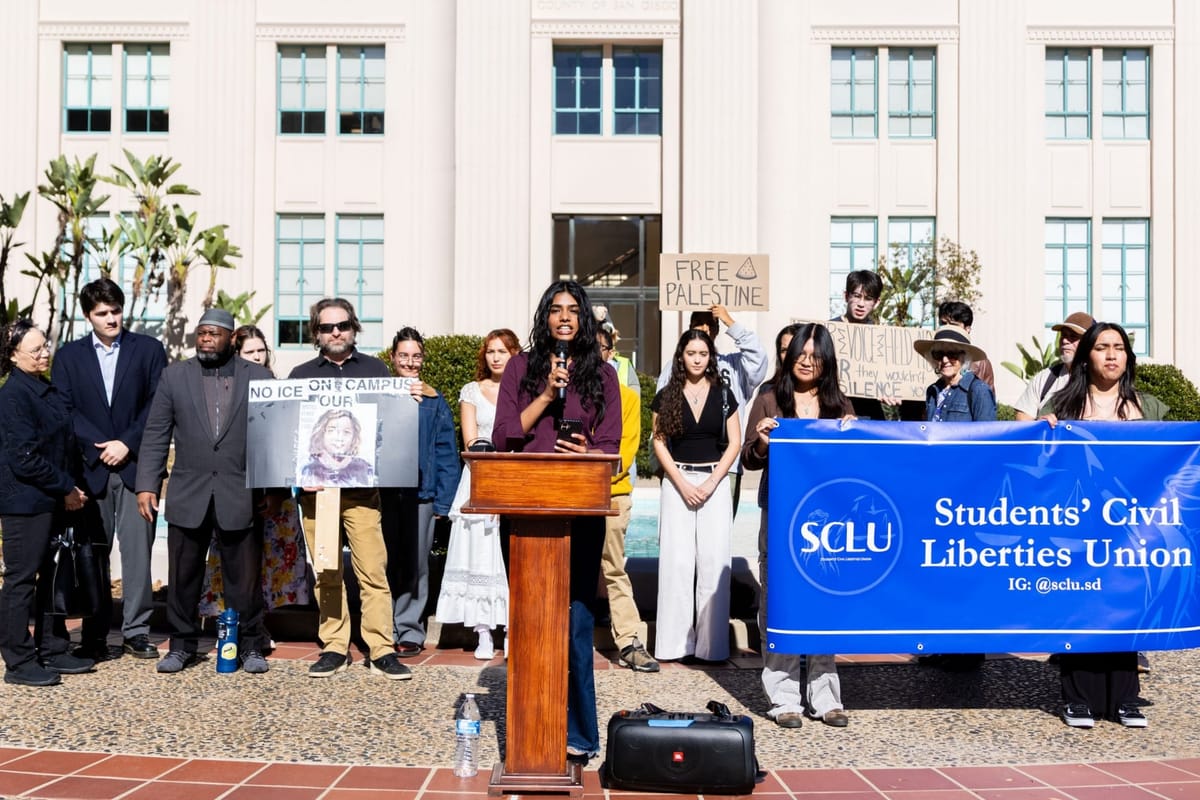
Youth activists came together outside the County Administration Building voicing their desire for a detention-free San Diego.
Written by Brittany Cruz-Fejeran, Edited by Kate Morrissey
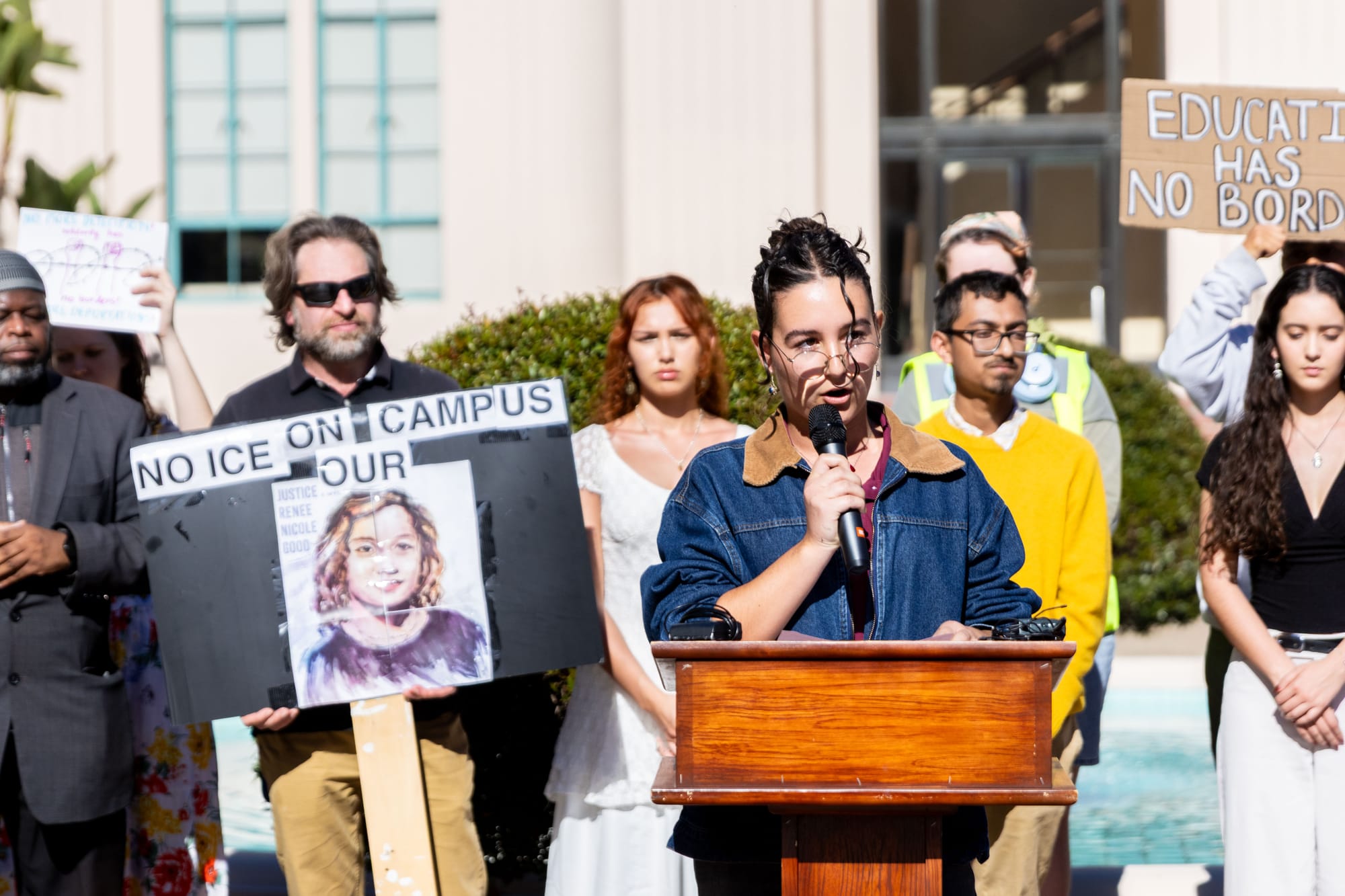
As the County Board of Supervisors voted Tuesday to advance a proposed ordinance that would further restrict cooperation with federal immigration officials, young activists gathered outside to push for the region to take its resistance to federal immigration enforcement further.
University of California San Diego's Student Civil Liberties Union, joined by other youth activist groups, called for an end to federal aggression in immigrant communities and urged local governments to set more restrictions in how they interact with federal officials.
“Our generation constitutes a real political force, and we are fiercely opposed to the cruelty and hypocrisy of immigration enforcement as we are witnessing it today,” said Ariadne Georgiou, a high school senior and founder of Youth Migration Justice Collective. “We are not too young to have something to say.”
The Civil Liberties Enforcement and Accountability Rules, or CLEAR, Ordinance voted on by the board that day would prohibit federal agents from entering non-public areas without a judicial warrant or court order, require clear signage of rights at county facilities and instruct the Sheriff’s Department to report when federal immigration officials ask for assistance.
The San Diego Board of Supervisors voted to advance the ordinance to a second reading later in January. The board's three Democrats voted yes, Republican Supervisor Joel Anderson voted no, and Republican Supervisor Jim Desmond was absent.
The Student Civil Liberties Union, which advocates for students’ rights, civil expression and liberty, joined with a coalition of other student and youth organizations outside the County Administration Building during the vote.
They demanded that local governments implement more policies — including the CLEAR Ordinance — to protect immigrants’ civil rights. They also called for San Diego to shut down automated license plate reader systems and shared their vision of a detention-free San Diego.
The city of San Diego, the San Diego Police Department and the Sheriff’s Department did not respond to requests for comment about these demands in time for publication.
Elianna Caraballo, a member of the UC San Diego student organization said she supports the CLEAR Ordinance's requirements of clear signage in businesses showing where federal law enforcement officials are not allowed to enter. She said that city and county officials need to meaningfully enforce these policies for them to be effective.
“Even if we designate these safe spaces and these safe havens and say, ‘Hey, you can't come here,’ who knows if they're going to abide by that because they haven't already abided by it before," she said.
She gave an ICE officer's killing of Renee Nicole Good and an off-duty officer's killing of Keith Porter as examples.
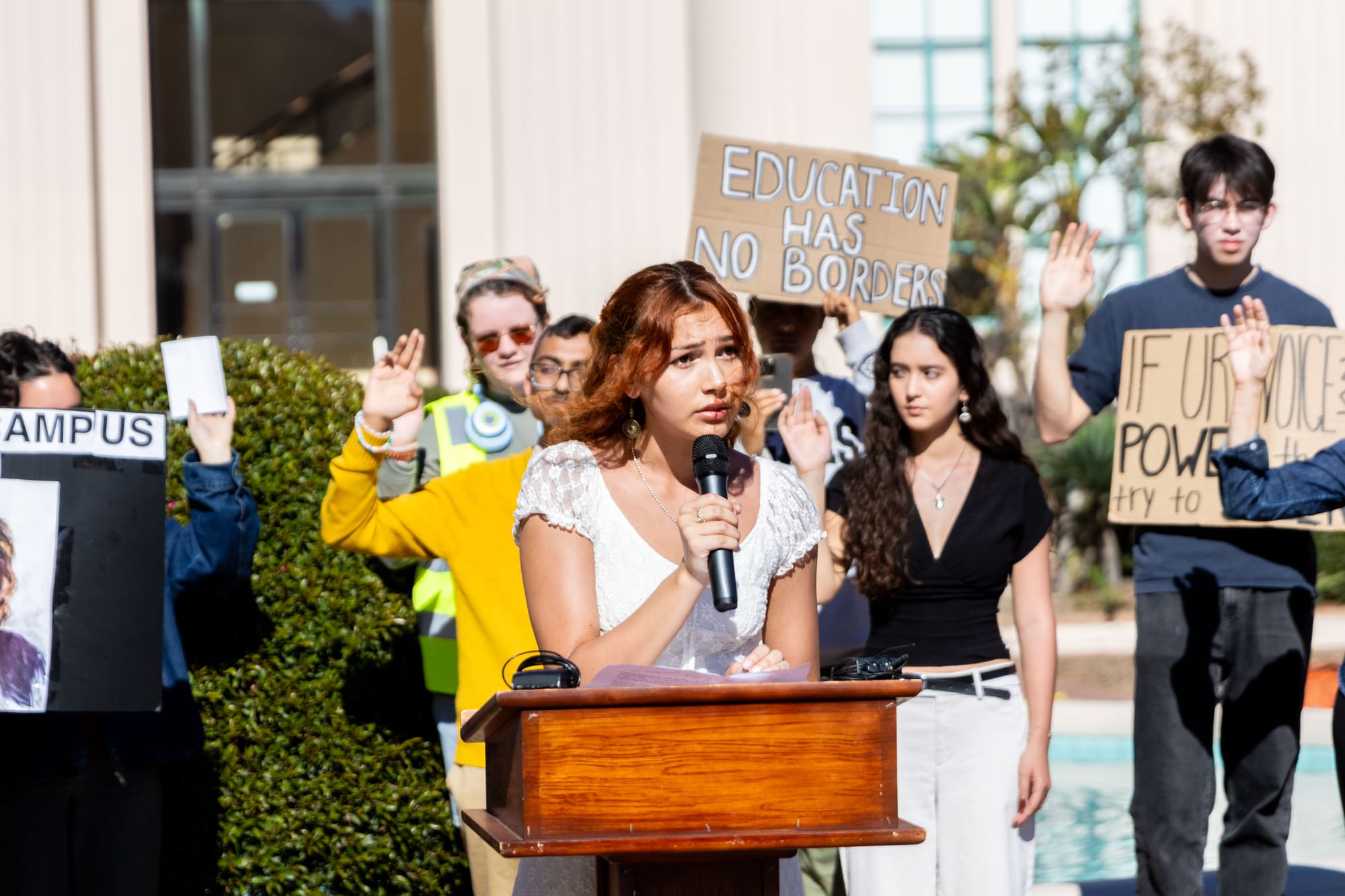
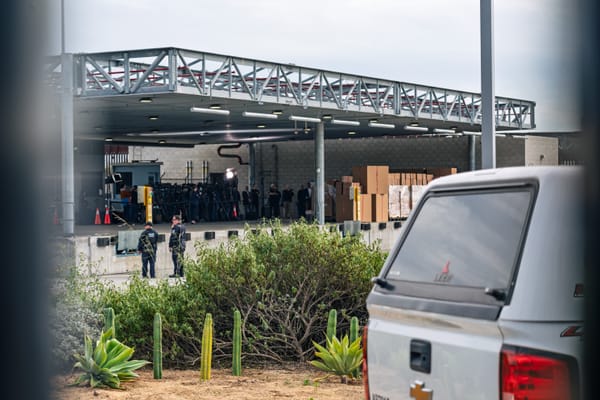
Daniel Soria, executive director with the civil liberties organization, said the group's third demand would get rid of Otay Mesa Detention Center to move toward a detention-free San Diego.
“Altogether, the three levels create a network of sanctuary and safety that makes the kind of federal violence and ICE detention that has defined immigration enforcement in the U.S. difficult to conduct,” he said.
Ryan Gustin, senior director of public affairs at CoreCivic, the private prison company that owns and operates Otay Mesa Detention Center, said it plays a limited, but important role in America’s immigration system.
“Those calling for elimination of facilities like ours haven't explained how they'd replace that capacity or what happens to the people in custody, because the need doesn't disappear just because a building closes,” he said.
Soria said his organization is calling for the end to mass, profit-driven detention as a default infrastructure in the immigration system.
“For us, detention-free San Diego is not ’close a building and hope.’ It’s a replacement strategy that reduces unnecessary detention, expands community-based mechanisms and preserves secure custody only where a judge makes a specific, individualized finding that it is truly necessary,” he said.
“We think that San Diego can meet public-safety needs without private detention: investing in community-based alternatives, and ensuring any secure custody that remains is transparent, humane, and accountable,” he added.
Youth-led social justice organizations including MECHA from San Diego State University, Youth Migration Justice Collective and The Reclamation Project joined the Tuesday gathering. The Justice Project, an organization promoting ranked-choice voting, UCSD’s Faculty Defense Group — a collective of faculty members that promote freedom of expression and academic freedom — and social justice group Activate! San Diego also participated.
High-schooler Georgiou said the ICE apprehensions, detentions and deportations are not what her generation stands for. She said her generation will not continue to tolerate them.
“We did not consent to this inhumanity,” she said.