
Sudden rule change shortens the time immigrants have to appeal their cases to 10 days

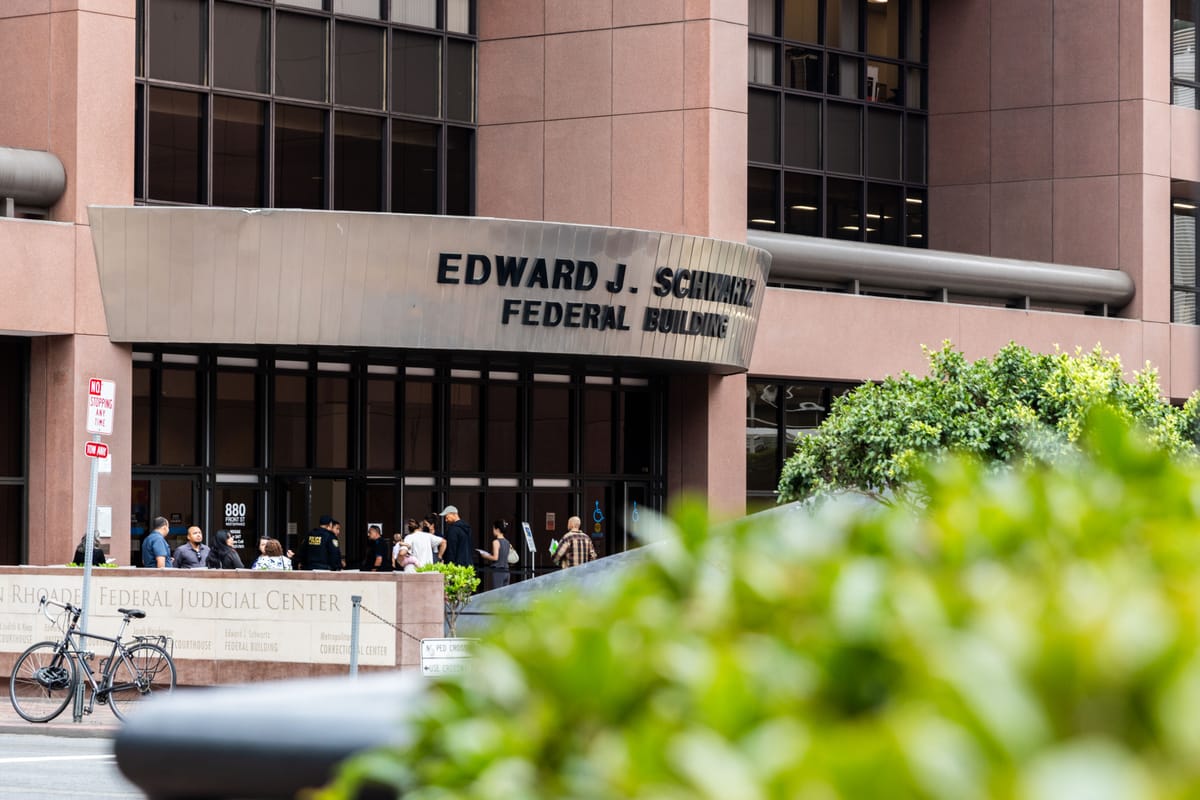
The Executive Office for Immigration Review published a rule on Friday that would also allow the Board of Immigration Appeals to quickly dismiss most cases.
Written by Kate Morrissey, Edited by Maya Srikrishnan and Lauren J. Mapp
The Executive Office of Immigration Review, the agency responsible for immigration court proceedings, published an interim final rule in the Federal Register that dramatically changes the way appeals work.
The rule shortens the amount of time that people have to appeal their immigration cases from 30 days to 10 days and says that the Board of Immigration Appeals will summarily dismiss cases, or quickly uphold the judge's ruling without considering the case's arguments, unless a majority of the board votes to decide one on its merits. Even though the agency just introduced the rule, it went into effect Friday while the government gathers public comment on it. Normally, the government gathers comments before implementing a rule, but publishing an interim final rule skips that waiting period.
“In no other court of law would this be acceptable,” said Kevin Gregg, an immigration attorney with Kurzban Kurzban Tetzeli & Pratt who hosts a podcast called Immigration Review, when asked about the rule's changes.
The Executive Office for Immigration Review directed Daylight San Diego to its reasoning in the rule itself when asked for comment.
In the interim final rule, the agency argues that it needs to make changes because of a growing backlog of cases. It says that from fiscal 2015 to fiscal 2025, the number of pending cases before the Board of Immigration Appeals grew from about 37,300 to roughly 202,900.
Members of the board, like immigration judges, are not part of the judicial branch of government but rather are employees of the Department of Justice in the Executive Office for Immigration Review. They generally decide cases based on paper filings rather than arguments in hearings.
The agency acknowledges that last year, it cut the number of board members from 28 to 15, but it argues that more board members wouldn't help reduce the backlog.
“The Board is at a point where, even were it to have additional resources and better management, without significant reforms, it would not be able to keep up with incoming filings while tackling the backlog in any meaningful way,” the rule says.
Maria Chavez, an immigration attorney with the Partnership for the Advancement of New Americans, said the issue goes back to the Trump administration's changes to the system. She said the number of pending cases has grown in large part due to pressure on immigration judges to deny immigrants' requests to stay.
“It's essentially just eviscerating the BIA appellate process, and all of this is of the government's own doing,” Chavez said.
Before Friday, when an immigration judge issued a decision, each side had 30 days to decide whether to appeal the case. If the immigrant chose to appeal, the person would often have to find a new attorney for that process either because the person is dissatisfied with the first attorney or because the first attorney doesn't do appeals, according to Gregg.
The attorney would file a notice of appeal outlining the general reasons for appeal within the 30-day window to the Board of Immigration Appeals. Then the board would have the audio files from the immigration judge's court proceedings transcribed and set a briefing schedule for each side to file more arguments.
The attorney would use the transcription to write a more specific explanation for the board about what the lawyer believed had gone wrong in the initial decision and hearing. Then, the opposing side, in this case the government, would have time to file a response.
Now, under the new rule, the person will have to find an attorney and get the notice of appeal submitted within 10 days. And, the notice of appeal must include the full explanation of the appeal so that the board can vote whether to hear the case or summarily dismiss it — even though the attorney does not yet have a transcript to work from.
“It's due process in name only in that there is a process,” Gregg said. “It's not due, and it's not fair. ”
Chavez said she often receives cases after an immigration judge has made a decision, and it takes time to piece together what happened during a case.

The rule also says that both sides will have to file their arguments at the same time, meaning that they won't be able to respond to the arguments the other side is making.
“If the Department of Homeland Security appeals, the idea that I don't review their brief first and respond is ridiculous. That's not how it works in any other court of law,” Gregg said. “This is all a pretext for taking away rights.”
Unless a majority of the board votes to take up the case because it has “novel issues” that the board wants to address, the board will summarily dismiss the case within 15 days.
“Who knows what is going to be considered or deemed a 'novel issue' or something new that BIA wants to listen to or wants to try to decide,” Chavez said. “The stuff that they're coming out with right now is not new or novel. It's harmful. Is that what their standard is going to be?”
If the Board of Immigration Appeals sides with the immigration judge, an immigrant can appeal again to a circuit court to hear the case. But that, again, often involves finding a new attorney who is comfortable arguing in federal court as opposed to immigration court, Gregg said.
In the interim final rule, the Executive Office for Immigration Review argues that immigrants will be able to get to this step more quickly if the board summarily dismisses most cases.
But, Gregg pointed out, if an immigration judge has ordered someone deported, that order becomes final once the board makes its decision. That means Immigration and Customs Enforcement can deport the person before or during their appeal to the circuit court unless an attorney can get an order from the circuit that says the person must stay in the United States in the meantime.
He said he thinks that quicker ability to deport people is the point.
Last year, in the One Big Beautiful Bill Act, Congress raised the cost of appealing an immigration case to the Board of Immigration Appeals to over $1,000.
“They're banking on the fact that only people with money will be able to assert their rights all the way up to the circuit court and they're right,” Gregg said. “Many people will just give up.”
Both Chavez and Gregg expect to see lawsuits over the new rule.
In the meantime, Chavez said, people with pending cases should be prepared to move quickly, with money on hand for the fees, if they need to appeal their cases, and they should get a full copy of their files from their initial attorneys in case they need to switch for the appeals process.