A weekend ball at Liberty Station showcases Black Pride, joy and self-expression

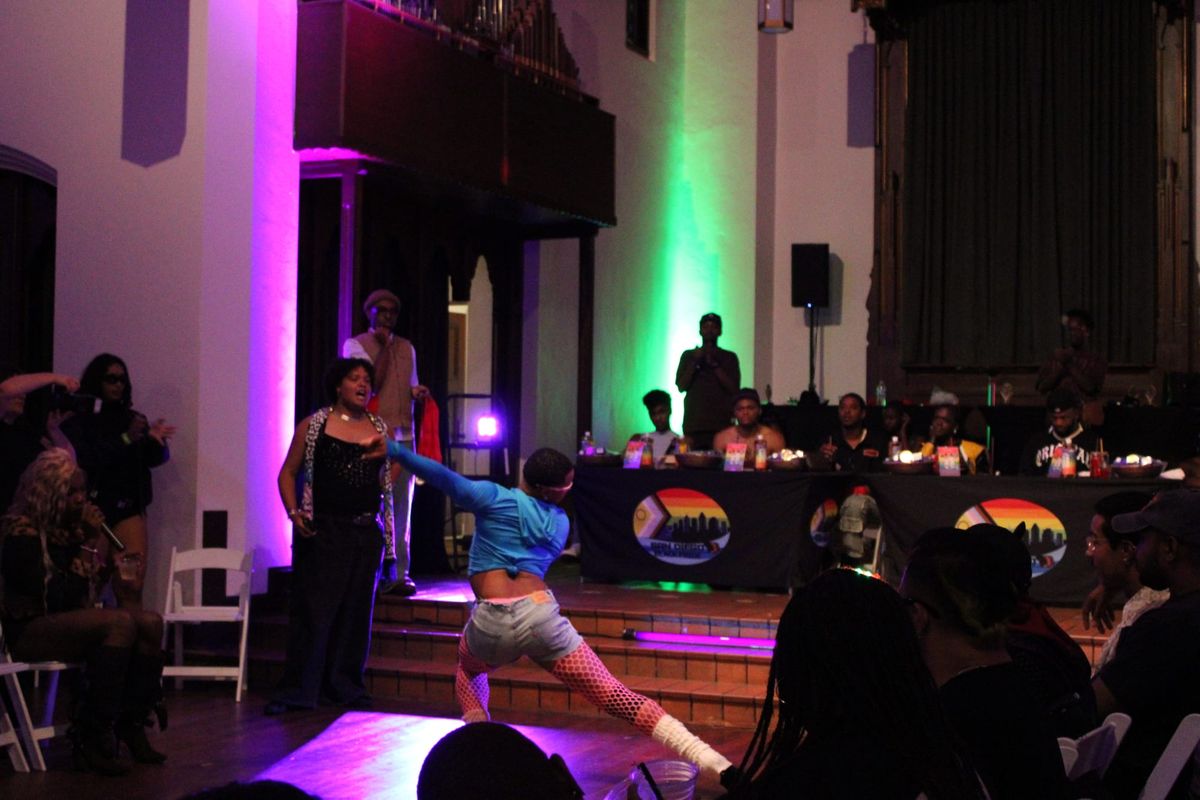
Liberty Station’s chapel turned into a runway on Friday to celebrate San Diego Black Pride Weekend.
Written by Jenna Ramiscal, Edited by Kate Morrissey
Performers hit sharp vogue poses, audience members leapt out of their chairs in excitement and judges held up 10s with their hands to give maximum scores on Friday evening at San Diego Black Pride’s ball inside Liberty Station’s chapel.
From Friday to Sunday, the nonprofit hosted a series of events as part of the organization's sixth annual celebration of Black queer culture. The ball kicked off the weekend festivities.
“We wanted to really create a space where Black queer and trans folks in all of our community in San Diego can be free of the confines of the world right now,” said Jordan Daniels, president of San Diego Black Pride. “Social, political and economic issues are really impacting queer and trans folks everywhere, but especially Black queer trans folks who have less access to rights in different states across the country and have less access to opportunities to thrive.”

Members of the board and volunteers spent six months planning events based on the theme unbound and unlimited, Daniels said. The organization chose the theme to represent a chance for the community to feel empowered, free and joyful. Daniels said all proceeds earned from the weekend will go back to supporting the Black LGBTQ+ community. San Diego Black Pride packed the night with four hours of DJ sets, rapid-fire chants from MCs and runway categories for experienced and novice walkers to participate in.
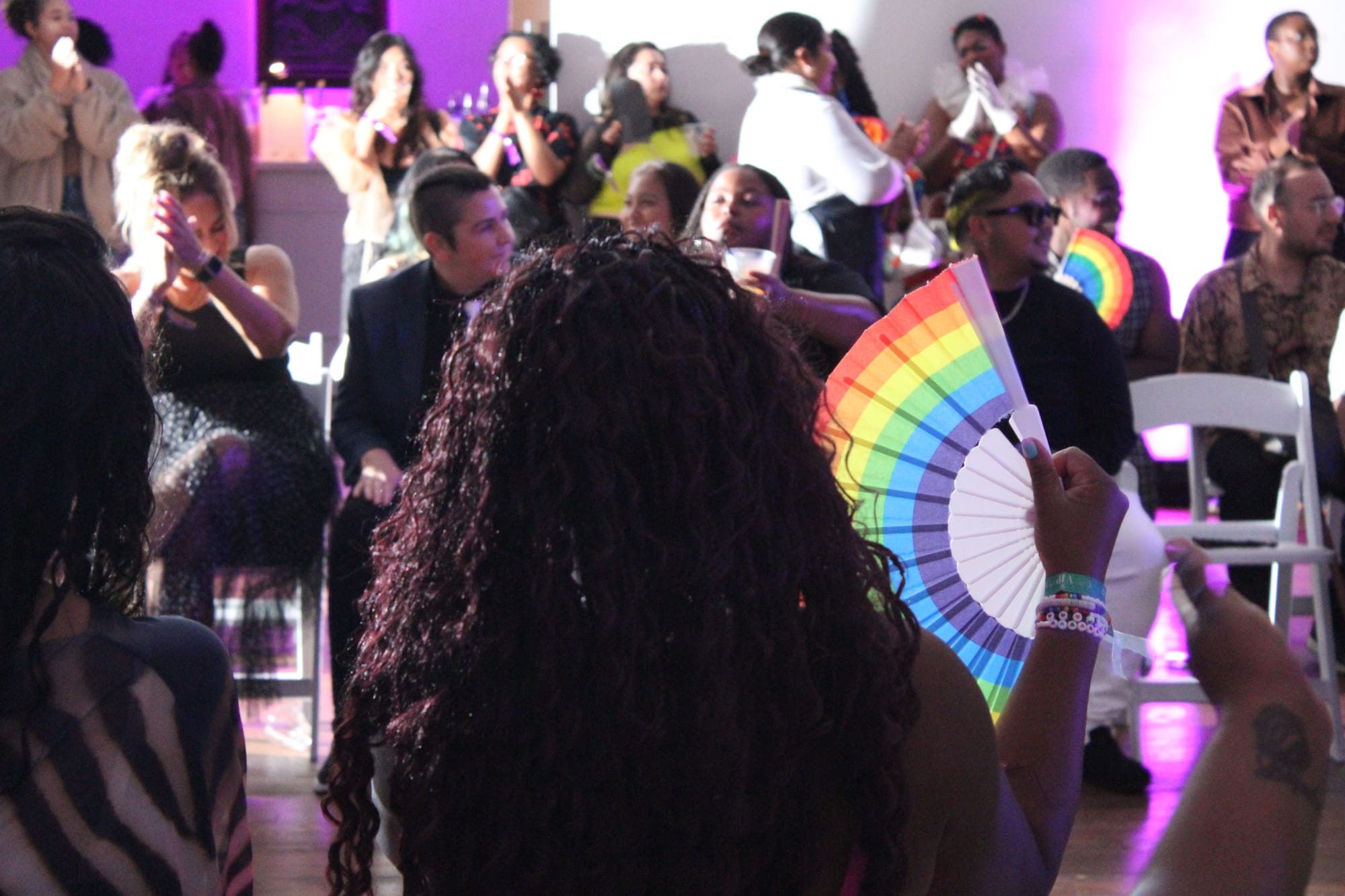
Attendees, after stepping through the entrance’s glitter curtain, walked onto the runway that split the church in half for the night. Rainbow lights projected onto a wall behind where an altar would normally stand. The DJ worked from the elevated pulpit, overlooking the roughly 100 spectators who sat on chairs lined up along the runway or stood at the back of the church.
Daniels’ said the organization intentionally chose the chapel location for the ball.
“Church has often been a space of Black celebration, but of queer harm,” Daniels said. “So we need to reclaim that ourselves and really have a divine experience for our community, which will be so amazing, fantastic.”
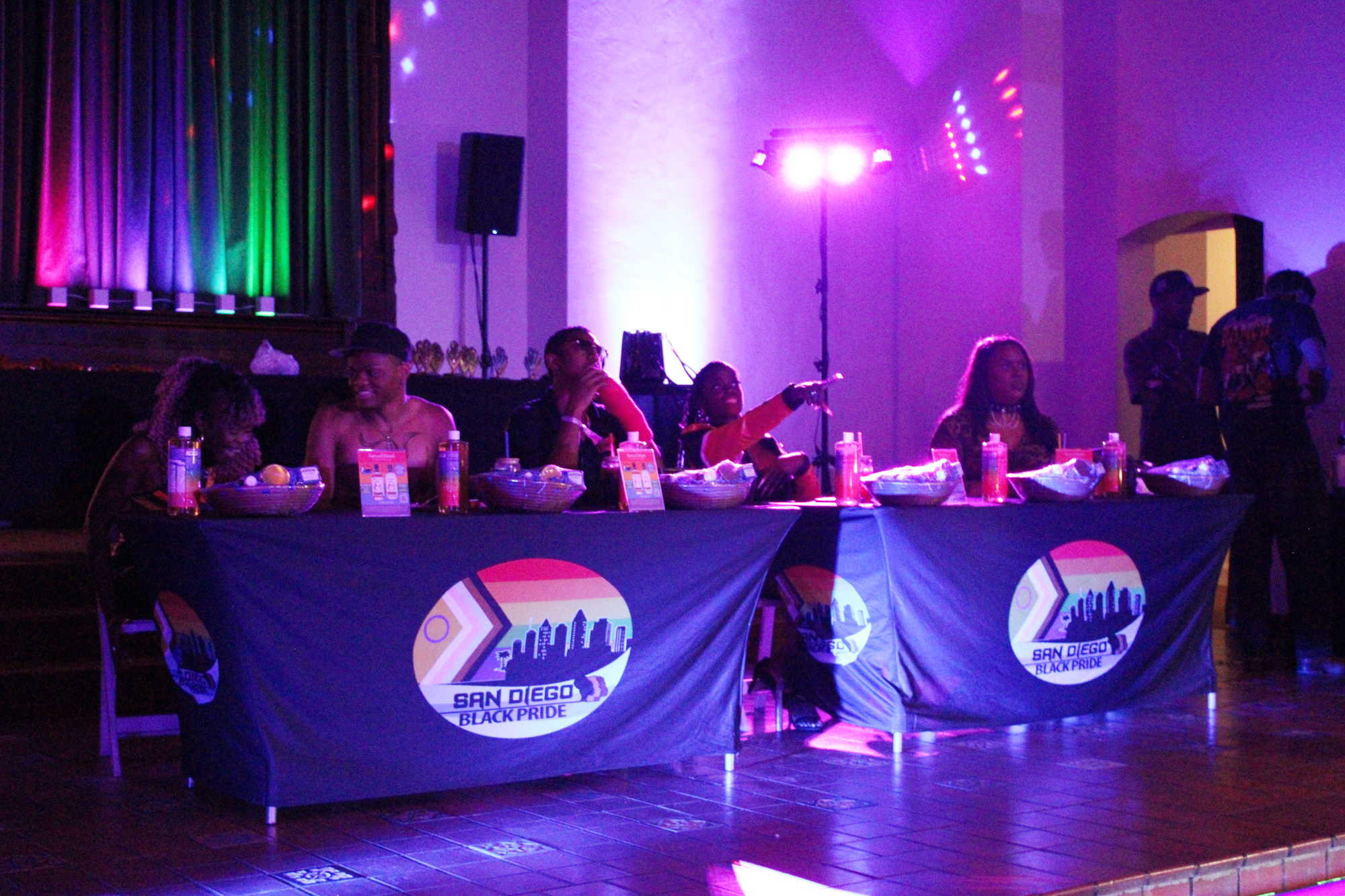
Black and Brown queer people have historically attended and performed at balls to express and celebrate themselves, Daniels said. MCs run the ball, calling different categories for people to walk, and a panel of judges select winners for each one. The July 10 ball included battles in many categories including open to all performance, realness, face, body, sex, shake that ass and commentary.
The ballroom scene reached mainstream recognition through the release of shows like “Pose” and “Legendary” and films like “Paris is Burning.” However, its roots run deeper than what’s on television, Daniels said.
Daniels said that balls emerged in the 1920s along the East Coast. Daniels said they were excited to host the celebration on the other side of the country.
San Diego’s ballroom scene is smaller than those in New York or Los Angeles. Performers at San Diego Black Pride’s ball classified it as kiki, a subcategory of ballroom that is designed to be community-oriented, less competitive and lower stakes compared to mainstream balls.
The floors shook throughout the night from audience members drumming their feet to the beat of house and club music, while cheers and snaps of unfurling fans echoed in the air.
The MC called walkers for performance, one of the most popular categories, during the last hour of the event. Friidae, who has been part of the San Diego kiki ballroom scene since it emerged almost 10 years ago, strutted on the runway in a rainbow faux fur jacket and leg warmers, her eyeshadow colored to match. She had already won a prize from the runway category earlier in the evening.
She catwalked from the back of the church to the front, straight to the judges’ table.
“Tens across the board,” the MC called out.
Friidae said that San Diego Black Pride is her community, family and safe space. Growing up in San Diego, she didn’t have many Black queer friends, she said.
“This means a lot to me because I never saw folks who were like me at this capacity,” Friidae said. “It's nice to have everybody around and fulfill that childhood dream of ‘I want a bunch of Black and queer friends who understand me, who understand my creative side, who understand my struggles.’”
After her catwalk, she went in to battle another performer. Friidae demonstrated precise floor work and death drops near the front of the church that earned cheers from the entire room so loud they overpowered the DJ’s blasting vogue music.
Shelli Elliot, a first-time volunteer at Black Pride weekend, said that she attended the first ball the organization held and remembers the way it united the community and ignited the love for the ballroom scene in San Diego.
“It's a really great place to be out, be Black, be proud, and enjoy the things that the African American culture has brought to the gay community, like the balls, these parties and entertainment,” Elliot said.
Naim Wright, who’s danced vogue for over four years, said that it was his first time attending San Diego Black Pride. He typically performs at balls in Los Angeles.
Competing in performance after Friidae, Wright kept the audience clapping as he performed intricate wrist and arms movements, fluid dips and spins. He wore a blue long-sleeved crop top, shorts and matching pink sunglasses and fishnets.
“Even given how big ballroom is and how big it's gotten, people still don't know about it and the importance of being gay, queer and knowing queer history,” Wright said. “It's really important to know that and then also be a part of it.”
Wright said oftentimes people are afraid to attend balls because they have the assumption that they have to perform if they go. He said that even just spectating and watching performances is an eye opening experience.
The battles continued until midnight. Spectators' heads followed Wright as he moved from one end of the runway to another. People alongside the runway swayed to the rhythm of the music, clapped and recorded his acrobatic vogue movements on their phones.
“What makes it worth it for me is every event, someone will inevitably come up to us and say, ‘Thank you, I needed this. Thank you, I feel seen. I feel heard. I feel celebrated,’” Daniels said.