Encanto teach-in about Attica prison uprising commemorates Black August

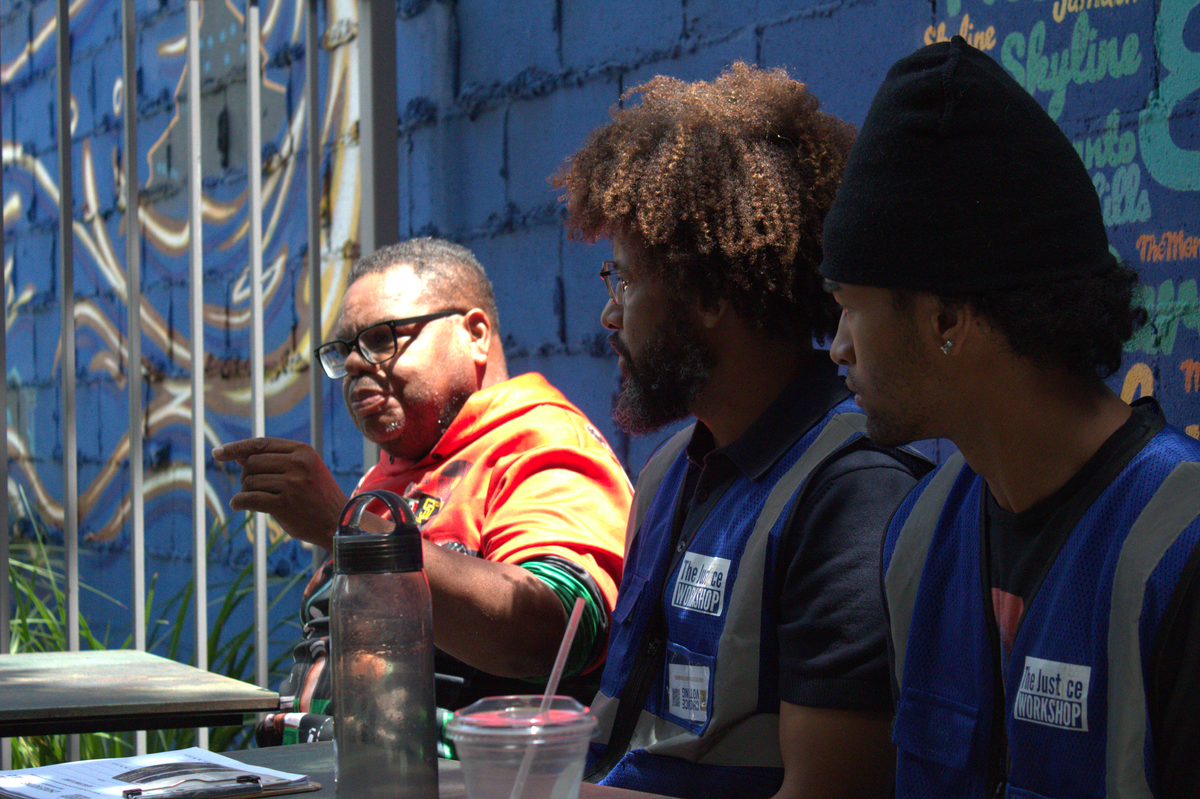
At the teach-in, hosted by the Party for Socialism and Liberation at The Mental Bar, the presenters said a 1970s rebellion at Attica Correctional Facility in New York inspired mass prison organizing.
Written by Rami Alarian, Edited by Kate Morrissey
Fifty-five years after the Attica prison uprising led to changes in prison conditions nationwide, San Diego community members gathered at a recent teach-in to explore its legacy in civil rights organizing.
On Aug. 15, activists with the Party for Socialism and Liberation gathered at The Mental Bar coffee shop to cover the historical background of the uprising. Despite prisons later scaling back many of the rights gained after national prison protests, presenters at the teach-in said the uprising remains a blueprint for prisoner rights and organizing today.
“It’s just crazy for me to realize these awful conditions that people were facing in the ‘70s and before that, paralleled — or are almost exactly the same as — what people are facing today,” said Blue Swepston, the member of the Party of Socialism and Liberation who hosted the teach-in. “It’s disheartening, but it’s also infuriating and really just puts a level of urgency in my head.”

Swepston said he felt motivated to host the event, in part, because major Black and Brown historical events get overlooked in educational settings.
“People are suffering in ways that I just didn’t know about,” Swepston said. “No one told me, and I wasn’t taught.”
Swepston said the fact that schools rarely cover events like the Attica prison uprising scares him. He said a lack of education surrounding historical Black and Brown liberation events in the education system is by design.
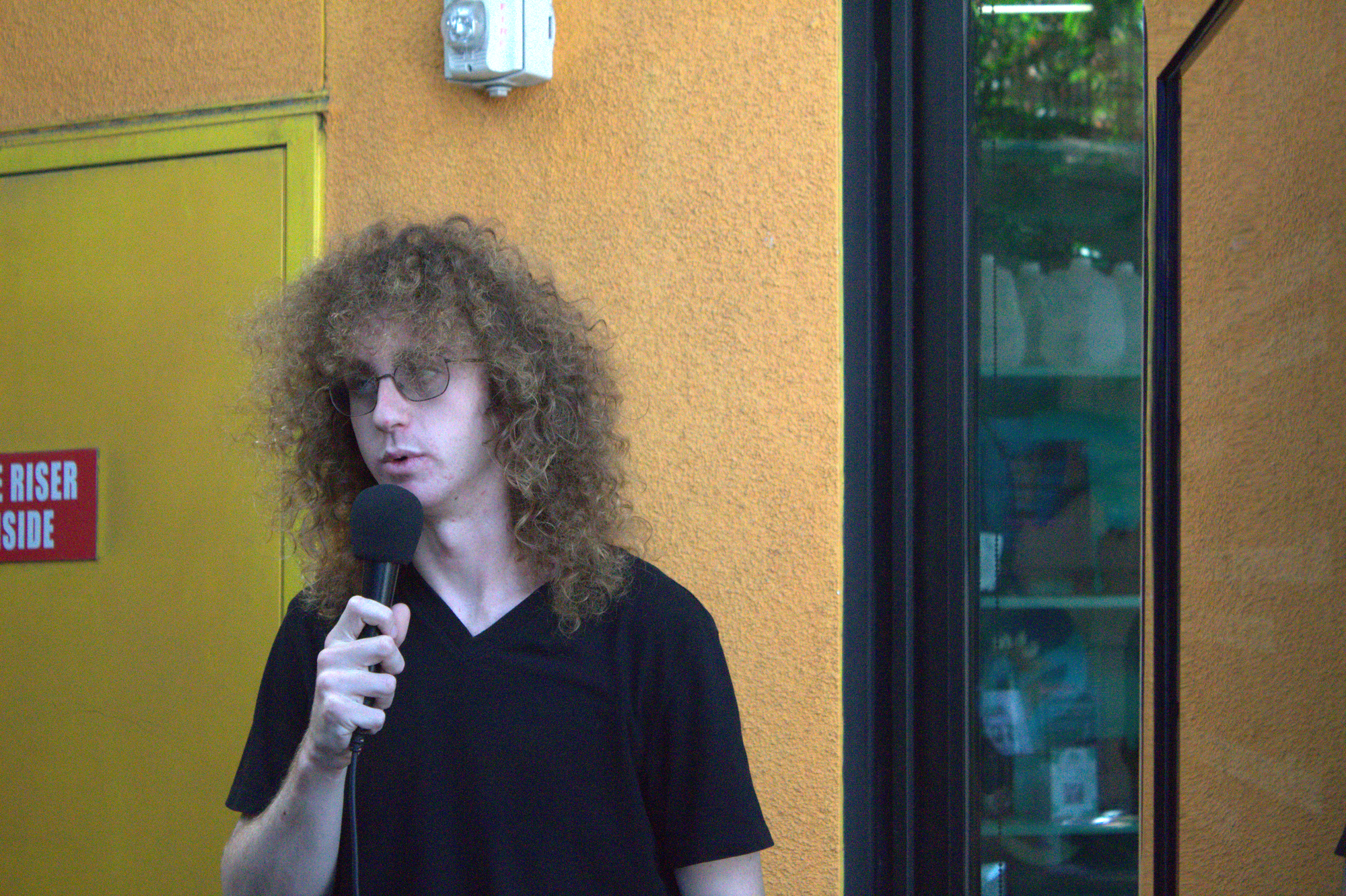
Tyler Peacock, a member of Party for Socialism and Liberation's media team, said educating people on the Attica prison uprising exposes the long history of injustice in the prison industrial complex.
He said showing people injustices of the past can not only give the public more direction on what to do to make things better but also lets people know that they are part of a larger fight.
Black communities pushed back on systemic racism, poverty and police brutality in the ‘60s and ‘70s through increased protests, which led to mass arrests, according to Swepston.
Swepston said that when Martin Luther King Jr. was murdered in 1968, police brutalized people protesting on the streets in more than 120 cities across the United States with National Guard units and state troopers involved.
The revolutionary movement reached prisoners across the country through papers and books. Based on what they read, they organized themselves into their own political parties like the Black Guerrilla Family, a Marxist-Leninist group founded by activist George Jackson, according to Swepston.
Swepston said the conditions of Attica Correctional Facility in New York were unlivable. The prison allowed prisoners only one roll of toilet paper a month and one shower a week. Prisoners experienced low quality food, little to no medical treatment and severe overcrowding.
Swepston said prisoners drafted a manifesto in 1971 and submitted it to both of the people in charge of the prison and Gov. Nelson Rockefeller.
The prison did not meet the prisoners’ demands, and a month later, prison guards fatally shot activist Jackson at San Quentin State Prison in California, which sparked more protests nationally.
Swepston said inmates took control of half of Attica Correctional Facility, holding 39 corrections officers hostage to ensure the governor and prison officials met their demands.
Prisoners said they would peacefully resolve the conflict if Rockefeller held open negotiations with them, according to Swepston. Instead, the very next day, the governor sent troops to retake the prison which resulted in the troops killing dozens of inmates and hostages and wounding more than 100.
In the aftermath of the uprising, correction officers brutally punished the prisoners for the rebellion. They stripped prisoners naked, beat them and made them crawl through trenches of broken glass, according to Swepston.
Prisoners all over the United States responded to the uprising by protesting and striking in solidarity.
“The uprising brought public attention to the brutal conditions of racism inside the U.S.,” Swepston said.

In the late 1970s, prisons began allowing access to law libraries, improving food quality and making religious accommodations.
But in the 1980s, prisons rolled back many of the inmates’ rights in favor of more tough-on-crime policies and tactics which transitioned into the modern era of mass incarceration, according to Swepston.
During a group discussion following his presentation, Swepston asked attendees what the Attica prison uprising can teach people and what state inflicted systemic violence looks like.
“The state inflicts death upon anybody and everybody who asks for decency,” Anthony Avalos responded.
Avalos said he could see indecency and violence reflected in the living conditions for prisoners.
“Racist ideas help us digest being able to take advantage of human beings,” Avalos said. “We can’t take advantage of other human beings without feeling like we're above them in some way.”
Avalos said he was recognizing and honoring Black August for the first time this year and that learning about the Attica prison uprising seemed crucial to understanding the significance of the movement.
Jimmy Lovett Jr. said that uprisings like the one at Attica Corrections Facility require people to be brave through fear. He said revolutionaries have to be willing to put their lives on the line.
“You have to be sold out for the revolution,” Lovett said. “But you have to have some people behind you too.”