How Ric Scales shook up San Diego’s rap scene

Time in Hawaii shaped the battle champ emcee whose freestyle prowess has taken him from Battle Bot to the Old Globe.
Written by Roberto Camacho, Edited by Kate Morrissey
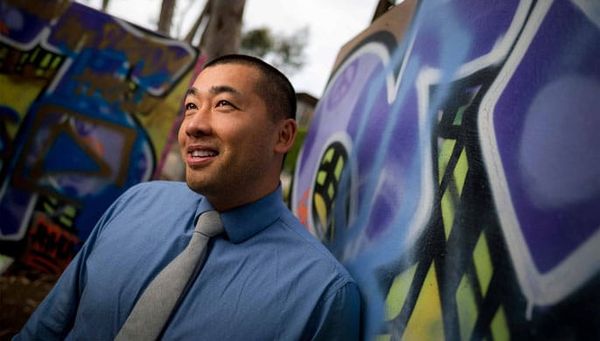
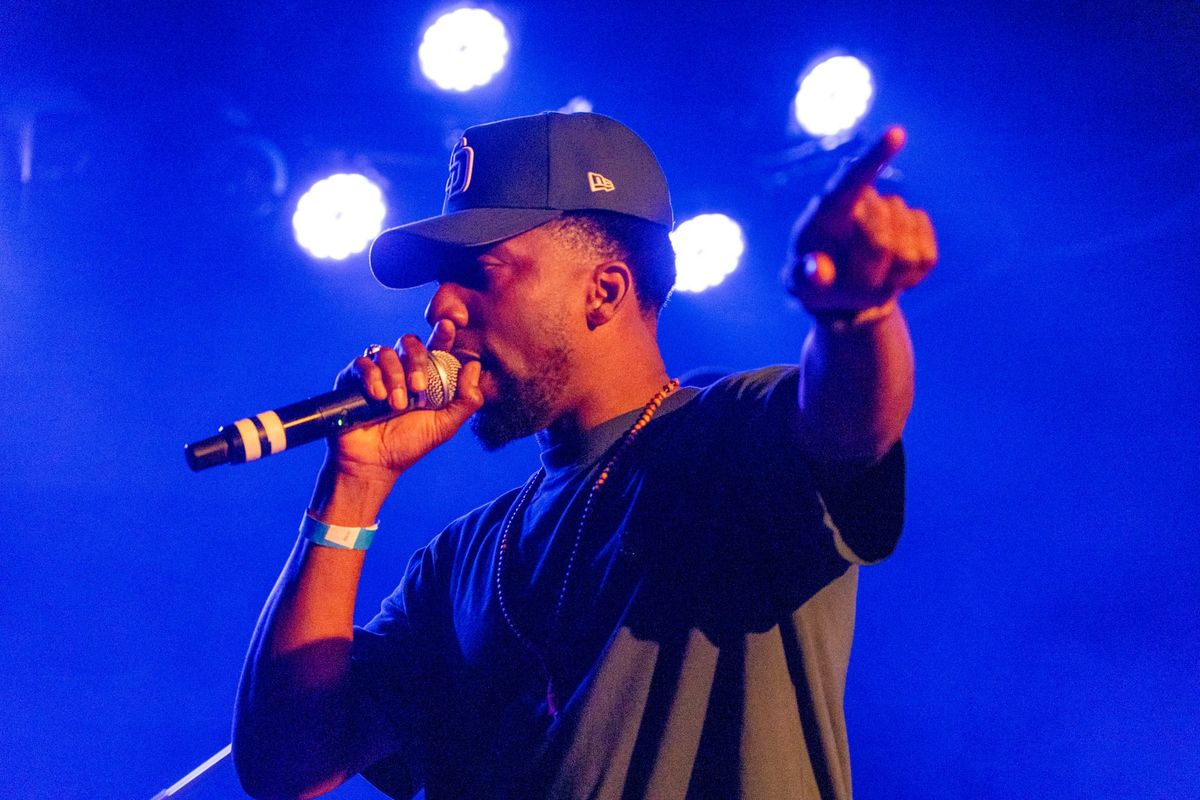
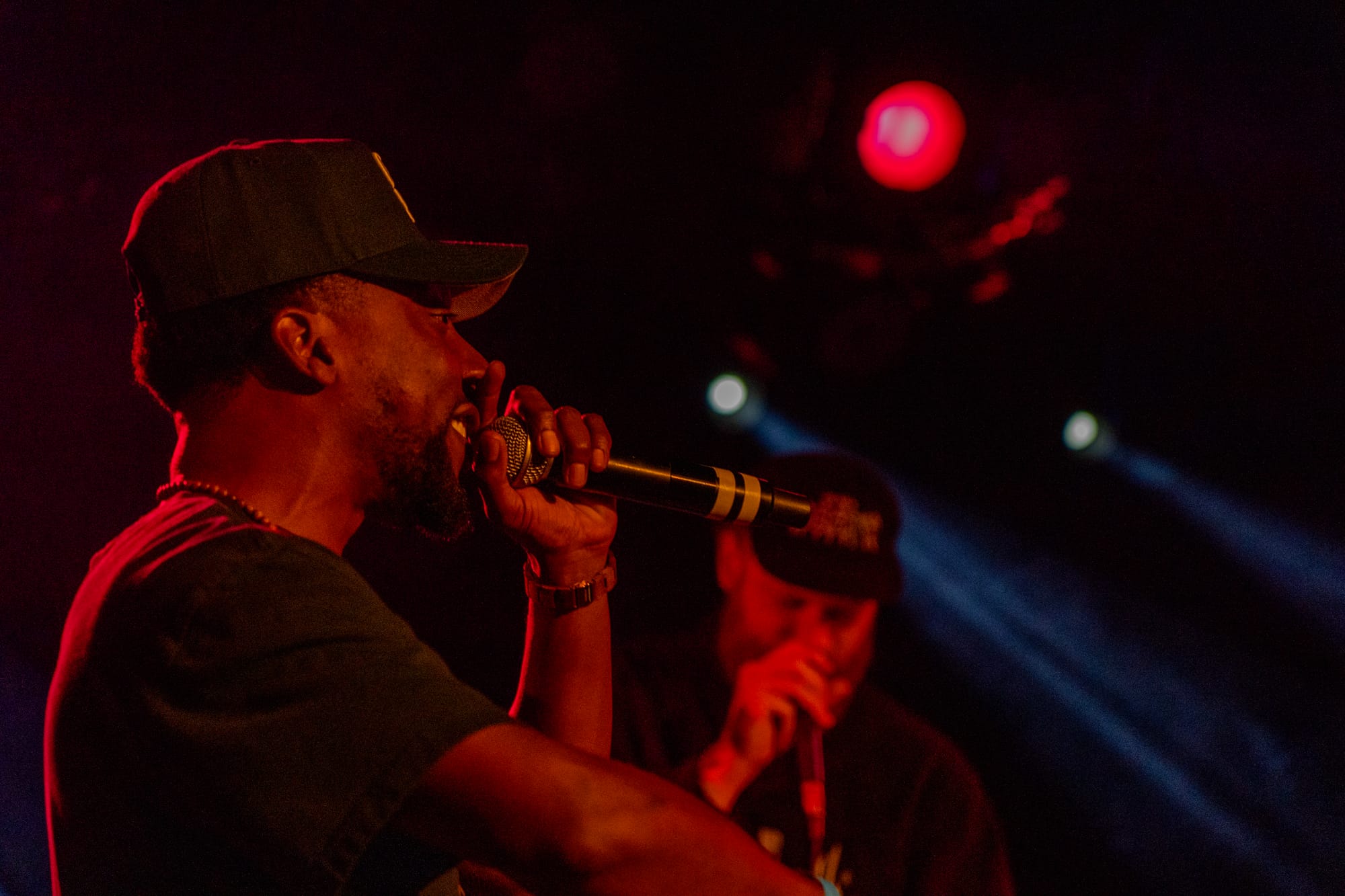
On a warm August evening, dozens of people pack into a mid-sized club in Honolulu. Taking the stage is San Diego Hip Hop artist Ric Scales, opening up for underground heavyweights Blu & Exile.
Rocking jeans and a backwards black San Diego cap, Scales performs one of his most popular songs, “Like That,” in which he flows over a laid-back track, lamenting imposter emcees, faux spiritualists, and the fake veneer of superficiality often present in modern-day music and social media.
“Why these imposters never got imposter syndrome? Is it naivety or is it over-optimism?” Scales raps. “He was a live dude until it caught up with him, reality told him what his subconscious didn’t.”

Like a lyrical boxer, Scales keeps the audience engaged as he bobs and weaves through the track before switching gears to a more up-tempo beat.
Following his set, Scales takes time to enjoy the ambiance. It’s been 23 years since he last stepped foot on the island, and it's a full-circle moment for him, returning to the place where he first began his journey emceeing as a teenager — long before making a name for himself in the often underappreciated underground Hip Hop scene of San Diego as one of the region’s most adept battle rappers and half of the duo 18Scales.
Now, after more than two decades in the local scene, the 41-year-old emcee said he is pushing his musical evolution, reveling in San Diego's Hip Hop community and traversing the challenges of an independent musician.
Humble Beginnings
Scales was born Cedric Robertson in Columbia, Missouri. His family moved around for much of his childhood due to his father’s military service.
Growing up in a musical household, Scales said that from a young age, he was immersed in a sonic pressure cooker of various sounds and musical genres.
“My dad always did some type of music, whether DJing or playing in a band,” Scales said. “My mother and my whole family were very church-oriented, and with that came gospel music and being in the choir.”
Scales says his parents’ music collection was instrumental in cementing his lifelong affinity for music. He named artists such as Stevie Wonder, Marvin Gaye, the Isley Brothers, Tony! Toni! Toné!, Jodeci, and Mary J. Blige as staples in the household.
“My parents had a ton of vinyl. In my household, we listened to all the quintessential stuff that a Black parent would be bumping in the 80s and 90s,” Scales recalled. “My first conscious moment was listening to a Stevie Wonder record with my Dad. I listened to so much Stevie Wonder growing up. He’s always been one of my biggest influences, not only musically, but also in philosophy of how to behave and treat people.”
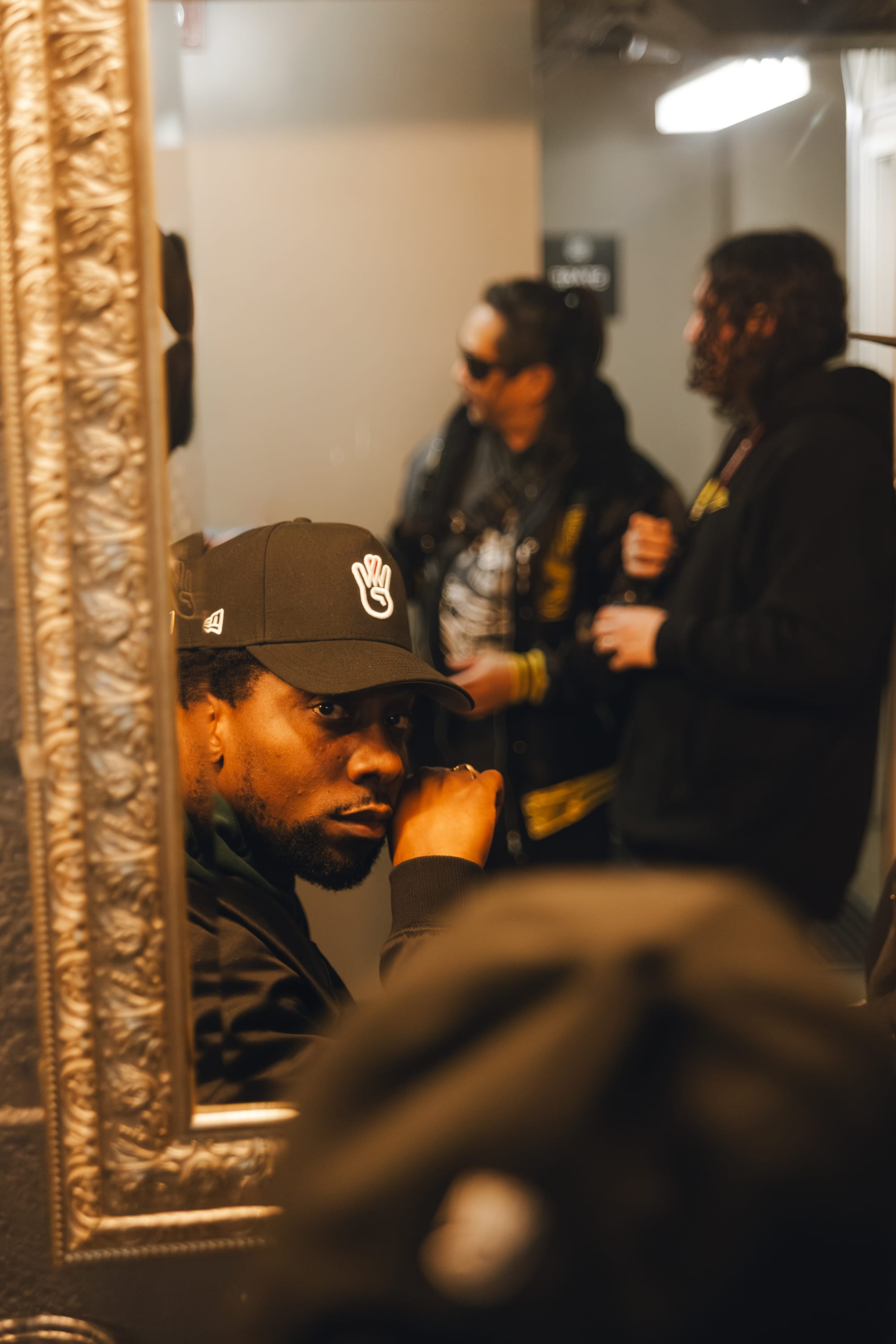
By the time he was a teenager, Scales’ parents had separated. He and his sister moved to New Orleans with their mother, where she had taken a job at Dillard University, a historically Black university. It was there that he first began writing his own raps, emulating artists such as Juvenile, BG, Slum Village, A Tribe Called Quest, and Talib Kweli.
When he was halfway through high school, Scales’ mother took another job back in North Carolina and sent him to Honolulu to live with his father, who was stationed on the island of Oahu.
Honolulu and Hip Hop
After he arrived on the island, Scales said he seriously got into freestyling and battle rapping.
“When I got there, I just sat in the room and spent the whole summer listening to Dilla beats and freestyling,” Scales said. “I locked myself up, and basically all I did was play basketball and freestyle all summer. And when I got to school, there was this little area called Black Street where all of the military kids hung out, where we always ciphered. It would just be like 30 or 40 people in a big circle, and there would be seven or eight people just battling each other.”
Scales said that the unique composition of Oahu’s demographics made Honolulu the perfect place for young Hip Hop heads and aspiring artists.
“Honolulu looks kind of like San Diego,” Scales said. “It's the biggest city in Hawaii, but it's not a super big island, and there are all of the military installations. There are six bases out there on Oahu, and the military pulls all of these people from all over the place into this one area.”
Not long after arriving, Scales began hanging out with a local breaking crew called the Waikiki Bboys, and before long had gained a reputation as a ferocious battle emcee.
Scales recalled that competition between local battle rappers became so intense that a rival even confronted him and his father outside of a movie theater at the Pearl City Mall, where Scales ended up battling his opponent on the spot as his father beatboxed.
After graduating from high school, Scales moved to North Carolina to live with his mother. He briefly attended St. Augustine's University for one semester before dropping out.
“I didn't like St. Augustine,” Scales said. “I was still trying to figure out what I was going to do with my life, and all I really wanted to do was rap.”
It was around that time that Scales began recording his own music on SoundClick, one of the internet’s earliest online music communities and marketplaces where independent artists and producers would regularly upload, share, buy, and sell their music in the early 2000s.
Scales was also communicating with various independent rappers across the country on Yahoo! Chat, a popular, free internet messaging and chat room service where users could enter organized, topic-based public chat rooms to meet and talk with strangers.
An Escondido rapper named Bless Brando, whom Scales had connected with online, convinced him to move out to San Diego in 2004.
It was after moving to San Diego that Scales adopted his stage name. He started off as Richter Scales — a play on his own name, Cedric, and the Richter scale used to measure the strength of earthquakes — a name given to him by Bless Brando. He eventually shortened it to simply Ric Scales.
Finding Community in America’s Finest City
Once settled in San Diego, Scales didn't take long to begin collaborating with local Hip Hop talent.
In 2015, he teamed up with emcee and producer Chuck M00n to form the duo 18Scales.
Over the years, Scales recorded an extensive catalog of music as both a solo artist and as 18Scales, releasing a slew of albums, EPs, and features that set his music apart from that of his peers. He garnered a dedicated following, working his way through the ranks to become one of the scene’s most prominent and consistent figures. He performed at the Old Globe Theater in Balboa Park as part of Word Up, the Globe's weekly performance and open mic night session, and even performed on KPBS’ Midday Edition.
Pulling from his early years in battle rap and freestyling in Hawaii, Scales became the multiple-time champion of No Sucker DJs Battlebot, a monthly event that was held at The Casbah from 2015 to 2020 that featured beat battles, DJ scratch-offs, a dance competition, and a battle rap tournament.
After calling San Diego home for over 20 years, Scales says he has no plans of slowing down. Currently, he is working on the upcoming debut album for the group Soul Disciples, a four-man crew that consists of Scales, emcees Ray Jones and King Cobretti, and producer Seiji Komo.
Beyond his music, Scales also co-hosts a monthly showcase for local Hip Hop and R&B acts called Slappin’ Hands alongside longtime friend DJ Root.
Although he’s spent much of the first half of his life in a near-constant state of flux, Scales says that he’s forever grateful for the people and the city where he's found himself firmly planted that keep him motivated to continue pursuing his dream.
“Taking that leap to move out here was one of the best things I ever did,” Scales said. “San Diego became home for me. I've been here longer than I've been anywhere else. The amount of love that I get — and encouragement to follow my dreams and be able to accomplish everything I have thus far — that's all San Diego.”