ICE raids home and car of San Diego activist

On an early morning in August, Immigration and Customs Enforcement agents held the person outside in their underwear while agents ransacked their belongings.
Written by Kate Morrissey, Edited by Lauren J. Mapp
A San Diego organizer who advocates for transgender and immigrant rights had woken up around 5 a.m. one morning in mid-August to feed their cats and then gone back to sleep when they said they heard a loud banging on the door.
Immigration and Customs Enforcement agents from the Homeland Security Investigations part of the agency were standing outside. The activist said that when they opened the door, they saw a gun pointed directly at them. The agents said they had a warrant for the activist's arrest.
“The next thing I knew, I was pinned against the wall, and they were trying to cuff me in only my underwear,” the activist recalled.

The activist asked not to be identified due to safety concerns.
ICE did not respond to a request for comment. The U.S. Attorney's Office in San Diego declined to comment.
This isn't the first time that ICE has raided the home of an activist who documents its activities. In May, agents targeted the homes of three Ventura County activists with VC Defensa, a coalition that defends immigrants and refugees. In Minnesota and Texas, the agency targeted groups of activists whom the Justice Department then charged with conspiracy and even terrorism.
Though ICE agents ransacked the home of the San Diego activist and confiscated some of their belongings, the activist said that since the incident, they haven't been able to get legal representation because they haven't been charged with a crime. The raid provides a window into the power that federal law enforcement holds when investigating the people who criticize it.
That morning, when facing down ICE agents at their door, the activist asked to be allowed to put a shirt on, but the agents said that was not possible and took the handcuffed activist outside barefoot and still in their underwear. A neighbor's security camera captured footage of the moment.
“I kept asking to see the warrant and what agency they were with,” the activist said. “They refused and said I would see it eventually.”
The activist's partner heard the noise and said they came carefully to the door, trying not to startle the armed agents in their home. The agents also handcuffed and detained them.
The activist asked why their partner was detained and whether the agents had a warrant for their partner. They said that the agents responded that they did not have a warrant but that the partner was detained for safety reasons.
The activist continued to ask for clothing because they were concerned about their chest being exposed to the public. Eventually, they said, the agents brought out a small blanket for them to put around their chest.
According to the activist and their partner, the agents put them into separate cars.
About an hour into the search of their home, the activist said, a detective came with a warrant and asked them to sign a document. They refused, they said.
Then the detective asked where the activist was “on the date of the incident,” the activist said, and the detective showed a picture but did not give a date or time. It's not clear what incident the detective was referring to.
The activist said they invoked their constitutional rights and declined to answer.
As the agents worked, neighbors helped the activist and their partner remind the agents to be mindful of their cats. The couple was concerned about the cats getting out of the home.
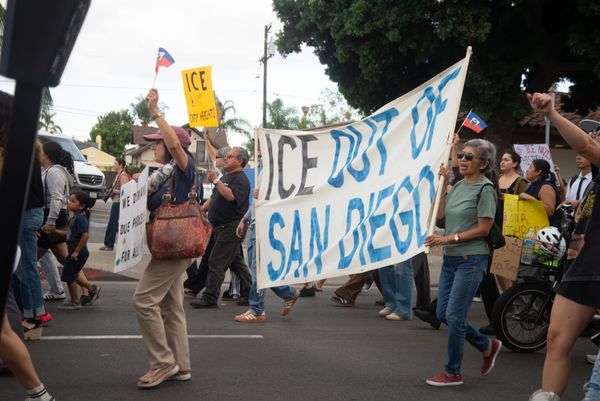
The activist said one agent questioned a neighbor about an “ICE Out of San Diego” sign in the activist's window.
“To be fair, 90% of San Diego hates you guys,” the neighbor responded, according to the activist.
When the agents freed the activist about an hour and a half after being detained, they said the agents handed them a warrant that had no case number on it and no explanation of what the agents were looking for or why it was issued. It says the warrant was issued by telephone with approval from federal Judge Jill L. Burkhardt to search the activist, the home at the activist's address as well as their car between 5:30 a.m. and 10 p.m.
The warrant uses the activist's dead name — the name they used before their transition and legal name change — and an alias that the activist has never used, they said.
On one page of the warrant, an agent had handwritten a list of the items that the group confiscated from the activist's home — a black and white bandana, paintballs inside a bag, a blue journal, grey Converse shoes, a black Samsung phone, black Converse hightop shoes, steel shot slingshot balls, two pairs of black pants, sunglasses, a visor, another pair of black pants and a black bandana.
The activist said the agents also took the dashcam from their car.
“None of it makes sense,” the activist said.
Once they were uncuffed, the activist noticed bruises on their wrists.
Still, they said, they think they were lucky because they are White presenting, and they believe they would have been treated worse if they weren't.
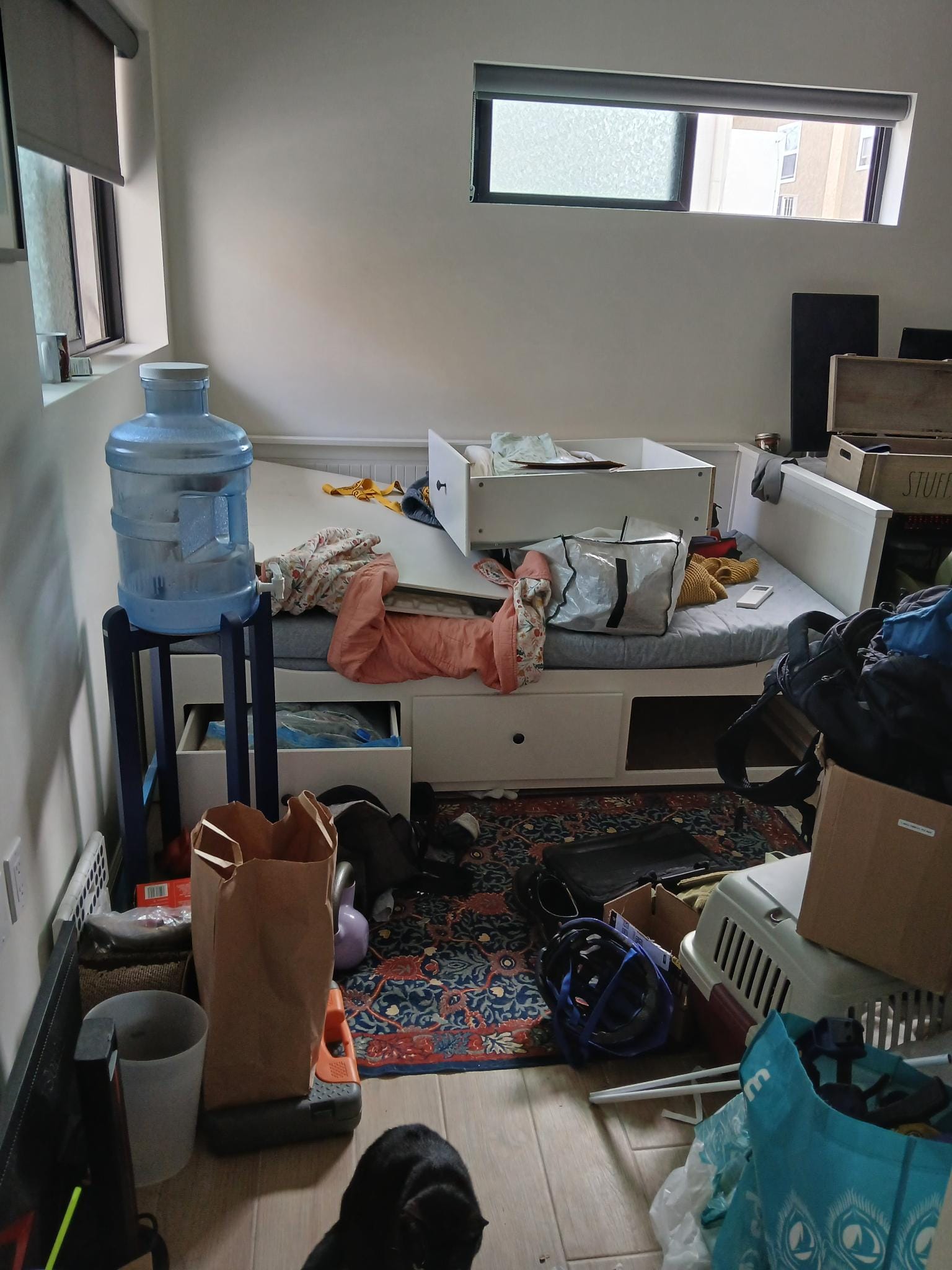
When they went back inside, the activist said, their home was in upheaval. They found cat vomit in several places and boot marks that tracked the vomit around the home.
“Our cats are still very much traumatized,” they said.
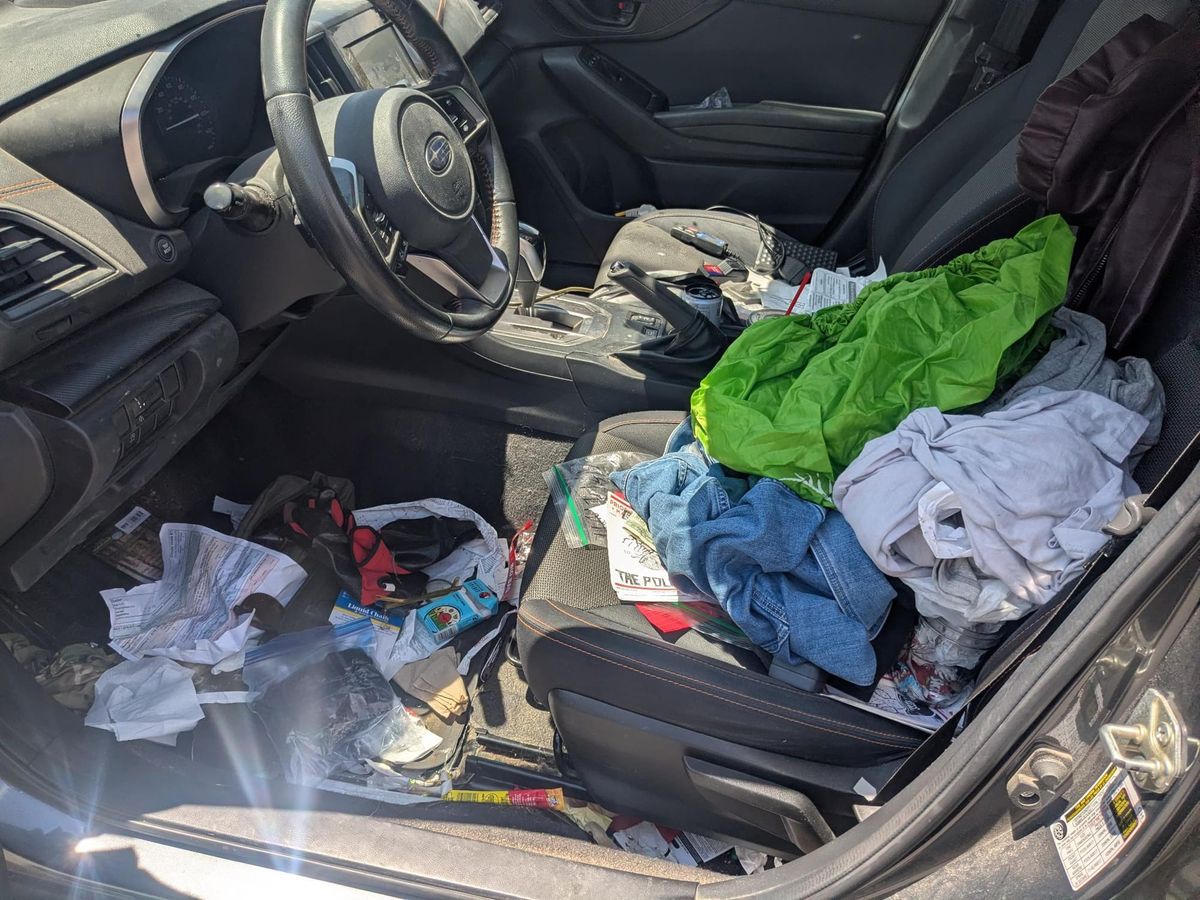
After the agents left, the activist decided to spend the day away from their home because of the trauma of seeing their belongings trashed and because they noticed that unmarked vehicles were still parked near the home. When they saw their car had also been ransacked, they cried, they said. Their medic supplies they carried to aid people living on the street were strewn all over the car, and their identification documents were on the dashboard where anyone could see their private information.
Friends and community members showed up to help clean up.
That day, other activists noticed that the activist's Signal account from the phone that the agents had confiscated was messaging them and adding them to new group chats. Word quickly spread to avoid interacting with the account.
Around 2:30 p.m., agents came back to the home with other documents, warrants whose contents are under seal. An agent said that they forgot to give the documents to the activist earlier, the activist said.
Though the experience traumatized them, their partner and their cats, the activist said they aren't going to let it scare them into stopping their community work, such as providing food and basic medical care to people living on the streets in their area.

Their neighbors have been checking on them, offering food and solidarity. That support, they said, has shown them the impact that they've had helping people in their community. As they spoke, they put on sunglasses to hide the water forming in their eyes.
“Don't be a savior,” they said. “Work with your community. Be a part of your community. If you do have that privilege, use it.”
They hope that, at least, if ICE agents spent so much time investigating them that day, that kept them from going after an immigrant elsewhere in the county. They said the experience really helped them to feel first-hand the trauma that immigrant neighbors are going through when ICE shows up on their doorsteps in the early morning.
They still feel their body tense up when they hear a knock at the door, but the activist said people shouldn't give in to that fear. They're still doing community work helping homeless neighbors, they said.
“I don't want people to be afraid after this,” they said. “I want people to be energized.”