
Months of pain, delayed care: An asylum seeker’s health crisis in ICE custody

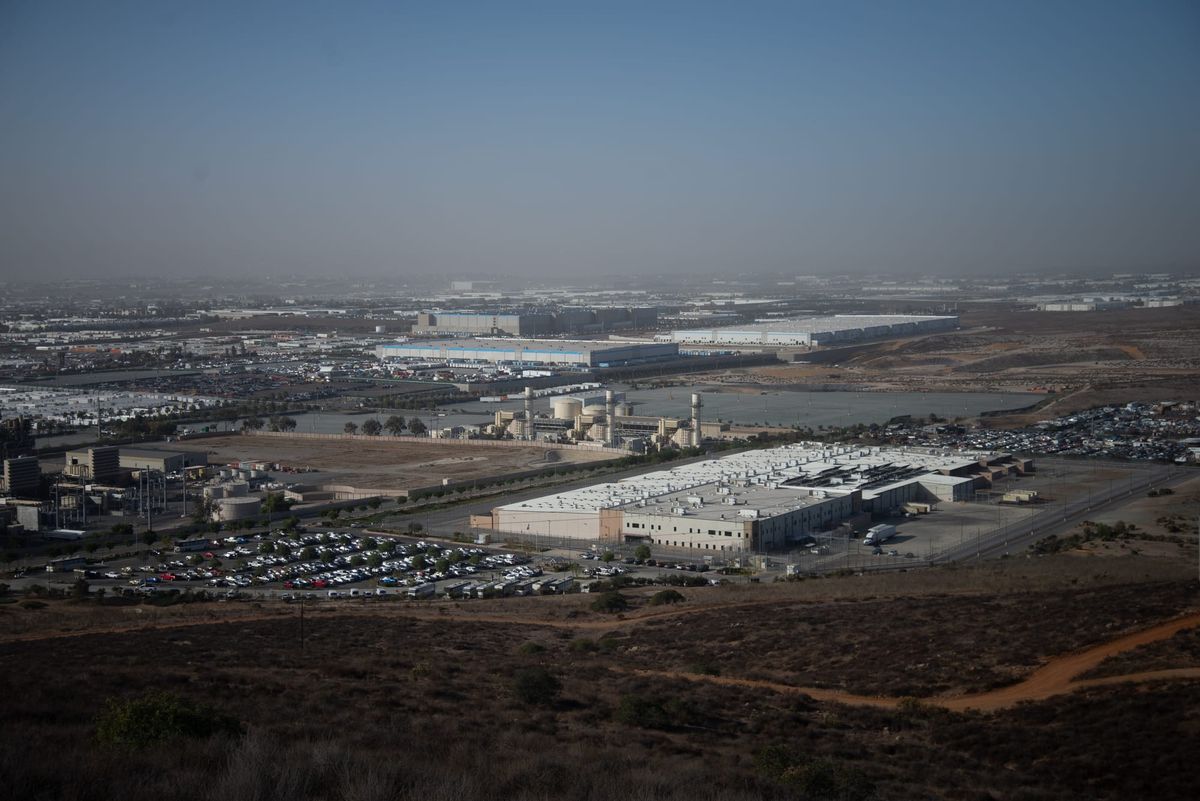
A mother held at a San Diego immigration facility says months of delayed and inadequate medical care have left her with a serious kidney infection and worsening pain.
Written by Kate Morrissey, Capital & Main
This article was produced by Capital & Main, an award-winning publication that reports from California on economic, political, and social issues. It is co-published here with permission.
A Colombian asylum seeker who has spent a year in immigration custody at Otay Mesa Detention Center in San Diego said that she has a serious infection in her urinary tract and kidneys and is not receiving proper medical treatment.
The woman, who asked not to be identified for fear of retaliation, said the infection started more than seven months ago and that the medical care she has received has been delayed and insufficient to address the issue.
“I'm concerned for my life because I'm a single mother, and I have two children who depend on me,” the woman said in Spanish in a phone call recorded by a friend. “And obviously, I came into this detention center healthy, looking for protection, a refuge, and it's been the complete opposite.”

Hers is yet another case of someone held at a detention facility coming forward about potentially life-threatening medical concerns since President Donald Trump returned to office. ICE hasn't paid for medical care for people in its custody since the beginning of October last year, which has caused cases of delayed and denied treatment across the country, according to the San Francisco Chronicle.
Immigration and Customs Enforcement, the federal agency that owns Otay Mesa Detention Center did not respond to Capital & Main’s request for comment.
Ryan Gustin, a spokesperson for CoreCivic, the private prison company that ICE pays to operate the facility, said that the company could not comment on the woman's allegations without having her name or identification number.
“We take any allegation regarding medical care, staff conduct, or resident treatment seriously. CoreCivic employees are required to adhere to our Human Rights Policy and Code of Ethics, company policies, applicable detention standards, and the requirements established by our government partners,” Gustin said via email. “Retaliation against an individual for raising concerns, requesting medical care, or utilizing established grievance processes is prohibited and inconsistent with those standards.”
Gustin noted that the facility received reaccreditation from the National Commission on Correctional Health Care in February.
The woman said she fled a domestic violence situation in Colombia, that the father of her children abused her and tried to kill her and that no one in her country — including police — was willing to help protect her from him, even when the abuse happened in broad daylight.
She has requested asylum in the U.S., but the attorney representing ICE in immigration court asked the judge to close her case so that the government could send her to a third country, Honduras, to request asylum there instead. The judge sided with the government, and the woman has appealed. She's stuck in custody while she waits.
She said she tried multiple times to find safety before ending up in the San Diego detention center.
At one point, she and her children went to Spain, where a family member had offered to take her in. But, the family member never answered her calls when she arrived. She and the children ended up back in Colombia.
In 2023, she came alone to the U.S. to request asylum. Border officials released her into the country, where she lived and worked while she waited on her case. After her children's living situation grew more complicated back in Colombia where they were waiting to join her, she decided she had to go back to help them.
The trio tried seeking asylum together at the beginning of the second Trump administration and ended up back in Colombia again.
She said her son told her to go back to the U.S. without them because he was so worried for her safety. He told her to finish her case and then bring him and his sister to join her.
In September 2025, she crossed the border in the San Diego-Tijuana region and requested asylum. Since October, ICE has held her at Otay Mesa Detention Center.
According to the woman, and to her medical records from the detention center, she was healthy when she entered the facility.
In the first few months there, she began to have increasingly heavy periods, according to her medical records. In November, she told medical staff that she'd bled through four menstrual pads in one hour. She felt dizzy from the blood loss.
According to the medical progress note from that visit, the provider told her to exercise more, wear less restrictive clothing, take ibuprofen and come back to the medical unit if she didn't improve.
The symptoms didn't improve, according to her records. She requested a follow-up but she was in the facility's immigration court on the day staff came to get her. Instead the facility's medical staff saw her a week later. By then, she'd stopped bleeding, so the provider told her to follow up if she experienced heavy bleeding again, according to the progress note.

But it didn't stop. She told Capital & Main that after more than nine months of seeking help with the medical condition, she's still experiencing heavy menstrual bleeding.
By January, she had another issue — pain while urinating and blood in her urine — according to her medical records. The provider prescribed an antibiotic, but it did not work. By the end of January, the pain had spread to her back and kidneys.
Over the next several months, she returned to the facility's medical unit with the same issues.
In February, detention staff sent her to the medical unit from lunch because her heavy bleeding had made her lethargic. Her medical records indicate that she fainted that day. She was taken to the emergency room at Sharp Chula Vista Medical Center, where a doctor noted a “bulbous appearance” of her uterus and recommended that Otay Mesa follow up with an ultrasound.
At the end of March, she again told medical staff that she was having abdominal pain. The provider's note indicates that the woman was waiting for an ultrasound.
According to the woman, she is still waiting for that ultrasound.
In April, the woman returned to the medical unit because of pain and blood when urinating, according to her medical records. In May, she told medical staff that the antibiotic she'd received had not helped. The provider put in requests for offsite consultations for a urology specialist as well as a CT scan for the woman for August — three months away.
The provider also ordered a different medication, but the facility didn't have it to give her, according to her medical records.
A couple of weeks later, she went to the medical unit again. According to medical notes, it appears there may have been some misunderstanding between the provider, the interpreter and the woman. The provider's note at first says the woman is doing better but later says that the woman said she was still symptomatic.
In late May, medical staff again sent her to the emergency room at Sharp Chula Vista Medical Center. The doctor there diagnosed her with syncope and back pain, told her to take ibuprofen and sent her back to Otay Mesa. His notes say, “No acute disease,” even though her urinalysis came back abnormal. The hospital incorrectly categorized her as “Mexican, Mexican American or Chicana” and incorrectly listed a hysterectomy in her medical history in its documentation.
When she returned to Otay Mesa, the provider at the detention facility called the workup she'd received at the emergency room inadequate and sent her to Paradise Valley Hospital in National City, where she was hospitalized for several days. There, doctors diagnosed her with pyelonephritis, a serious urinary tract infection that affects one or both kidneys.
At the hospital, medical staff gave her antibiotics through an IV, according to medical records. The hospital records noted that it had not received information from Otay Mesa about which medications the facility staff had already tried.
But after she got back to Otay Mesa, the woman said, she didn't receive the medication prescribed for her upon discharge, and her condition worsened again. A note from Otay Mesa medical staff indicates that a provider there changed the medication to a different one because of concerns about a possible allergy.
The woman told Capital & Main in August that her symptoms keep getting worse. The pain has gotten so bad that sometimes she can't walk, she said.
At that time, she had very visible blood in one of her eyes. She said that had started about a week before and that the medical unit had done little to help her.
She said she finally received a medication ordered for her in May, three months prior.
The woman said that she understands that the test results she's received about her condition are not good, but that medical staff have told her she needs more testing before they can tell her what is wrong with her. She said she is worried that won't happen.
While she's trying to navigate getting the medical care that she needs in the facility, she said she's also faced mistreatment from guards.
One guard has treated her so cruelly that when that person appears to take her unit to meals, sometimes she decides she would rather not eat than deal with the abuse, she said.
At one point, a guard took away her phone privileges for 30 days, she said. After ICE reviewed her complaint about the situation, it restored the privileges, but several weeks had already passed.
That meant she couldn't call her children, which nearly broke her.
“I'm here because I don't have any other options,” the woman said. “So much time is lost here, and then if you lose, you get the decision from night to morning, and it was all for nothing.”