The Neighborhood Kids bring revolutionary Hip Hop from San Diego to the world

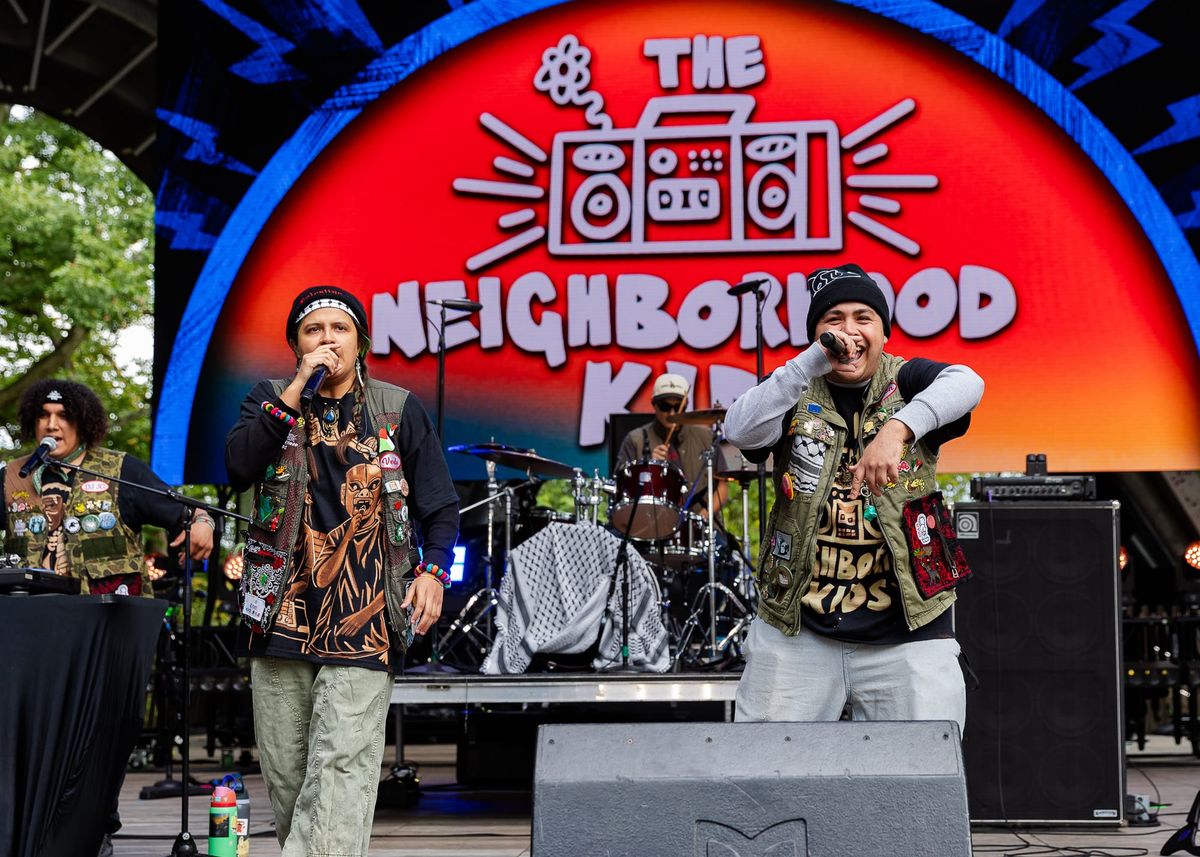
After years of toiling in the San Diego music scene, the Neighborhood Kids are rising as one of Hip Hop’s most promising and vocal socially conscious acts.
Written by Roberto Camacho, Edited by Kate Morrissey
As Ruben Moreno stepped onto the stage as the opening act for Power to the People Fest with his bandmates from San Diego's own The Neighborhood Kids in early October, he felt proud after the countless hours of paying dues in the local Hip Hop scene.
Moreno, who performs under the stage name Amon the MC, said he knew the group was making history.
“It felt like a long time coming,” Moreno said. “It felt beautiful seeing so many people come out for love, resistance and music — like something we have all been dreaming of seeing since we started making music, something that every musician hopes to achieve."
A socially conscious, bilingual Hip Hop group using its music as a platform to speak out against injustice and inspire impactful change, The Neighborhood Kids have gained national attention in recent years through support from prominent artists including Rage Against the Machine guitarist and longtime activist Tom Morello, who curated the one-day music and civic action event at Merriweather Post Pavilion in Columbia, Maryland. Made up of emcees Amon and Verde, DJ JG, drummer Gatoz Locos, bassist Emerson, guitarist and engineer Jon the Funkymonk and producer Niko Rosy, the Neighborhood Kids have performed in front of thousands, focusing their efforts on events highlighting humanitarian issues including Power to the People Fest and the Global Sumud Flotilla in Barcelona.
“I think that it is important for us to shine a light on that other perspective and give a voice to people,” said Vernice Lopez, who performs as Verde. “It's not that hard to care about people dying. It’s so easy to care and to have empathy for people who are going through it and being killed every day. It's not hard to just have a heart.”
The Neighborhood Kids have opened up for artists such as Macklemore, Immortal Technique and Morello. Last year, the group initially connected with Morello after catching his attention with their high-energy stage performances and socially conscious music. The group even joined Morello in performing at his Defend L.A. protest-fundraiser concert at the Echoplex in Los Angeles in June 2025. Morello even went so far as to call the group his “new favorite band” and invited the group to open up for him on the East Coast leg of his tour last fall.
With the exception of a few artists including Chicano rapper Lil’ Rob and mid-90s emcee Jayo Felony, San Diego has spawned relatively few rappers who have achieved critical acclaim and mass appeal beyond the city’s regional underground Hip Hop scene.
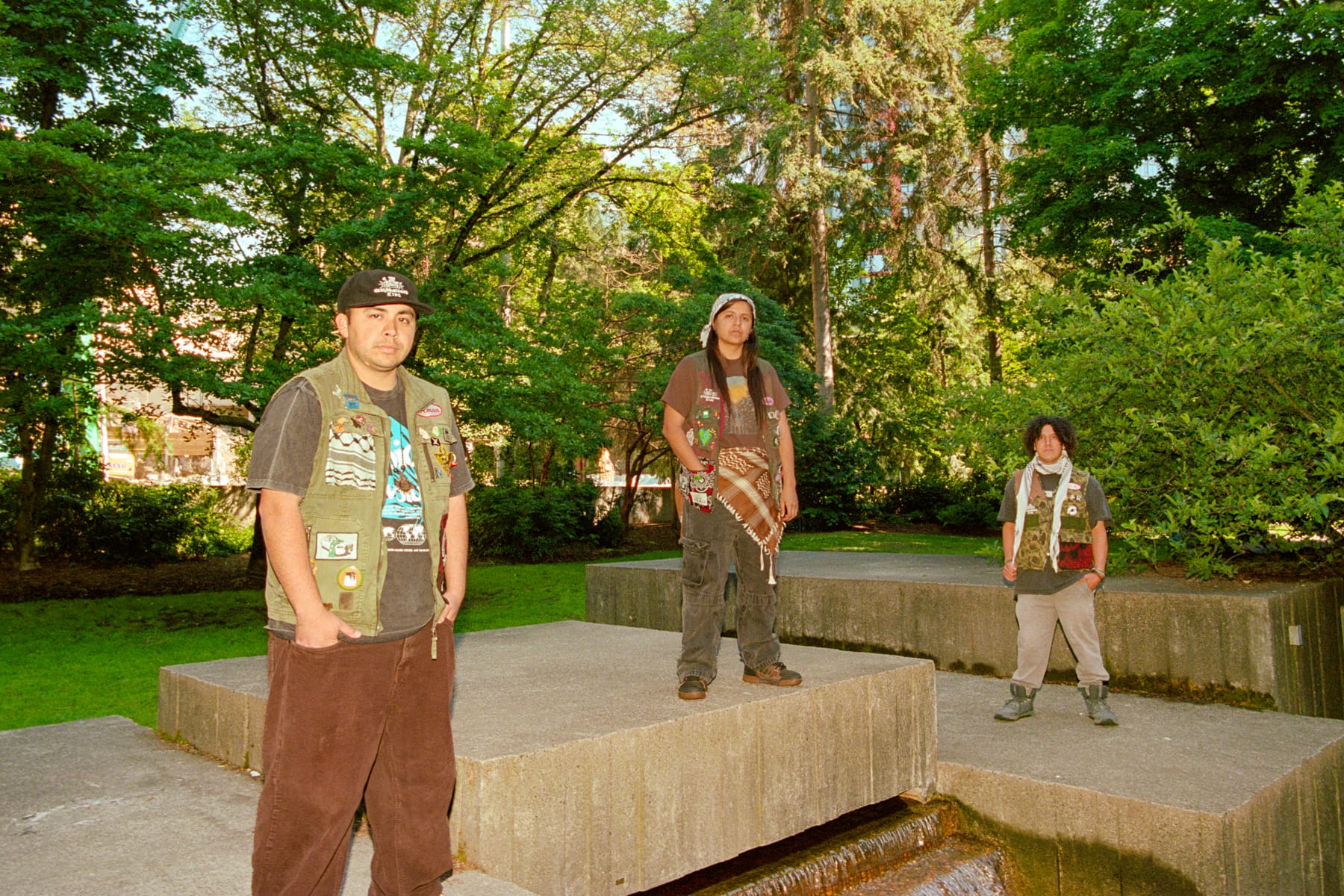
The Neighborhood Kids’ music balances quirky, feel-good, positive Hip Hop vibes with a gritty, defiant authenticity reminiscent of 90s and 2000s groups. They combine the eclectic, playful nature of groups like Digable Planets and De La Soul with the aggressive, high-energy rap-rock fusion sound of Rage Against the Machine and the explicit, revolutionary, left-wing political messages of Immortal Technique.
Prior to the group’s formation, lead vocalists and founding members Moreno and Lopez performed as solo artists in San Diego’s underground Hip Hop scene beginning in the mid 2010s. Moreno had already gained a reputation as an adept battle emcee, and both had partaken in battles such as The Cypher Effect, leading to the pair meeting and eventually dating. Not long afterward, both Moreno and Lopez began brainstorming ideas to form a rap group.
They said they found inspiration for the name back in 2020 at the onset of the COVID-19 pandemic during the peak of quarantine and social distancing measures. One fateful day, they played a pickup game of basketball with children on their block in North Park.
“We were messing around, playing ball with them, and one of our other neighbors said to us, ‘We saw you guys hanging out with the neighborhood kids,’ and it just clicked,” Moreno said.
Before long, Moreno and Lopez would recruit their longtime friend and collaborator Michael Archundia, aka DJ JG, to serve as the crew’s DJ, later adding the rest of the team. Since then, the one-of-a-kind crew of emcees, DJ, and live musicians have pushed the confines of conventional Hip Hop, bending genres and bucking the status quo through their music and activism.
“Hip Hop was birthed in the struggle,” Moreno said. “It was birthed by oppressed people, so it only makes sense that people should use it to talk about the oppression of the people. I think to use such a powerful art form and talk about nonsense is just blasphemous to me.”
At the Flotilla performance in Barcelona, the group's largest stage and first European performance, The Neighborhood Kids freestyled as part of their send-off for those attempting to sail to Gaza. Moreno recalled it as a particularly powerful moment that illustrated the impact that Hip Hop can inspire on a global level.
“It felt empowering to be a part of a movement bigger than ourselves for the collective good, for the people in Palestine and Cuba,” Moreno said.

The group released its first EP, “Every Child Left Behind,” in 2023.
Earlier this year, the group released its highly anticipated debut studio album, “Voice of the Revolution,” propelled by the album’s lead single “Biddi Bom,” which has accumulated over 900,000 spins on Spotify alone.
Despite the group’s earlier singles having a more rock-fusion-inspired sound, the group opted to utilize more classic Boom Bap Hip Hop production as a sonic backdrop this time.
“We rarely really had anything like super Hip Hop,” Lopez said. “Starting up, The Neighborhood Kids was a lot of band stuff, which is super cool, but it just has a way different sound than this project, which is more Hip Hop-based.”
Moreno said that for the group’s debut, they were inspired to return to their roots and craft a sound that invoked the nostalgia of Hip Hop’s Golden Era of the early and mid-90s. They also wanted to craft an album that documented where they’re at as a group, and that could sonically stand the test of time.
“This album was made for this time period,” Moreno said. “This is the best representation of our growth, and it’s also like a timestamp on history. However the world receives it is how they receive it — we needed this to be a good debut project for ourselves.”
The album’s theme derives from a three-part poem written by Moreno called “The Legend of the Blue Butterfly.” On the album, his grandmother voices the poem, strung through the 53-minute runtime.
In the first segment, Moreno’s grandmother softly reads:
“Beneath the rubble a blue light of hope
Peeked through the cracks of debris and shattered memories
Not too far from the rose that grew
From the concrete piles of broken homes
Made way for the world's new light
And a butterfly emerged
A blue butterfly.”
Before the group finished the album, it worked with Victor Roman, also known as Viral Boa, a surrealist painter based in Escondido to create the apocalyptic imagery for the album’s cover art featuring both Moreno and Lopez looking at a blue butterfly. That image guided the rest of the work.
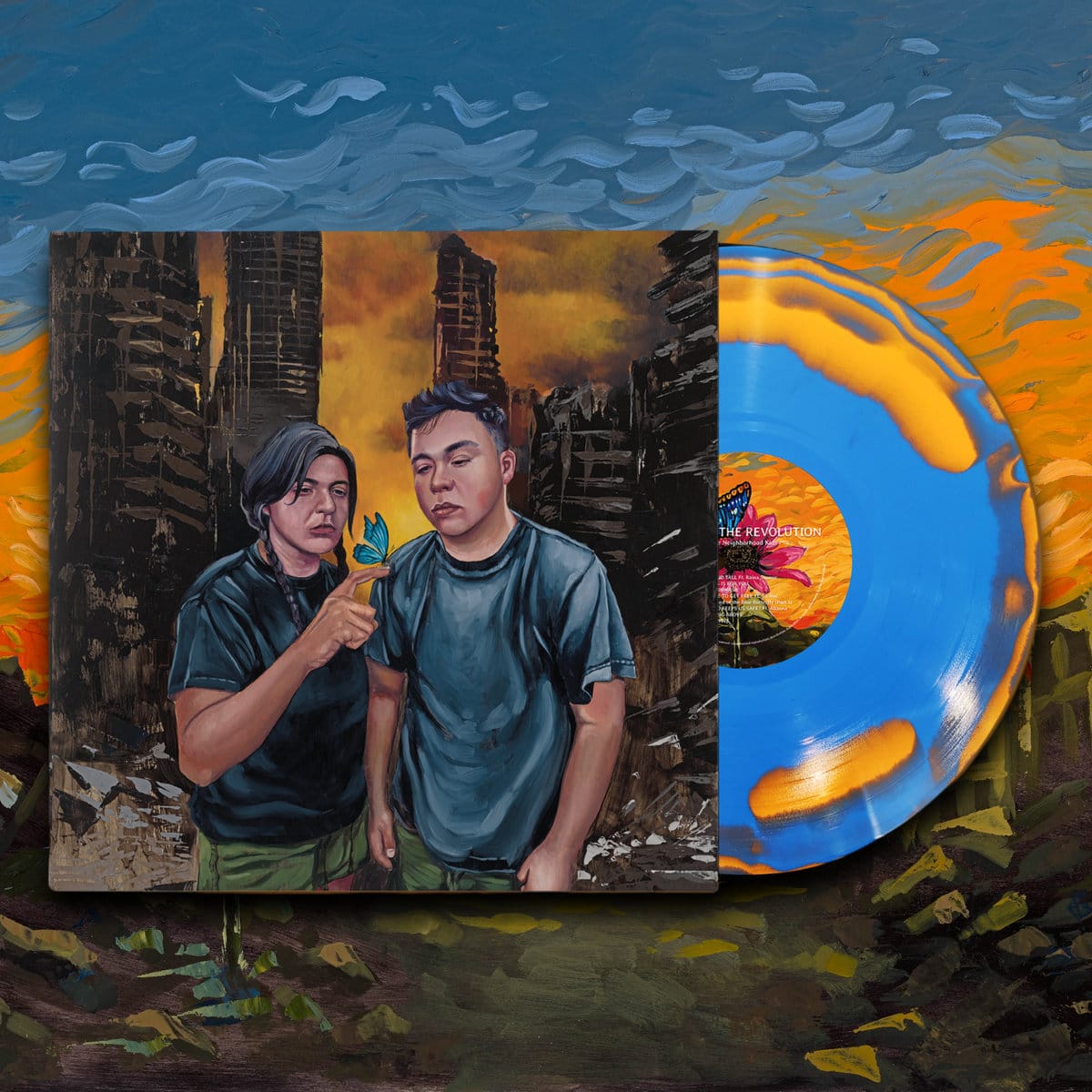
In the midst of the album’s recording, Moreno and Lopez watched an episode of “Yu Yu Hakusho,” a 90s Japanese anime series that featured similar symbolism.
After that, Moreno wrote the poem.
“I wanted to tie the whole project together,” Moreno said. “There was a pivotal moment in the show where a blue butterfly came before a lot of crazy transitions. We started looking up why there was a blue butterfly and why it was in all of these anime shows. Blue butterflies signify transformation, hope, rebirth, and all these things. We felt like the world is going through that stage right now.”
Looking to the future, the Kids have no plans of slowing down. The group has a joint album with friends and long-time collaborators Indigenous Cats, with a full-length collaborative LP tentatively in the works. The crew also has hopes of someday working with underground heavyweights such as Immortal Technique and Brother Ali in the future.
For now, the group is focused on touring for its album, with a stop in San Diego for Día de los Muertos on Nov. 1 in Barrio Logan, along with tours following in Seattle, Portland, Berkeley and Mexico City to close out the month.
Both Moreno and Lopez said artists have the power to make the connections to domestic struggles and those overseas and be speakers of truth to power in today’s contentious era.
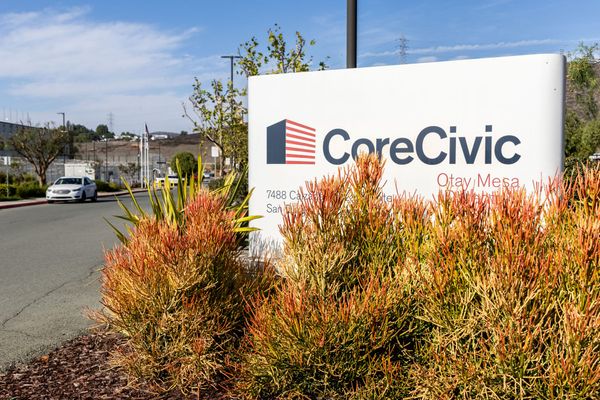
“I feel like people are really waking up,” Moreno said. “There are still kids in the cages right now in ICE detention centers. There are people across the world who still don't have their freedom, but I also feel like there's a collective enlightenment where people want to do something about it.”
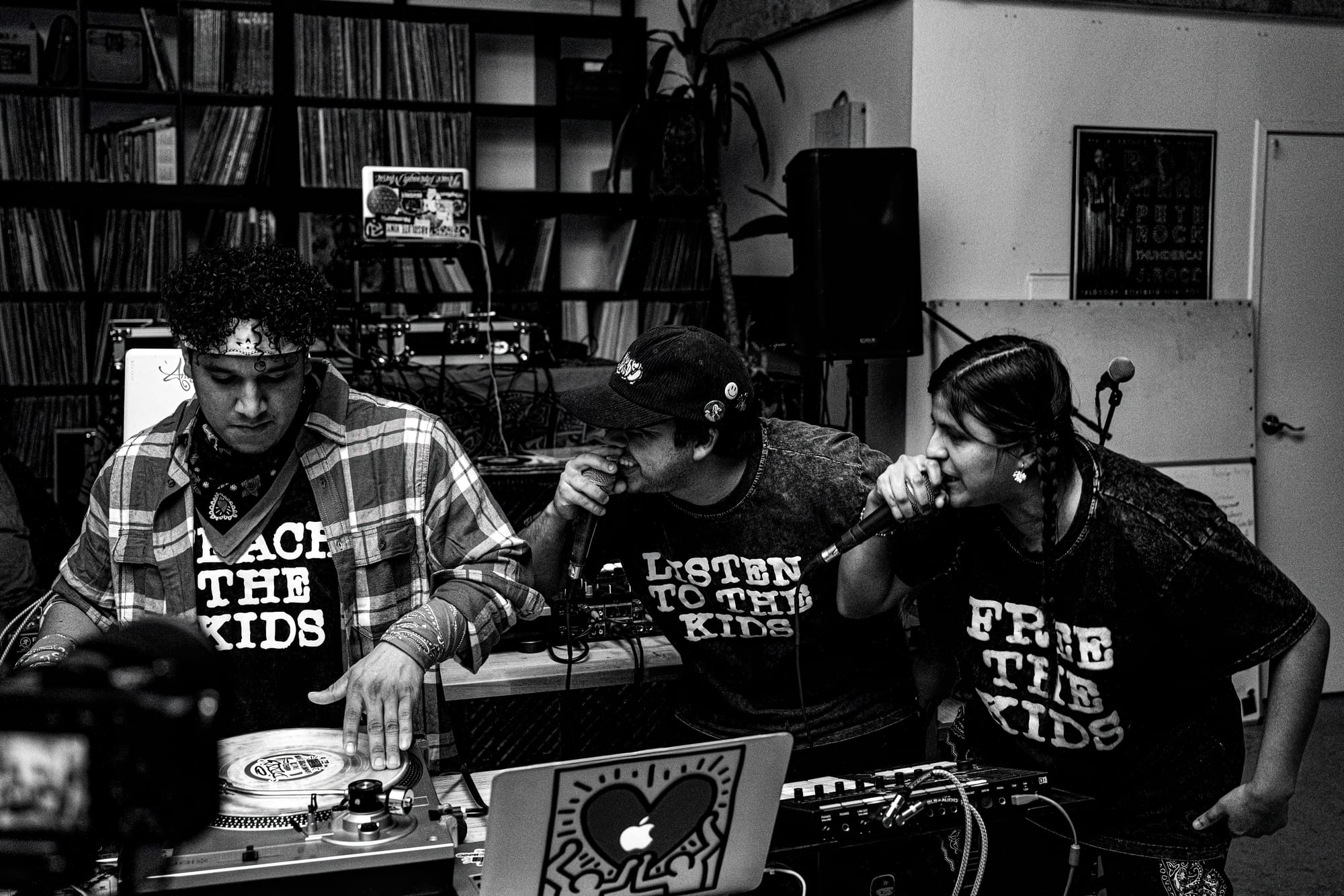
At Power for the People Fest, The Neighborhood Kids made sure to let the thousands in the crowd know.
Towards the end of the group’s 20-minute set, Moreno took a moment to address the crowd.
“Right now there is a terrorist organization stripping families away, tearing apart communities and putting children in modern-day concentration camps! We don't rock with ICE, and I know that the people here at Power to the People Fest don’t rock with ICE either,” he roared. “This one is for all of the children. This is more than a song. It’s a mantra for liberation and freedom!”
To close the set, the band rocketed into one of its most popular songs, “Kids in the Cages,” a scathing protest anthem condemning the separation of immigrant families and demanding an end to child detention at the hands of federal immigration enforcement.
Moreno and Lopez sang a verse from the song behind a chorus of record scratches and guitars:
“This is this truth, and then this is reality
This is the truth, and then this is a tragedy
Taking the children away from their family
Why is this happening? It's a catastrophe
Stop with the vanity
Where is humanity
We are the refugees, we are in agony.”
Following their set, the emcees thanked the crowd and left with a simple message.
“Free Palestine, free the Congo, free Armenia, free Sudan and free everywhere in the world from Western imperialism,” Moreno said.