Organization supporting former refugees pushes for CNA exam in more languages

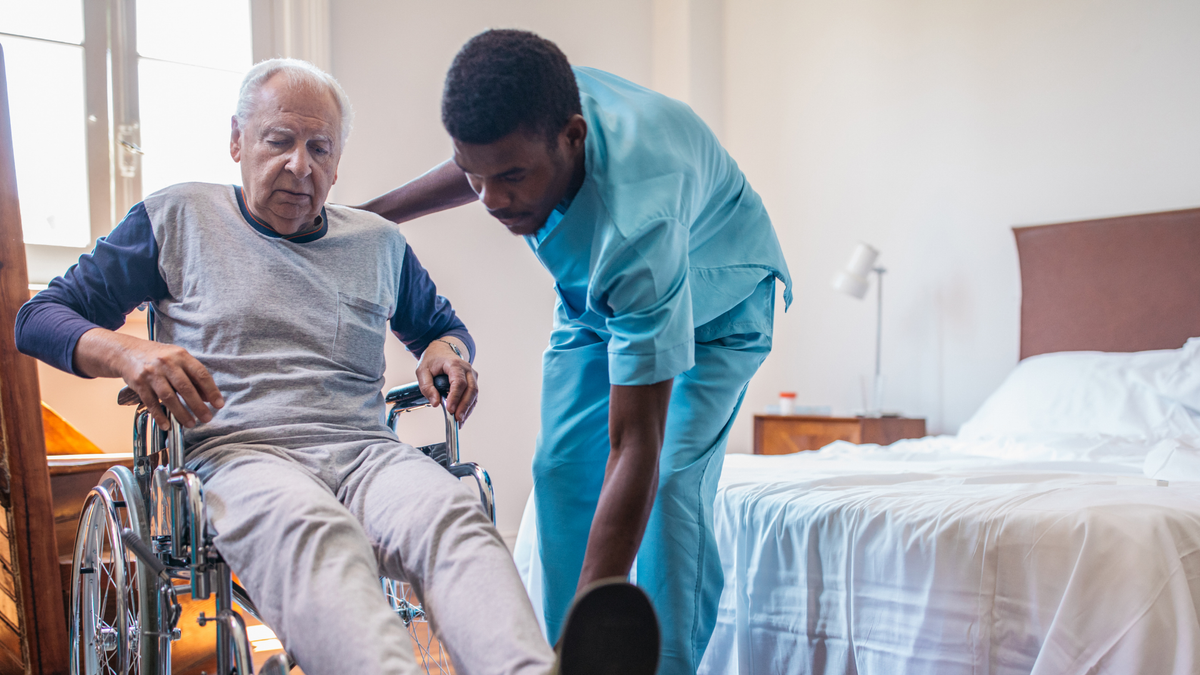
Nile Sisters offers classes to help immigrants, particularly those from African countries, prepare to become Certified Nursing Assistants.
Written by Kate Morrissey, Edited by Lauren J. Mapp
The first time Azeb Birhane took the written exam to become a certified nursing assistant, she didn't finish in the time allowed.
She said that's because she doesn't read English quickly. She passed the preparation quizzes without issue because she had more time, she said. But as she was working through the exam in April, the test administrator told her that time was up, and she had to stop.
Birhane is among many immigrant students who took classes with Nile Sisters who have passed the skills portion of the certified nursing assistant exam but struggled with the written portion because of a language barrier, according to Rebecca Paida, director of operations for the organization. She petitioned the California Department of Public Health to allow people to take the written exam in more languages.
The state currently offers the exam in both English and Spanish after a 2024 bill required the department to begin offering the Spanish option to help address shortages in the profession.
But for immigrants from other parts of the world, including San Diego's diverse communities of former refugees, the path to becoming a certified nursing assistant still requires them to navigate the written exam in English.
“If the state aims to provide an equitable model by incorporating Spanish as a second language, it's only appropriate that other populations can seek whichever language they may require as part of their exam needs,” Paida said. “That aligns with civil rights principles.”
The California Department of Public Health did not respond to a request for comment. According to a letter it sent to Paida, it will hold a virtual hearing on her request on June 16.
Paida said she's had a difficult time getting others to take up the cause with her. But, she said, some other states offer the testing in more languages already. Minnesota allows people to take the written exam in English, Spanish, Somali and Hmong.
“This is not just a language issue,” Paida said. “This is a workforce issue.”
Certified nursing assistants work in hospitals and other medical settings under the supervision of registered nurses to help patients with hygiene needs, eating and transportation.
In a 2023 report, the California Health Care Foundation reported that health care worker shortages are expected to increase as the state’s population continues to skew older. By 2030, a quarter of Californians will be age 60 and older, and the California Department of Aging has predicted that the state will have a shortage of between 600,000 and 3.2 million direct care workers, including home health aids, personal care aids and certified nursing assistants.
Some of Nile Sisters’ students were previously nurses in their home countries. Others, including Birhane, are new to the profession and looking for a viable career path.
Birhane, originally from Ethiopia, has been in the United States for about three years, she said. She wished she could take the exam in Amharic.
She currently works as a parking lot attendant, she said, but she hopes that becoming a certified nursing assistant will put her on the path to a more stable career that will allow her to better provide for her family. She plans to keep working on her English so that one day she can become a registered nurse.
She said she found the work of a certified nursing assistant gratifying because she had experience as a caregiver after her brother had a stroke back in Ethiopia.
“I like to help people,” Birhane said.
Filbert Ochira, a refugee from South Sudan who came to the U.S. last year, said it took him three tries to pass the exam. He thinks that both the language barrier and test anxiety contributed to the difficulty he had in passing.
He said he volunteered with different international health-related organizations when he was living in a refugee camp in Uganda.
“All my lifetime, I love working with the community,” Ochira said. “I like supporting people.”
He said that coming to the U.S., he's had to work to learn about what career paths might be available to him, and through the classes with Nile Sisters, he feels inspired to keep going in the medical field.
“For somebody like me, I have to go from nowhere to somewhere,” Ochira said.