San Diego Gay Rodeo struts into its comeback at Pride
After nearly 15 years of dormancy, the chapter is back and fundraising for its next rodeo.
Written by Jenna Ramiscal, Edited by Kate Morrissey
For well over a decade, San Diego Gay Rodeo ceased to exist, but now it's making a comeback.
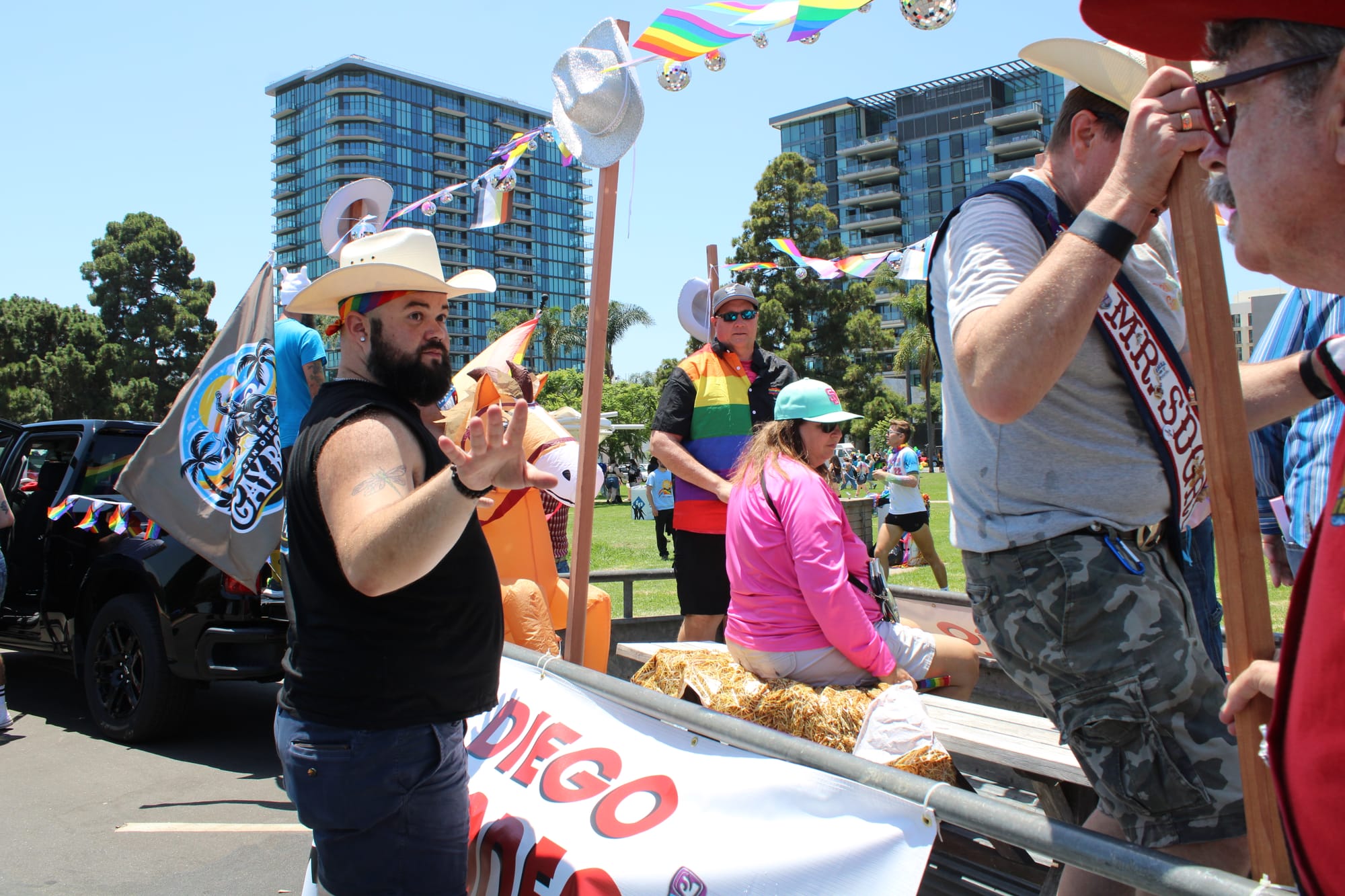
At this year’s San Diego Pride Parade, a group of more than a dozen members marched to encourage people to support the revived chapter. The group offers a space where western culture can intersect with the LGBTQ+ community. Members said rodeos have typically excluded queer people.
“We're all united by the rodeo,” Andy Siekkinen said while tearing up. “It's actually the most diverse gay group that I've been a part of — in economics, gender, in almost any way. We want to have fun, support each other, and it's different from any other organization I’ve ever been a part of.”
San Diego Gay Rodeo, once a community with close to 50 members, seemed to die out in 2010 — but that isn’t stopping self-proclaimed guncles, or gay uncles, Tom Hayes and Reid, and their nephew by choice, Ethan Bury, from working to rebuild the chapter.
Hayes said being part of the San Diego chapter in 2003, when he served as its hotel director, motivated him to help bring the rodeo back.
“I remember having a lot of fun doing it, and I thought about getting the younger generations more involved in community events,” Hayes said.
The trio and some of their other friends revived the chapter in 2024, and its members have fundraised for the last two years to host a local rodeo, according to Bury, the chapter’s vice president.
“It's going to go down in history as being something culturally significant,” said Mikey Soto, another member of the group. “Nobody really knows it exists even within the rodeo community. A lot of people that are in the gay rodeo face twice as much discrimination and sexism. It’s a space worth saving.”
Bury said, despite its recent revival, the San Diego chapter is growing strong. Out of the three gay rodeo chapters that exist in California, San Diego’s has the largest membership with a total of 34 people.
He said the rodeo is around $1,500 away from reaching its fundraising goal. With the money, the chapter aims to host a rodeo in August 2027 in Lakeside.
Siekkinen said it is hard to explain the rodeo community to those who aren’t part of it or haven’t experienced it. Although cliché, he said, the word family most closely captures what the rodeo means to him.
He said sometimes rodeos might not seem like the most welcoming place for queer people, but gay rodeo exists to combat that, creating a place where everyone cheers for everyone.
“Our rodeos often have been asked, ‘Well, are you a real rodeo or just making fun of it?’” Siekkinen said. “That's very common. People who are not in the LGBTQ community and who are more familiar with the rodeo community, they assume we're a joke.”
But gay rodeo is not a joke.
Gay Rodeos typically include four different categories: roping, speed, rough stock and camp. Each category has different events within it for a total of 13 events overall.
The camp category is unique to gay rodeo. It features three events — goat dressing, steer decorating and wild drag race.
But gay rodeo does more than host rodeos. The group also prides itself on educating members about rodeo practices and animal safety, supporting other LGBTQ+ organizations and raising money for charities.
At the chapter, state and international level, gay rodeo chapters and associations also pick annual royalty.
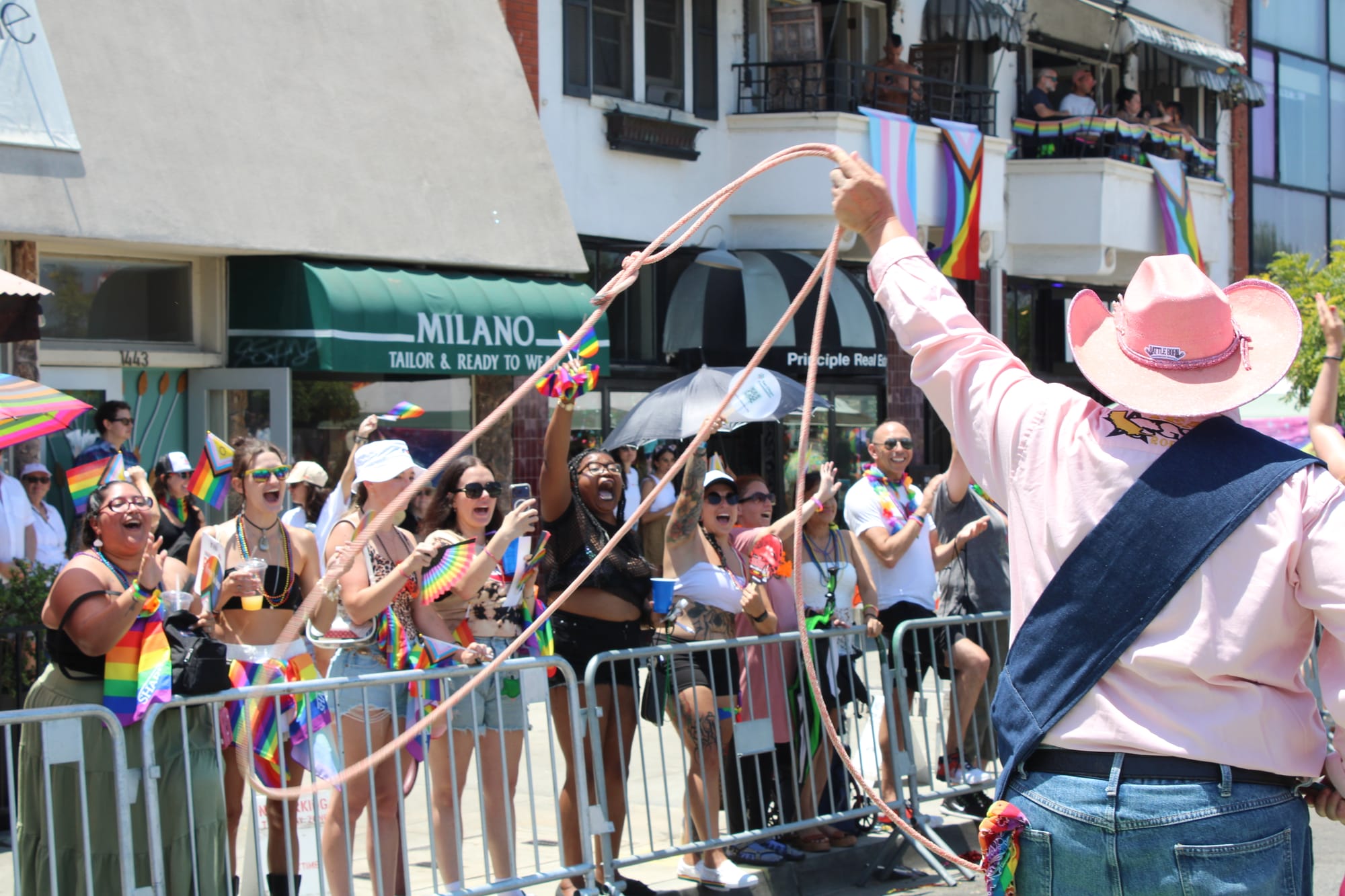
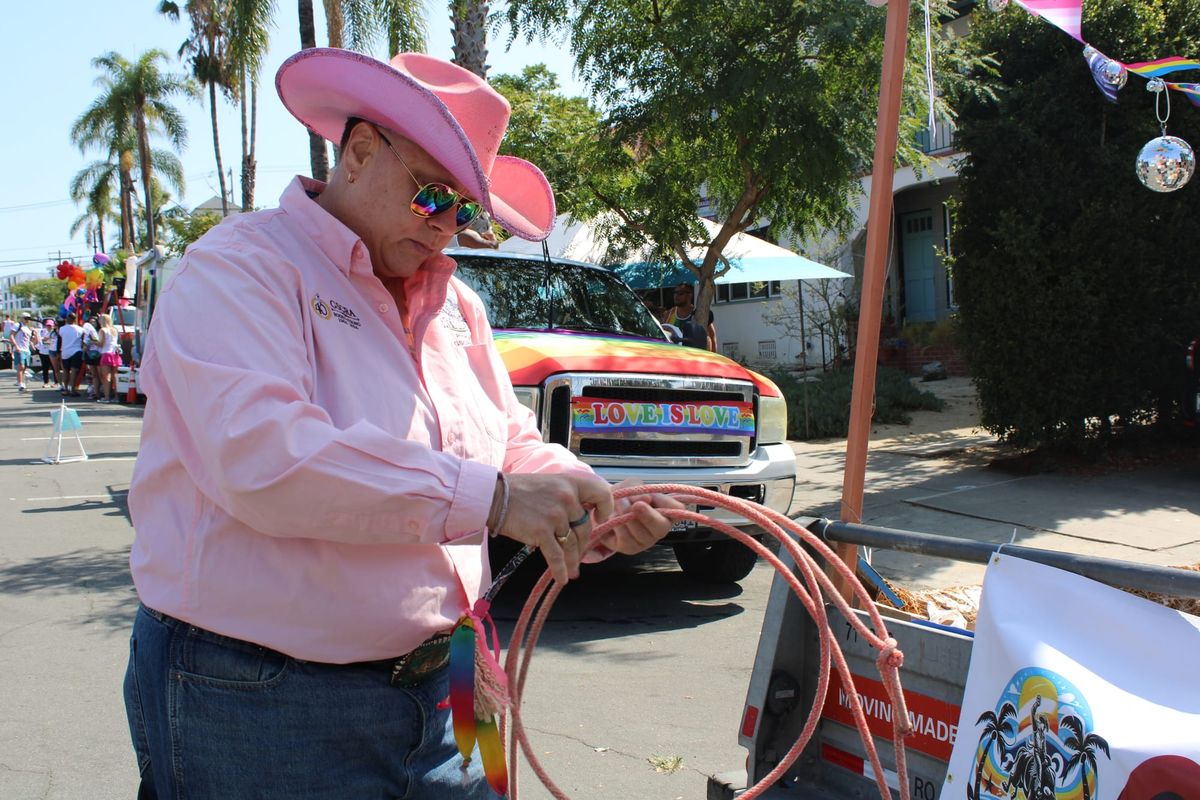
At the Pride Parade, Tonja Alvis wore a light pink button up and matching cowgirl hat adorned with a crown and a sash that read “2026 Ms. SDGRC,” the acronym for Ms. San Diego Gay Rodeo Chapter, one of the royalty titles for this year. She is ranked 11 in the world for calf roping on foot and ranked 12 in wild drag race, she said.
As royalty, Alvis is fundraising for Christie's Place, a local organization that provides support for women, children and families impacted by HIV and AIDS.
“Honestly, to ride a horse is better than sex,” Alvis said. “It’s better than therapy. To be out in the middle of nowhere, it's not like driving a car. It brings you back to the past. It brings you back to the roots. It can't help you but bring you back into history.”
Ron Call, this year's Mr. San Diego Gay Rodeo Chapter, said rodeo also helps him connect back to his roots of being raised in Texas.
“It's like coming home for me,” Call said. “It's a sport, and there's a lot of animal activists that are against the rodeo, but I'll tell you we take such good care of the animals.”
Call organized a bingo night, in partnership with San Diego Gay Men’s Chorus, for July 25 to help raise money for the chapter’s rodeo.
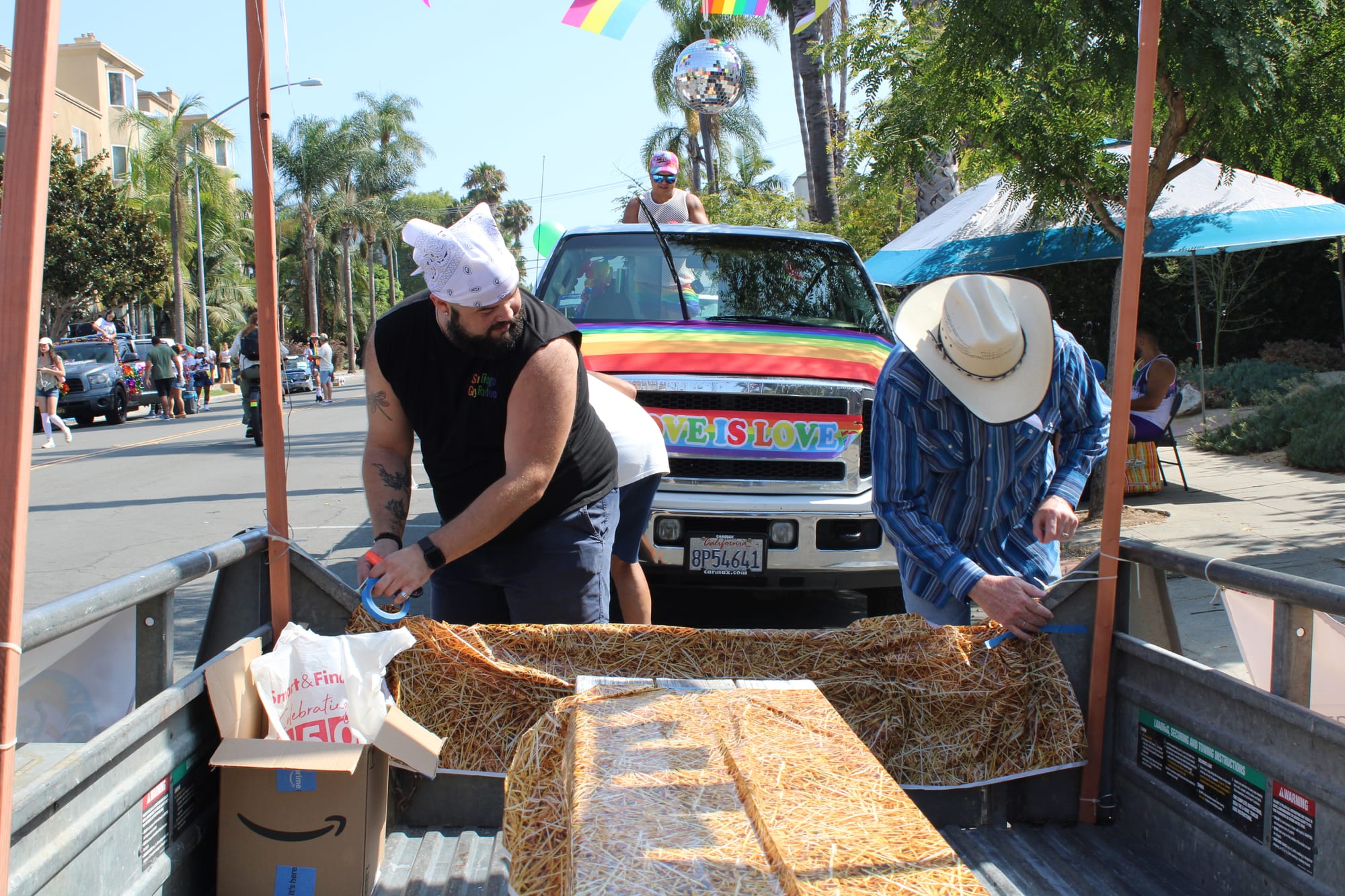
On the morning of the Pride Parade, Hayes, Reid and Bury started to set up the rodeo’s float, the 175th group out of more than 200 organizations, a little before 9 a.m. The San Diego Gay Rodeo banner caught the eye of a passing stranger.
“The gay rodeo is back?” they asked, launching a conversation with Bury, Reid and Hayes.
Listening to the gay country anthem “Man! I Feel Like a Woman!” by Shania Twain, members dressed in western boots and cowboy hats decorated a U-Haul trailer with bedazzled hats, LGBTQ+ flags, disco balls and hay table cloths.
On the morning of the Pride Parade, Siekkinen, a previous member of the Palm Springs chapter and former 2024 to 2025 president of Golden State Gay Rodeo Association, the state organization that oversees the California chapters, arrived wearing a plaid red button up and cowboy hat where other members were already setting up.
The rodeo’s float kicked off at 12 p.m., and Alvis equipped herself with her light pink lasso. Throughout the parade, she swung the rope in circular motions, earning “yeehaws” from the crowd.
Call walked throughout the parade, wearing his sash and waving to the rows of people watching along the street.
As the organization’s western-decorated trailer cruised along University Avenue and Sixth Avenue for an hour, Siekkinen and Courtney Mullen, another member, led the team by holding up a big San Diego Gay Rodeo sign.
Soto paraded behind them wearing an inflatable horse costume, with Alvis twirling her lasso alongside him. Royalty from this year and years previous donned their sashes and waved.
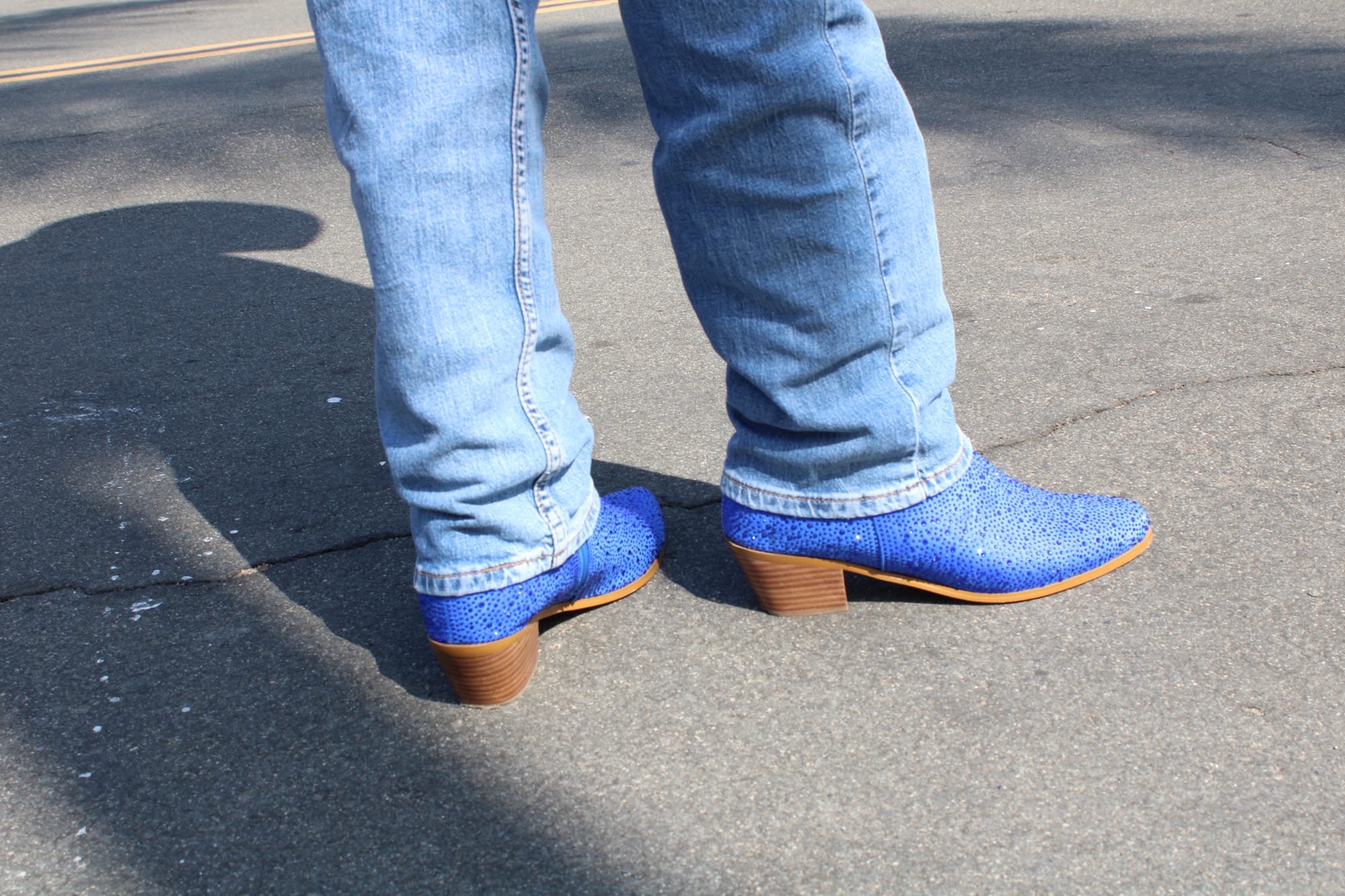
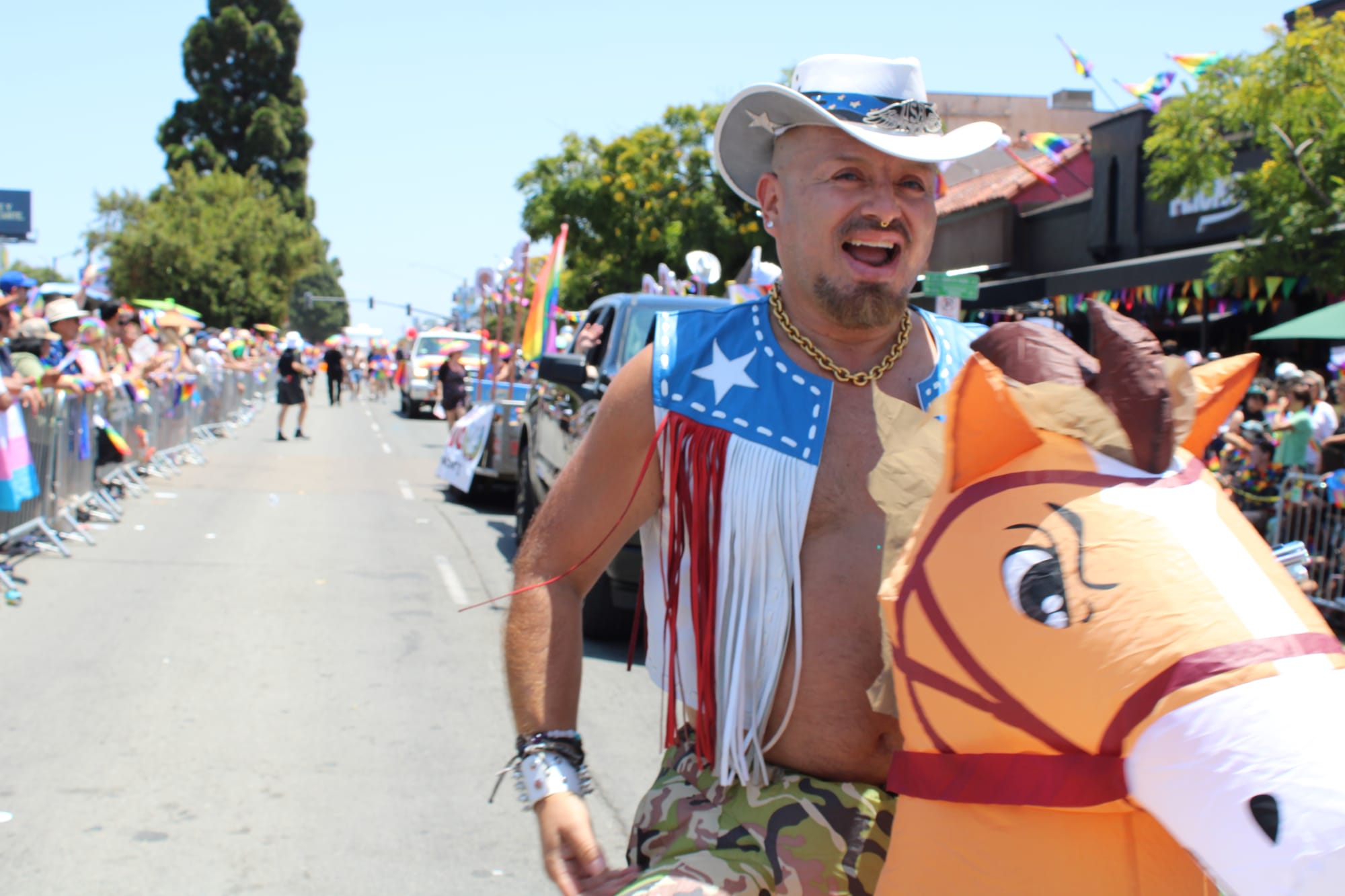
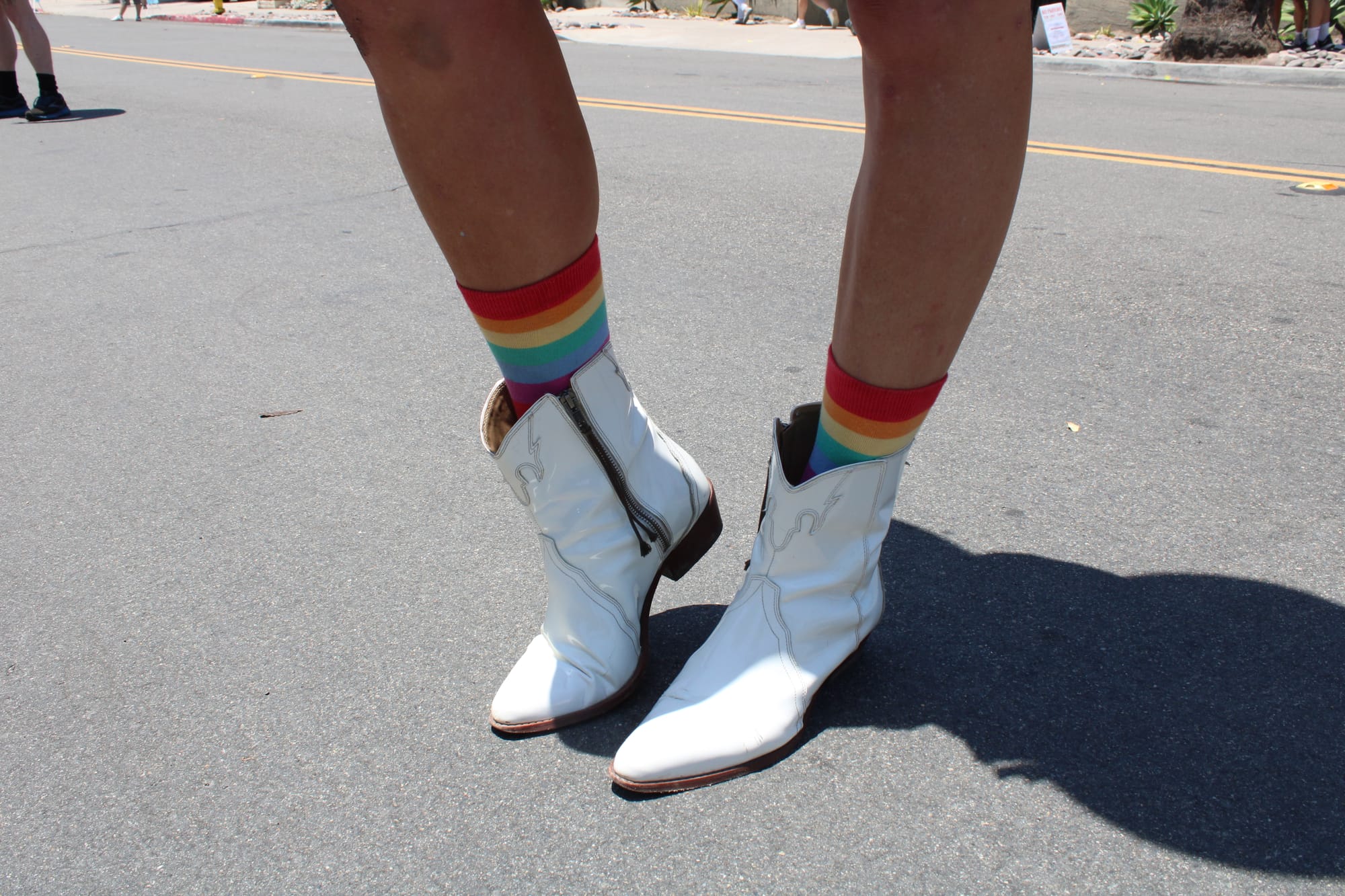
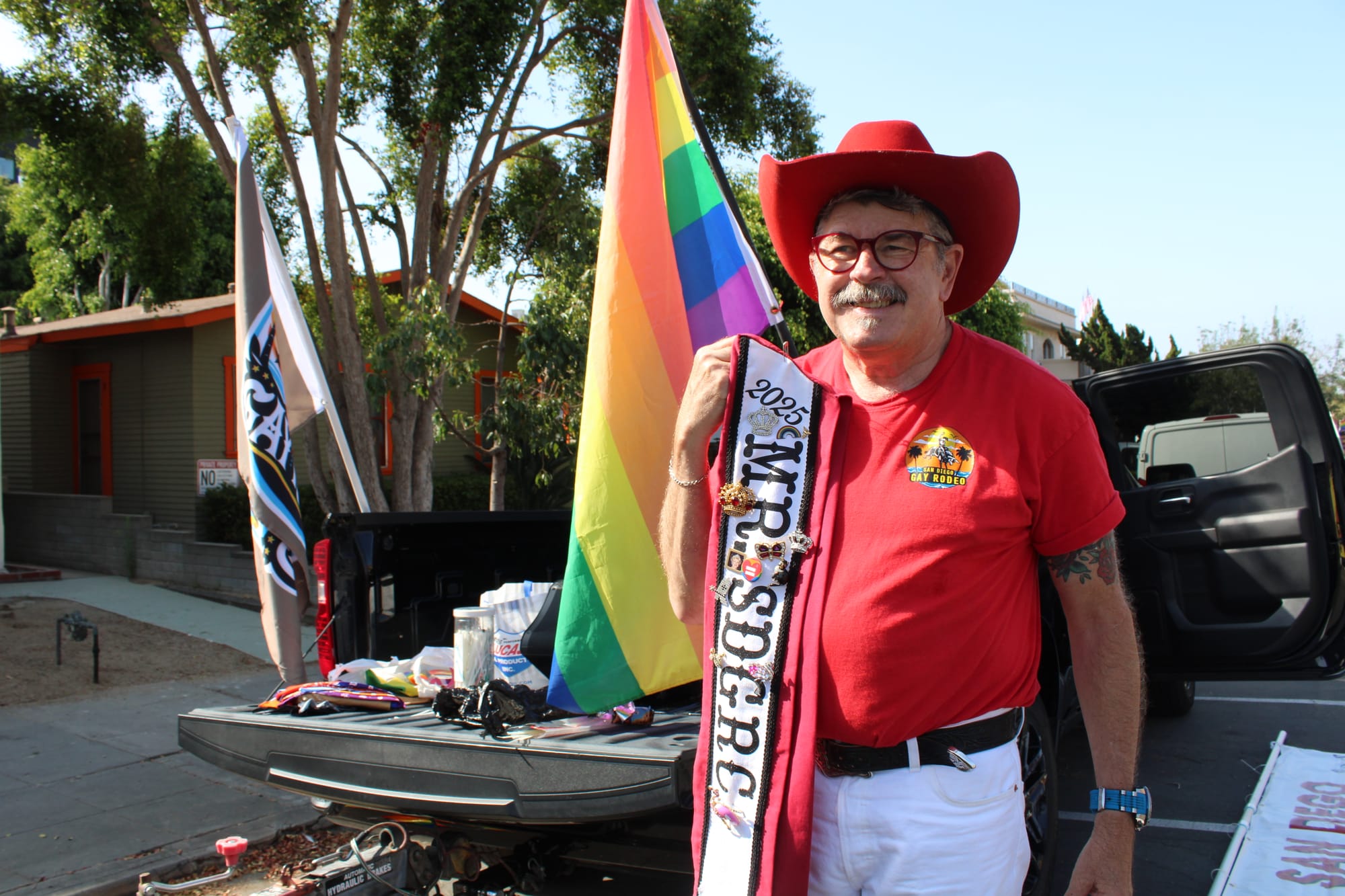
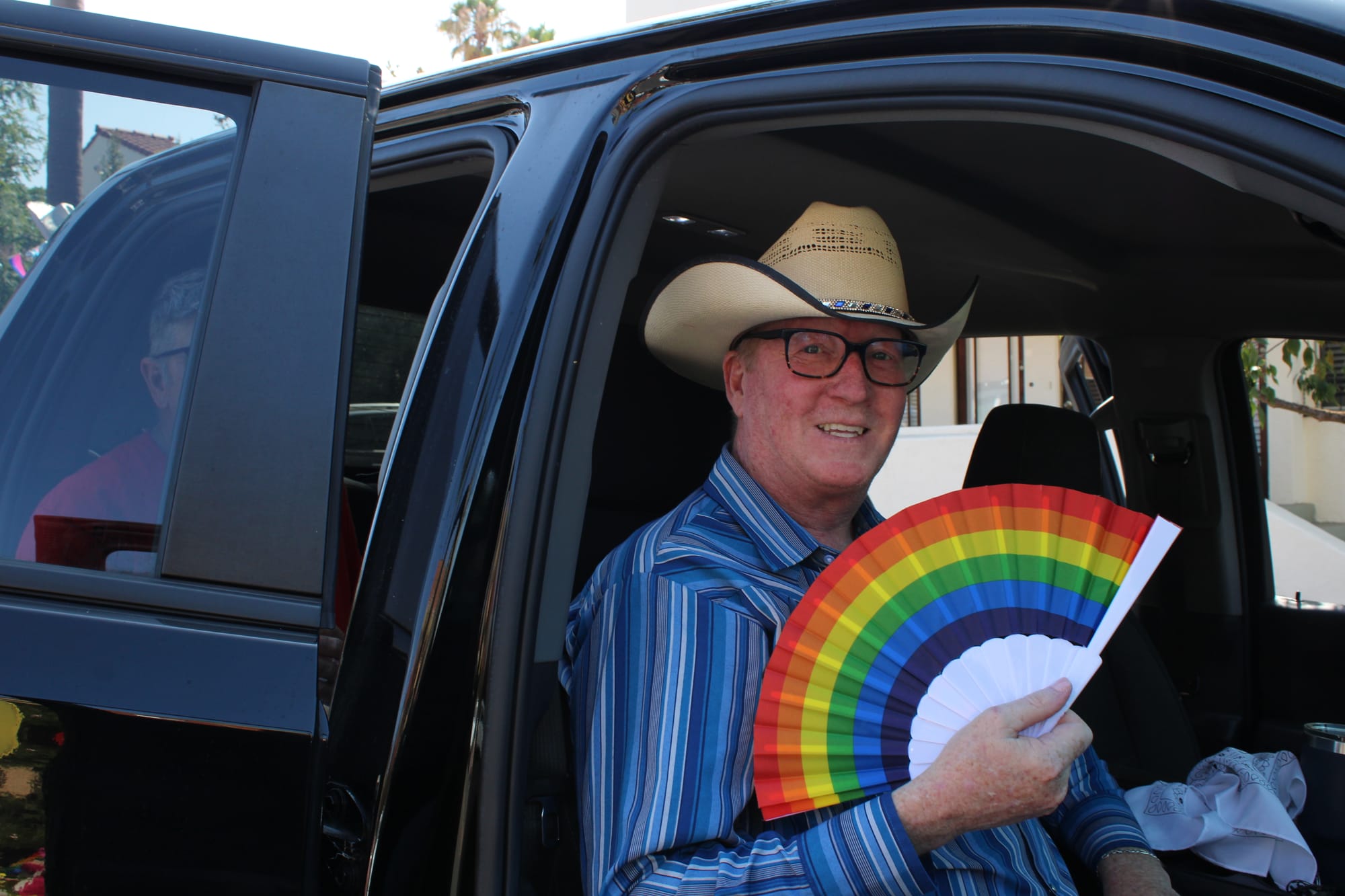
San Diego Gay Rodeo members march at the Pride Parade. Jenna Ramiscal/Daylight San Diego
As the group passed thousands of people, some in the crowd would stop to say, “Gay rodeo?” in high pitched tones, a mixture of confusion and excitement.
One member of the crowd said, “I’m sure it’s better than the regular rodeo.”
Others called out, “Yeehaw,” and, “Giddy up,” while mimicking the gesture of lassoing and riding a horse.
“I'm sure you heard people going, ‘Oh my God, there's a gay rodeo?’” Siekkinen said. “That's one of our biggest problems. It's great doing events like this, and then people know that we exist.”
 Daylight San Diego