San Diego artists and organizers are preparing for future funding fights

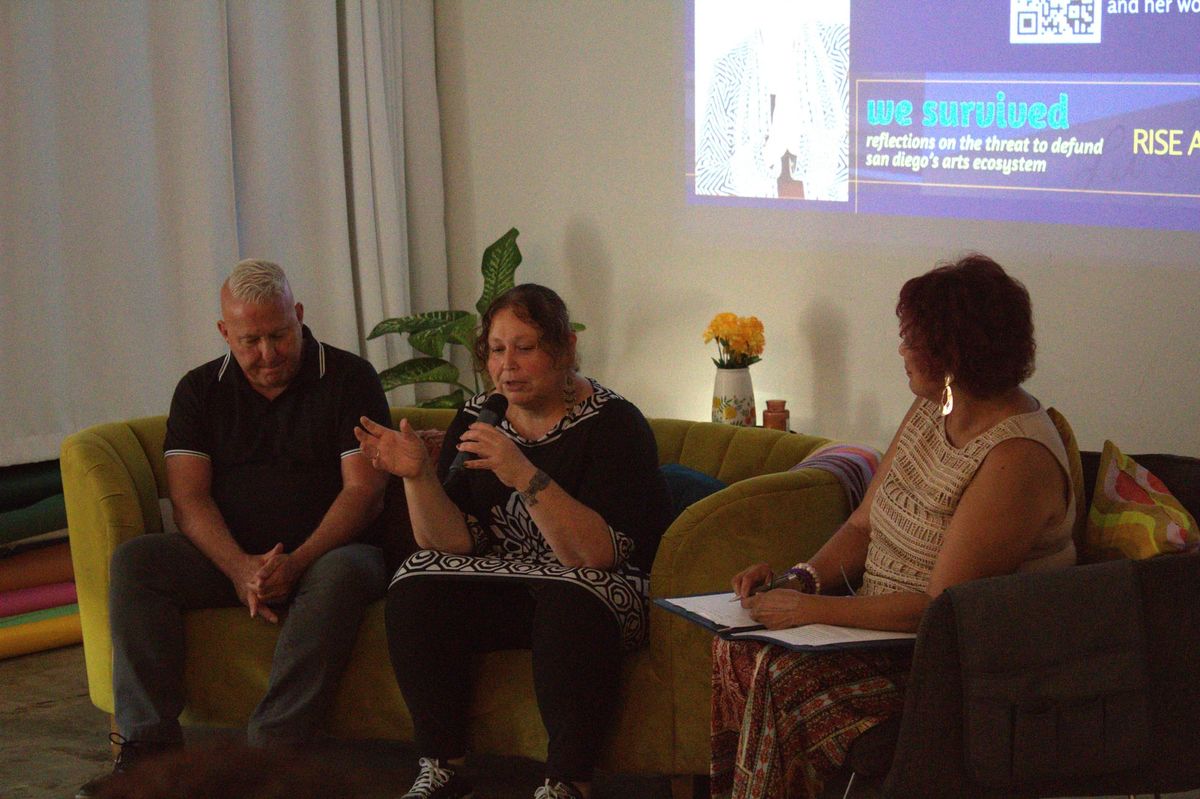
At a RISE San Diego talk, a panel of art leaders and advocates said the San Diego arts community is still grappling with trauma after the city nearly eliminated arts funding.
Written by Rami Alarian, Edited by Kate Morrissey
San Diego artists and art lovers are still reeling from the trauma from Mayor Todd Gloria's city budget proposal that would've wiped out arts funding, but they are also determined to prepare for the next funding fight.
That's according to panelists and community members who showed up for a recent installment of RISE San Diego's community dialogue series that invites experts in the fields of advocacy and art to talk about the intersection between the arts and social justice issues. Panelists said even though a later version of the budget restored most of the arts funding, the arts community still has work to do to protect San Diego artists.
“We had a near-death experience with the city trying to wipe out $11 million of our arts funds,” said Leah Goodwin, the program manager for RISE Arts. “That’s not a cut, that’s an execution.”

Goodwin asked the crowd what words could be used to describe a city that zeroes out funding for the arts. Attendees responded with words like audacity, hubris, callous, disrespectful, ignorant and obtuse.
Mayor Todd Gloria's office did not respond to a request for comment.
Monica Hernandez, the executive director of Chicano Park Museum and Cultural Center, and Bob Lehman, the executive director of San Diego ART Matters, joined Goodwin on the panel for the July 30 talk.
Goodwin, with the help of RISE San Diego’s program director Anamarie Montecina Till, has run RISE Arts Talks since last year with panelists covering topics including youth creative movements, art as a mental health practice and arts’ place in the economy.
“One of the things we found that our artists are saying is we need safe places to meet, connect and be together,” Goodwin said. “They kept saying ‘Oh my God, if we could just have places where we could talk about things that matter.’”
After the mayor's attempt to cut city arts funding, that gathering has taken on a new urgency.
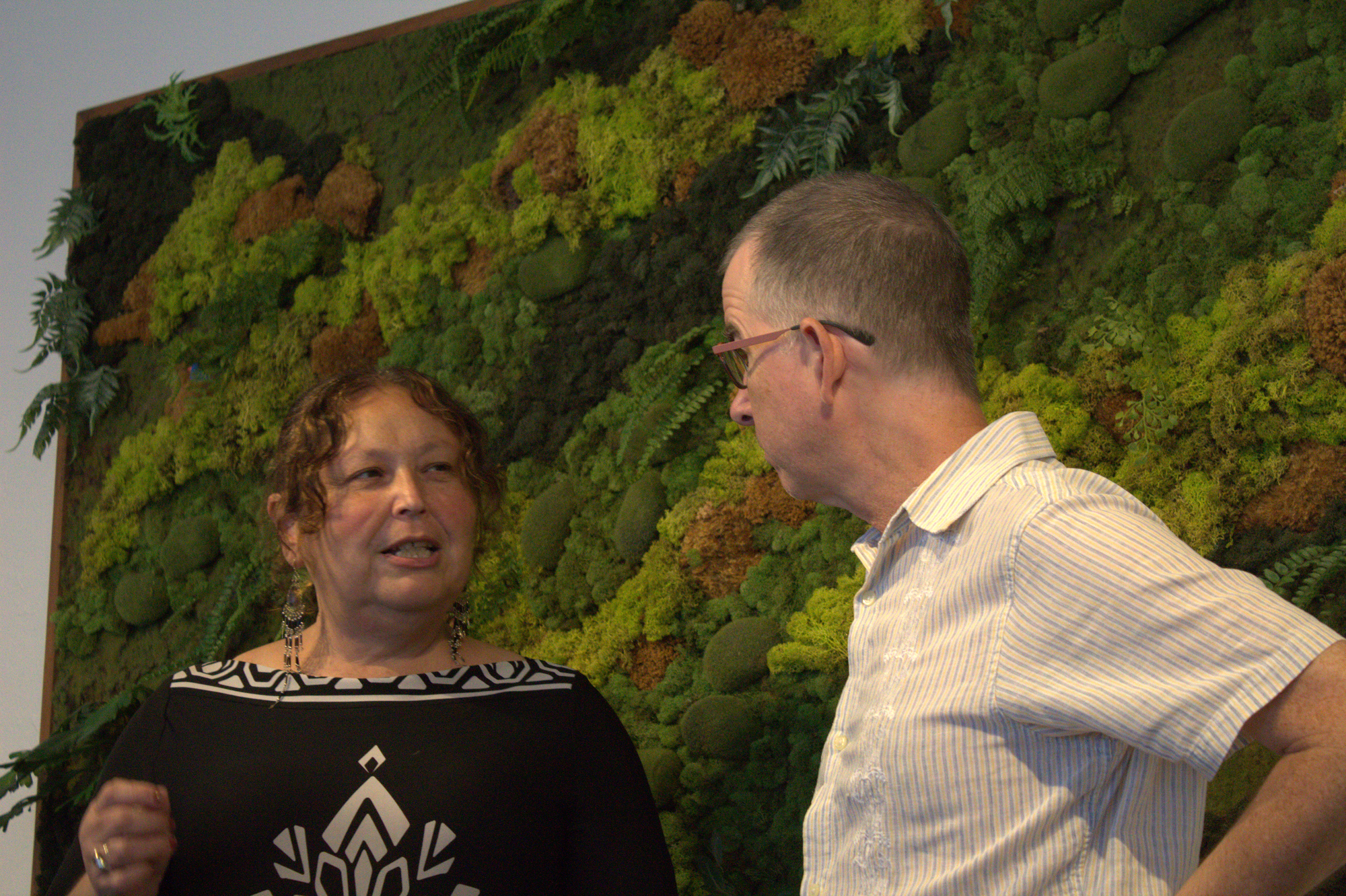
Lehman said the night before the announcement of funding cuts, a staff member from Mayor Todd Gloria’s office met with him and more than a dozen other art advocates to let them know.
Lehman said he knew for years that the city might cut some arts funding in its annual budget.
“This isn't new,” Lehman said. “This was extreme.”
Lehman said some art advocates were worried that people wouldn’t show up for rallies to protest the funding cuts.
“I never doubted it,” Lehman said. “I knew, right away, we’ll get people.”
Hernandez said she received countless calls from worried organizers wondering what to do.
“There was already this movement, this energy around just the closeness of the community coming together to protect ourselves from the ICE raids,” Hernandez said. “So we formed this very informal collective through the arts, through an artistry exhibition that very intentionally brought BIPOC from across the region with the whole purpose of getting to know each other.”
That exhibition, “An Artist's Duty,” launched under XiKANX collective and featured 100 artists, performers and vendors to protest Immigration and Customs Enforcement. Hernandez said the group ended up tapping into that same network to protest against funding cuts.
Despite the community's success in scaling back the cuts in the end, panelists said the proposal still damaged the mental health of local artists and art advocates.
Lehman said that he felt immense pressure, like the future of the arts was weighing on his back. He said artists and organizers should take time off for themselves to prioritize mental health, but he admitted that he and others have struggled to do that because the fight for arts funding is not over.
“We haven’t stopped,” Lehman said. “We haven’t taken a breather.”
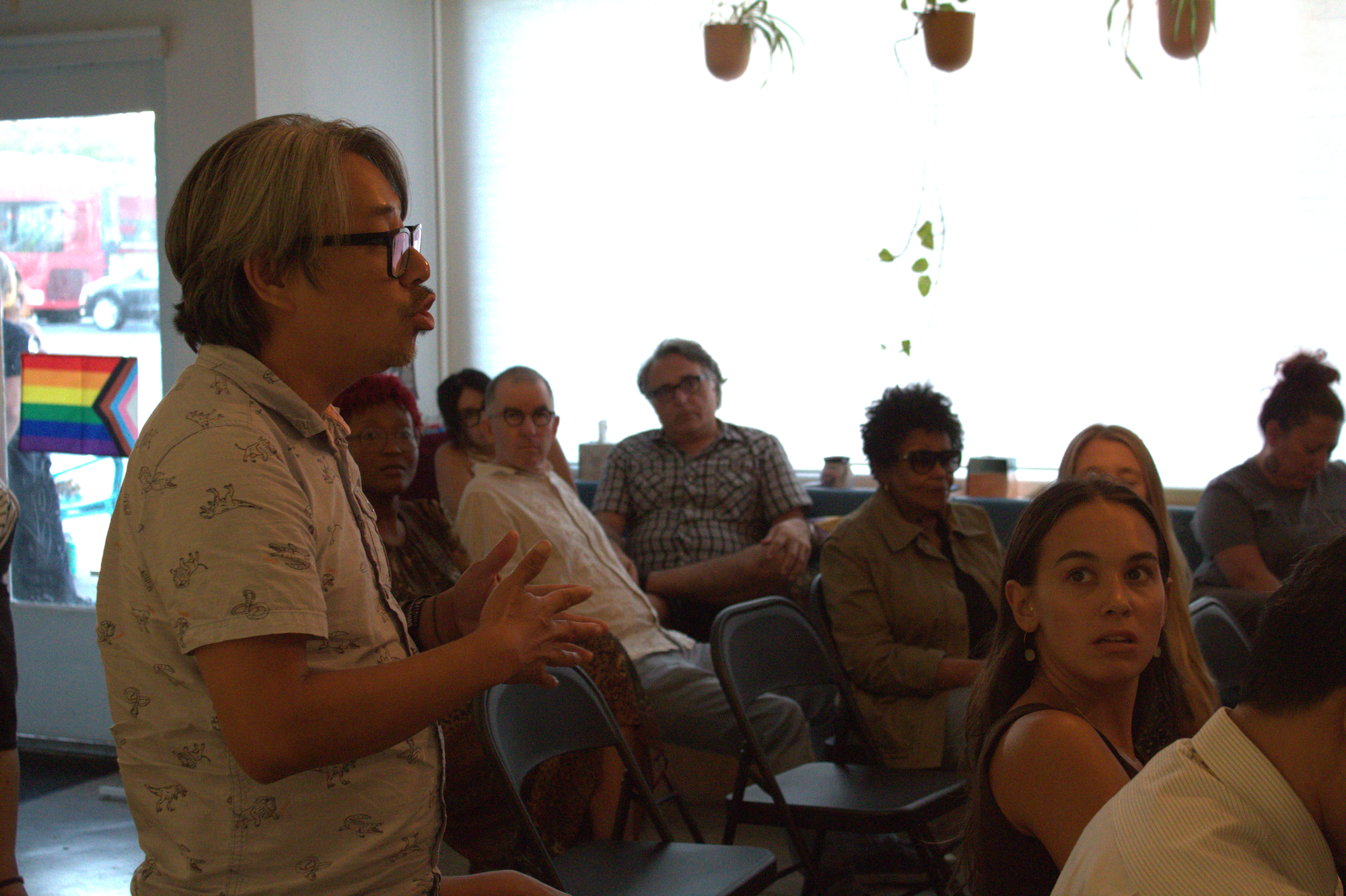
Lehman said that opposing the funding cuts formed a stronger organized art community but that the trauma still lingers and so does the threat to funding.
Going forward, panelists said, San Diego art advocates must focus on making the art scene not as reliant on politics while still attempting to form a relationship with local politicians.
“We have nobody in the City Council that says ‘I'm an arts champion,’” Lehman said. “Part of the problem was that nobody was talking to them.”
Hernandez said that if a crisis pushes a community to talk to its representatives for the first time, then they are doing something wrong. She said that holding politicians accountable starts by building a connection with them.
Lehman said he had breakfast with Mayor Todd Gloria recently to talk about the state of local art. He said Gloria told him that artists don’t have much to worry about.
“He knows that we’re going to get money next year,” Lehman said. “We don’t know what it’s going to be, but he knows something’s going to happen because of how powerful we were.”
Lehman said he's working with other advocates on a long-term strategy that involves creating an independent funding plan and being ready to organize quicker.
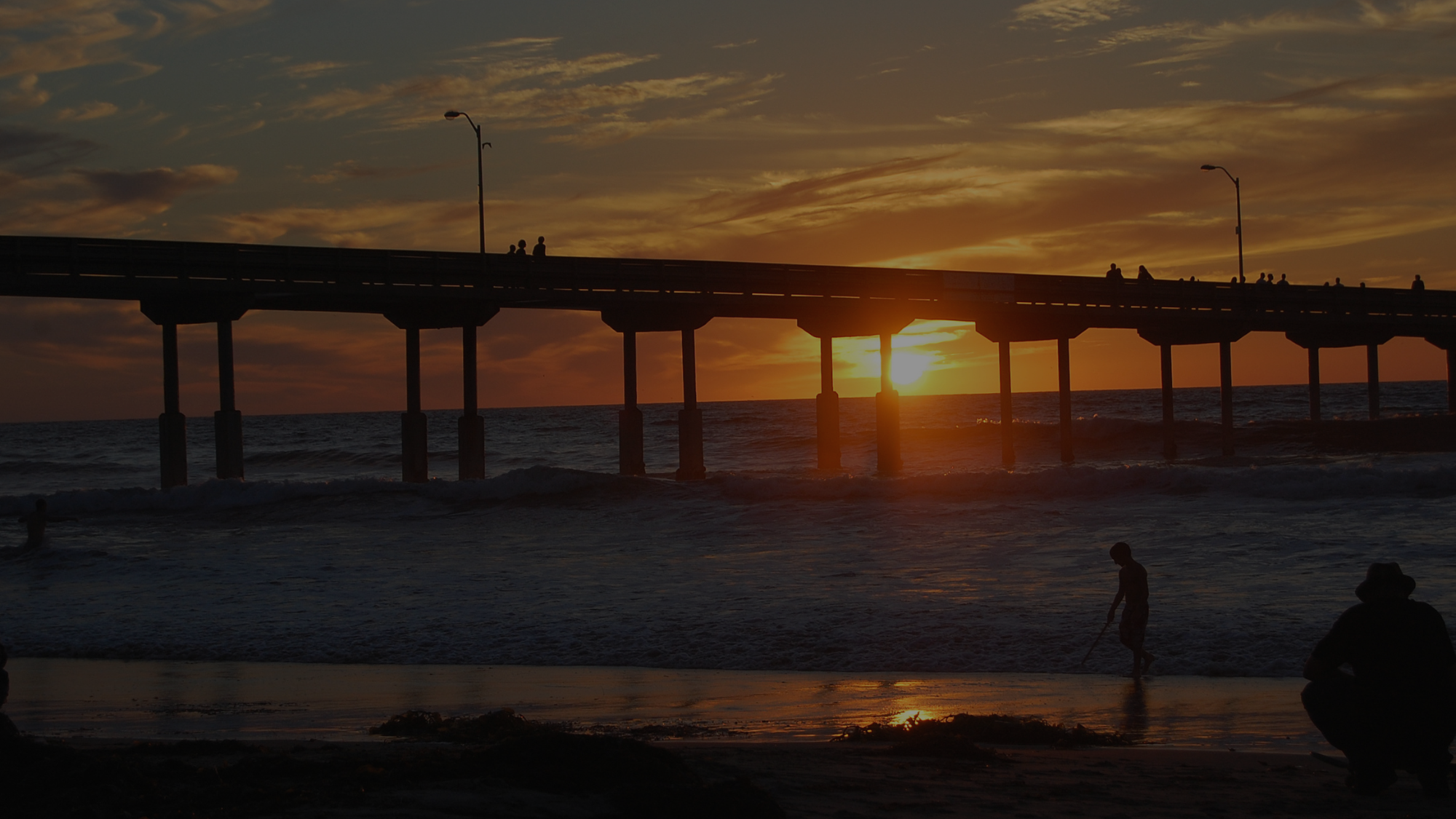
At the end of the talk, community members stood up to offer insight.
“I don’t think having the community come out and fight for scrap is equitable,” said Jean-Huy Tran, the executive director of Viet Voices.
Edwin Oscar Lohr, a commissioner of the city’s Human Relations Commission, said he believed the community's organizing around the funding cuts brought the city together.
“A force was created that is now going to be a legacy for many years to come,” Lohr said.
The panelists said the organizing that stemmed from opposition to the budget cuts can serve as an important tool for future protests and funding fights.
“The rallies are done, but spring is going to come around again, budget conversations turn around again,” Montecina Till said. “Are we going to have to go through this again?”