San Diego families call for greater support during ‘No Country for Mothers’ screening


Parents, advocates and elected officials discussed child care and policies impacting parents lives during the Liberty Station event earlier this month.
Written by Yanelli Zavina Robles, Edited by Lauren J. Mapp
Raising a child can take a village. That village may include grandparents watching the kids, an understanding employer, an accessible school program or government policies designed to help families make ends meet.
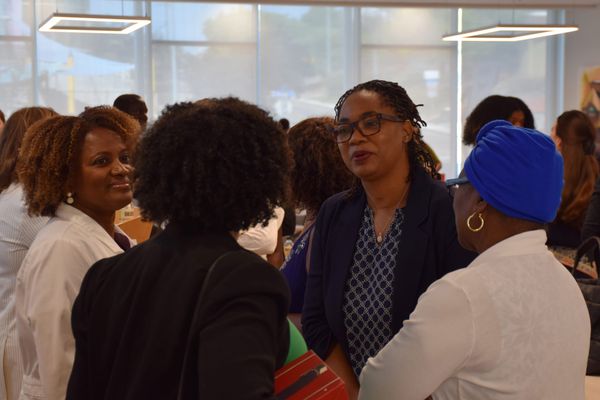
A Sept. 11 screening of the documentary “No Country for Mothers” in Liberty Station showed one example of what a village can look like. Children's First Collective brought together San Diegan parents, advocates and panelists to discuss what families need, what those needs look like and how local politics can help achieve them.
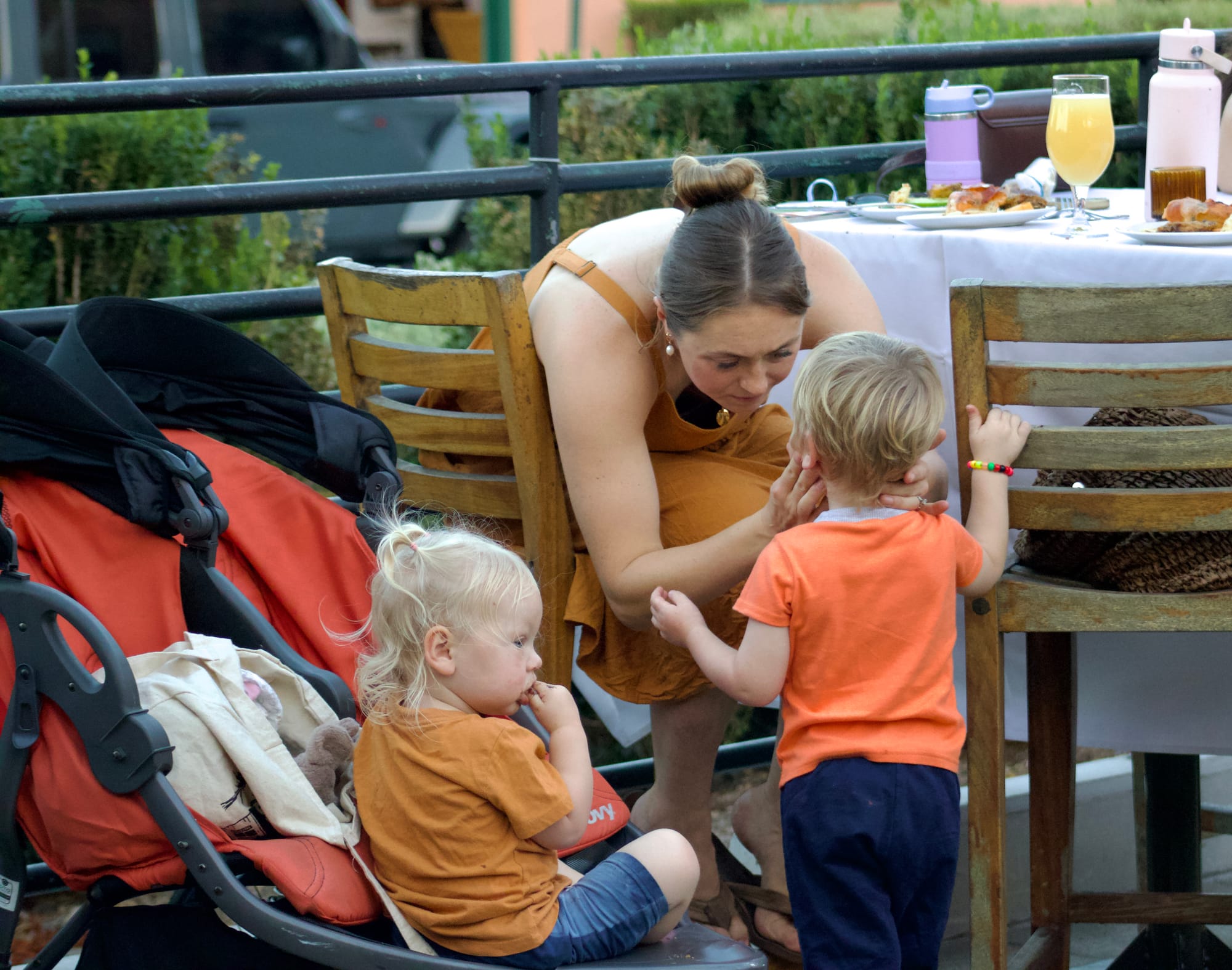
Children filled the lawn with laughter, blowing bubbles and dancing with ribbons as families gathered before the panel. Building blocks, modeling clay and games were stacked on a table for kids to play with, and children's books filled a blanket on the floor.

Directed by Raeshem Nijhon, “No Country for Mothers” highlights the challenges of motherhood in the United States and the lack of structural support that many families face. The documentary follows activist and Moms First founder Reshma Saujani as she speaks to mothers across the country asking them their thoughts on what she describes as a “war on moms.” Throughout the film, Saujani explores how false dichotomies between working and stay-at-home moms — or the “girl bosses” and the “tradwives” — are creating divisions among mothers at a time motherhood can already feel isolating.
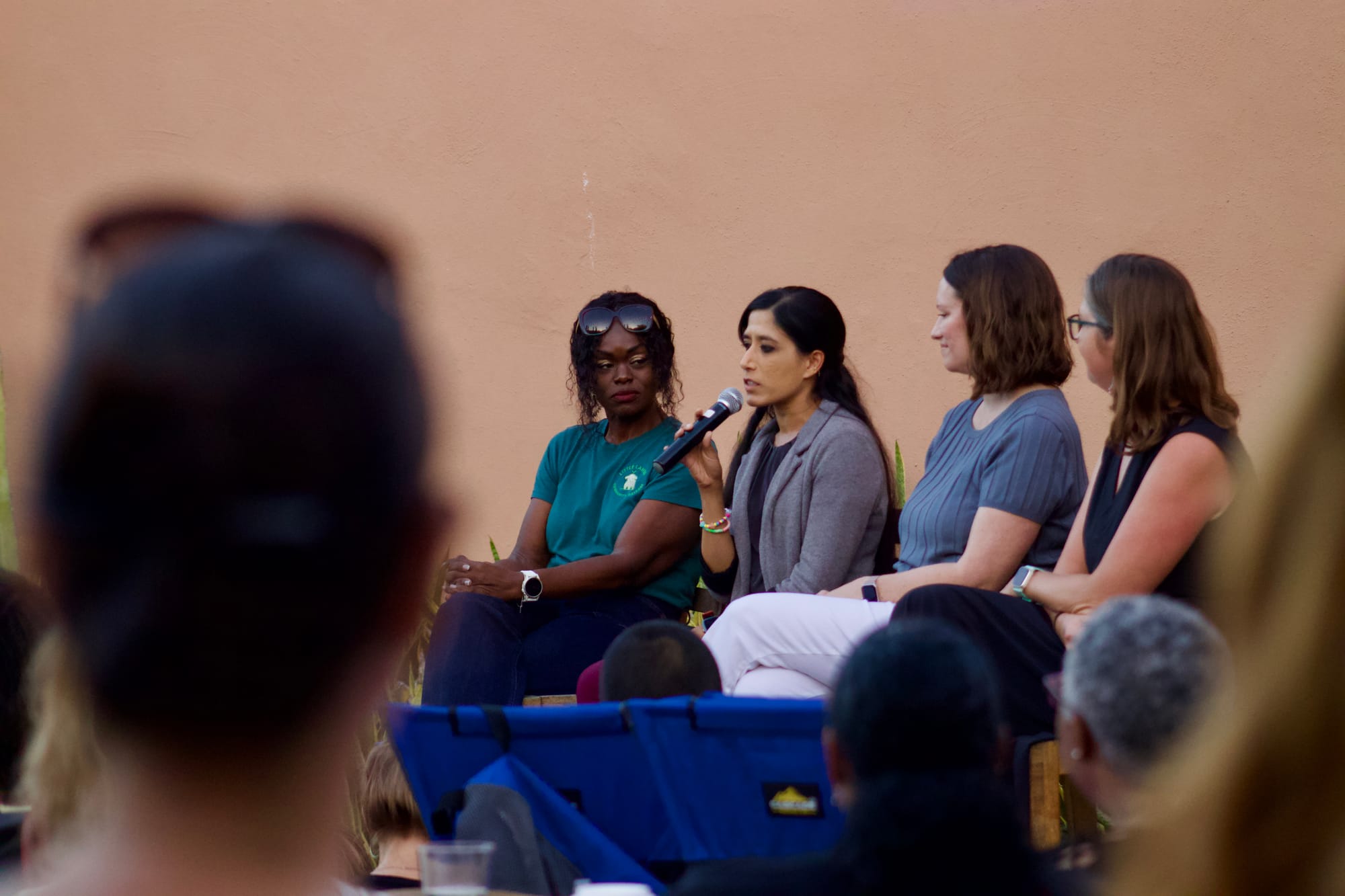
Before the documentary screening, panelists explored ways San Diego government officials can advocate for parents by supporting affordable child care and paid family leave policies at the state and federal level. A panel featuring Carlsbad Mayor Pro Tem Priya Bhat-Patel, Rooted Life project director Nancy Behm, child care provider Priscilla Dicken and Caring for Mama founder Kim Richards discussed how to mobilize the community and local government to enact practical policies.
Bhat-Patel said becoming the first pregnant woman to serve on the Carlsbad City Council opened her and her colleagues’ eyes to how the city supports its employees and the public. Although elected officials do not receive paid family leave, she said her experience showed her that the city can still help shape policies that better support families in the community.
“Being able to be at that table, sharing that perspective as a working parent and as a parent in general, I think is really important.” she said.
Throughout the evening, the conversation held a common theme: Families need support.
What that support looks like can vary between households. For some, the village begins with their partners, relatives and friends. For others, it includes schools, employers, community organizations and government programs.
Anna McNerny, a mother of two, said her village is a group of people who support families through the challenges of raising children.
“My husband and I are both military, (and) it has been so important to have that support system,” she said. “I think this is a group of people that have very niche needs and wants and therefore require niche advocacy.”
McNerny said advocacy can amplify parents' voices when they come together, but a village can also extend beyond other parents who share similar experiences. She attended the event with a friend who does not have children but came to support McNerny and her two children.
“This is what adds legitimacy to what we’re doing here,” McNerny said. “It is not just people screaming into an echo chamber of, ‘We are so wronged.’ There are other people here being like, ‘Yeah, this is also something we are about, and this is how we can improve for the greater good.’”
McNerny said the event also stood out because it gave parents an opportunity to participate in an activity that can be difficult with children. The event allowed parents like her to watch a documentary while also creating a space for them to join a larger conversation about supporting families.
For other mothers, building a village can mean relying on several forms of support at once.
As a single mother working her way through community college, Iltze Flores relied on her mother and cousins to care for her daughter while attending school and working as a server.
“I'm a single mom, so I've always wanted to be able to provide the best life I can for my daughter and be present,” Flores said. “But I also wanted to further my education to be able to provide her a better life.”
Balancing those responsibilities sometimes meant spending days away from her daughter.
“I was always leaving my daughter away for the weekend,” she said. “I had to drop her off Thursday night and pick her up Monday morning. Every time I saw her, it was like she had grown a little bit more. She knew more.”
Flores said her experience helped her understand the importance of having a supportive village. Her mother, also a single parent, worked two or three jobs while raising Flores and her siblings. As Flores grew older and became a mother herself, she began to recognize the sacrifices her mother made to provide for their family.
Flores said she found herself in a similar cycle, focused on working and providing for her daughter while also wanting to be present as a parent. The cost and availability of child care added another challenge to balancing those responsibilities.

When her daughter was 14, Flores returned to school to finish her education. She has since earned an associate degree in business administration and plans to pursue a bachelor's degree.
Flores said parents could have greater opportunities to pursue education and career goals earlier in their children's lives if they had access to the support systems they needed.
Organizers with the Children’s First Collective — a local group of nonprofits, public entities, childcare providers and parents — believe supporting families means looking at how that village can extend into the community.
“We are always looking for opportunities to bring community together, to build relationships and to really show child care providers and parents that they are seen and appreciated,” said Courtney Baltiyskyy, who heads the Children’s First Collective San Diego chapter.
Children’s First Collective works at the federal, state and local levels to advocate for children, families and child care providers. Baltiyskyy said those conversations are particularly important as working families balance multiple responsibilities.
“Working families are carrying a lot right now,” Baltiyskyy said. “Parents are taking care of their aging parents, their own kiddos and we are the economic drivers in San Diego.”
Baltiyskyy described caregiving as a labor of love that should be recognized not only within families, but through public policy. She pointed to the cost and availability of child care as a challenge facing working parents.
“Child care providers can’t afford to stay, and parents can’t afford to pay,” Baltiyskyy said.
Children’s First Collective advocates for changes in six areas, including the child care workforce, facilities, mental and behavioral health, workplace benefits and policies, local government and dedicated funding. The collective also works with employers on parental leave and accommodations for working parents and caregivers.
Baltiyskyy said local government also has a role in addressing working families' needs.
“We know that there is a lot that our local government can do,” Baltiyskyy said.

The collective is involved in efforts supporting Measure B, a countywide half-cent sales tax proposal that will be on the November ballot. The measure is estimated to generate between $400 million and $450 million annually if approved, with funding divided among health and family services, child care, the Tijuana River sewage crisis and public safety.
Baltiyskyy said the collective views the measure as an opportunity to expand access to child care, increase compensation for providers and support behavioral health services for young children.
But she said policy changes are only one part of building a stronger support system. She also encourages parents to participate in local advocacy and build relationships with other families.
“It truly takes a village to raise a kiddo these days,” Baltiyskyy said.

As families packed up and children left the lawn where they had spent the evening playing in Liberty Station, the conversation returned to the idea that brought many of them there together.
Before the documentary started, U.S. Rep. Sara Jacobs told attendees that change also depends on families making their needs heard.
“None of the progress that we are going to make happens without your advocacy, happens without you showing up,” she said. “None of it happens without the people right here saying, ‘We want better, we deserve better and we demand better from our government.”
Hera Hub is screening “No Country for Mothers” at its Sorrento Valley location on Oct. 8. Reserve a spot in advance online.