San Diego Muslim community leaders say mayor ignored them prior to attack

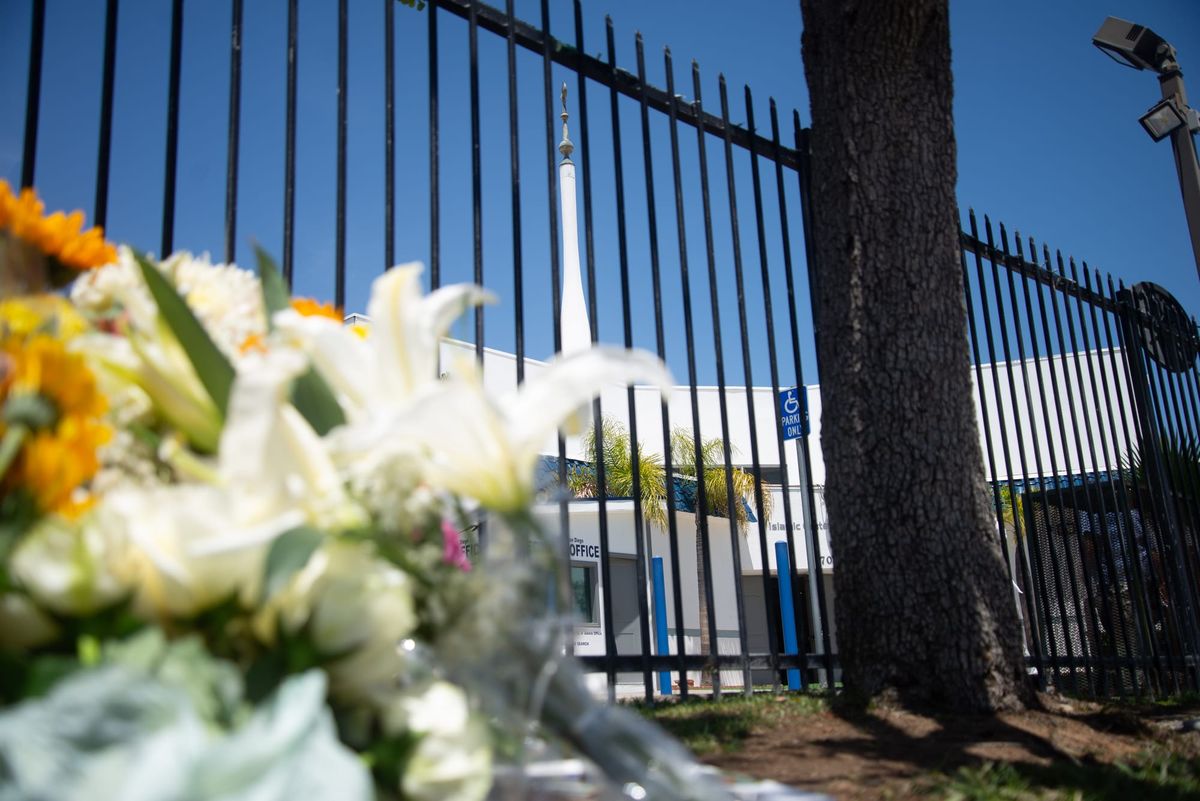
Many in the Muslim community criticized the mayor and police chief's comments in the aftermath of the attack on the Islamic Center.
Written by Kate Morrissey, Edited by Lauren J. Mapp
As San Diegans mourn the three men who died protecting the Islamic Center of San Diego from two attackers in mid-May, another emotion is coming up for many in the local Muslim community — anger.
They are angry at local public officials who ignored the community's concerns about increasing examples of Islamophobia following Israel's attacks on Gaza, and they are angry that officials used the moment to argue for policies and practices that they believe will hurt their community more than help.
“Instead of putting more care in the community and more attention and listening to what the community's needs are, they are literally not paying attention to what we're asking for,” said Mejgan Afshan, co-founder of Borderlands for Equity. “And we're not asking for the world. We're asking for basic human dignity, decency, and the right to live and practice in peace.”
Shortly after the attack that terrorized the community, San Diego's mayor and police chief spoke at multiple press conferences applauding the police response. The police chief celebrated the department's automated license plate readers, and the mayor used the moment to argue for his unpopular budget proposal for the coming fiscal year.
“This is what we budget for,” Mayor Todd Gloria said during the first press conference following the attack. “This is what we ask of our public safety professionals, and they absolutely deliver in the way that we ask them to do so.”
Neither Gloria's office nor the police department responded to requests for comment.
At the second press conference of the day, police Chief Scott Wahl shared the beginnings of a timeline of how police learned of the attack. He said police first heard from the mother of one of the gunmen about two hours before the attack, that she was concerned her son was suicidal, that guns were missing from her home and that the son and a friend had left in her car in camouflage.
He said that as police pieced these details together, officers became concerned that they were looking at a potentially more dangerous situation than a runaway or suicidal teen. He said the department began using its technology to track the car the teens were in.
“Our license plate readers was at the top of that list,” Wahl said.
He said a reader picked up the car in Fashion Valley, and officers deployed to the area. Then, through calls from community members, officers learned that the Islamic Center was under attack.
It's not clear what path the car took from the automated license plate reader in Fashion Valley to the mosque and school located on Balboa Avenue near the entrance to I-805. A city map of license plate readers shows several just west of the Islamic Center.
“Those ALPRs failed. That's what happened. That should have been the headline. That's the story,” said Homayra Yusufi with the Partnership for the Advancement of New Americans. “What crime did it prevent? Our three heroes lost their lives to protect the children in there. That's the story.”
Many who spoke with Daylight reiterated that the police chief's touting of his force's response to the act of domestic terrorism took away from the heroism of Amin Abdullah, Mansour Kaziha and Nadir Awad, the three men who were killed while protecting those inside the center.
Pushing back on surveillance
The surveillance apparatus that has grown across the United States in the two and a half decades since 9/11 has disproportionately impacted Muslim communities.
Many local organizations run by leaders of the San Diego Muslim community have campaigned against additional surveillance, including automated license plate readers. Adding to that community pressure, KPBS reported last year that data from license plate readers in El Cajon ended up in immigration enforcement-related searches nationwide.
Yusufi said that the police chief using the moment to tout the technology was disgusting.
“That's not how you stand with community,” she said.
She said when San Diego's Muslim leaders gathered after the killings, many shared their anger about the officials’ comments.
“The community was upset that in the time of our crisis and the time of our worst nightmares, that the mayor and the police chief chose to use it for their political gain, to justify their police budget and justify surveillance technology that the entire Muslim community has been asking to be shut down because we know it is surveilling and harming our immigrant communities,” Yusufi said.
Khalid Alexander, founder of Pillars of the Community, called the mayor and police chief's messaging at the press conferences infuriating. He found Gloria's comments to justify his budget decisions cutting funding for arts, recreation centers, youth programs, libraries and violence intervention particularly problematic.
“Perhaps even more damning was a clear decision on his part to gather points with law enforcement and their supporters rather than the actual victims of this violence,” Alexander said.
He emphasized that the two assailants were teenagers and that they had learned from other examples in society to dehumanize Muslim community members.
“This is a deeper societal issue creating people who do not value the lives of other human beings who may not look like them, who may not speak like them, and I think that's the real harm in the mayor's statements,” Alexander said.
Ignored concerns
Several community leaders said that the city, and the mayor in particular, had ignored requests to meet with them about Islamophobia concerns.
Jamal Kanj, a writer and Palestinian San Diegan who published a scathing commentary on the ways San Diego leaders failed the Muslim community prior to the attack, said that Gloria refused to meet with Muslim and Arab community leaders after Israel began committing genocide in Gaza. Kanj said all they were asking was for the city to call for a ceasefire in the region.
“He ran away from the community like the community has some kind of a virus,” Kanj told Daylight. “He suggested they meet with his staff when it was him they needed to meet with. To him, I would say you're trying to console us in death when you basically avoided us in life.”
Last year, Gloria, along with several Jewish organizations, chose to boycott the San Diego Pride Festival over one of its performers who had made statements supporting Palestinians and critical of Israel's actions in Gaza.
Alexander said that he realized soon after Gloria's election that the mayor had turned his back on certain communities who had helped him get into office.
“A mayor who claimed to be for social justice, who immediately embraces law enforcement and rushes to the right — honestly I think it's very reflective of a lot of Democratic candidates,” Alexander said. “They run on a campaign for the people, and as soon as they're elected, they begin to put more attention on wooing Trump supporters than actually advocating for the people who put them in office.”
The city also adopted a controversial definition of anti-semitism that many Muslim community members argued would be used to silence their critiques of Israel's treatment of Palestinians.
Yusef Miller, executive director of North County Equity and Justice Coalition and Activist San Diego, said that punishing pro-Palestinian expression can negatively influence the way society, and especially young people, see Muslim and Arab Americans.
“Pro-Palestinian doesn't mean anti anybody,” Miller said. “It just means support for the health and survival of Palestinians.”
What the community wants to see
Last year, the Islamic Center of San Diego held a day-long conference on how to combat Islamophobia. Academics, organizers and activists presented findings about bullying and hate crimes, particularly in schools, as well as the effects of the stress of dealing with Islamophobia.
The conclusions about how to move society away from hate were straightforward — include Muslims and Arab Americans in the conversation, educate children about their beliefs and histories and create more spaces where people of different backgrounds can come together and learn to be with each other.
In the aftermath of the attack, many Muslim community members are still calling on local leaders to take these steps.
During a press conference the day after the attack, Tazheen Nizam, executive director of Council on American Islamic Relations San Diego, said elected officials should meet with the Muslim community.
“We have been ignored,” Nizam said. “We have been put at the back burner in the last few years like we didn't matter and we didn't exist.”
Yusef said local elected leaders should denounce Islamophobia directly and push for diversity, equity and inclusion practices as well as ethnic studies in schools.
Several Muslim leaders also called on police to send out alerts to local places of worship and schools if they are concerned about the potential for an active shooter situation.
“There is no reason why the police, as well as the city of San Diego or any other region, are not able to share the information and the pictures and the car color and type for the community to be on watch,” Afshan said.
Ramla Sahid, executive director of the Partnership for the Advancement of New Americans, said that the mayor's budget priorities will likely create more distrust and hate among the city's young people rather than help prevent future attacks.
“A city that invests in its children, its citizens, is a city that's going to have a lot of love for one another,” Sahid said.
She said investments in surveillance and policing teach young people that communities like hers are meant to be controlled and watched, rather than embraced and included.
Investment in art and culture and youth programs, Alexander said, would actually combat hate.