San Diego Police Department ends its media credentials program

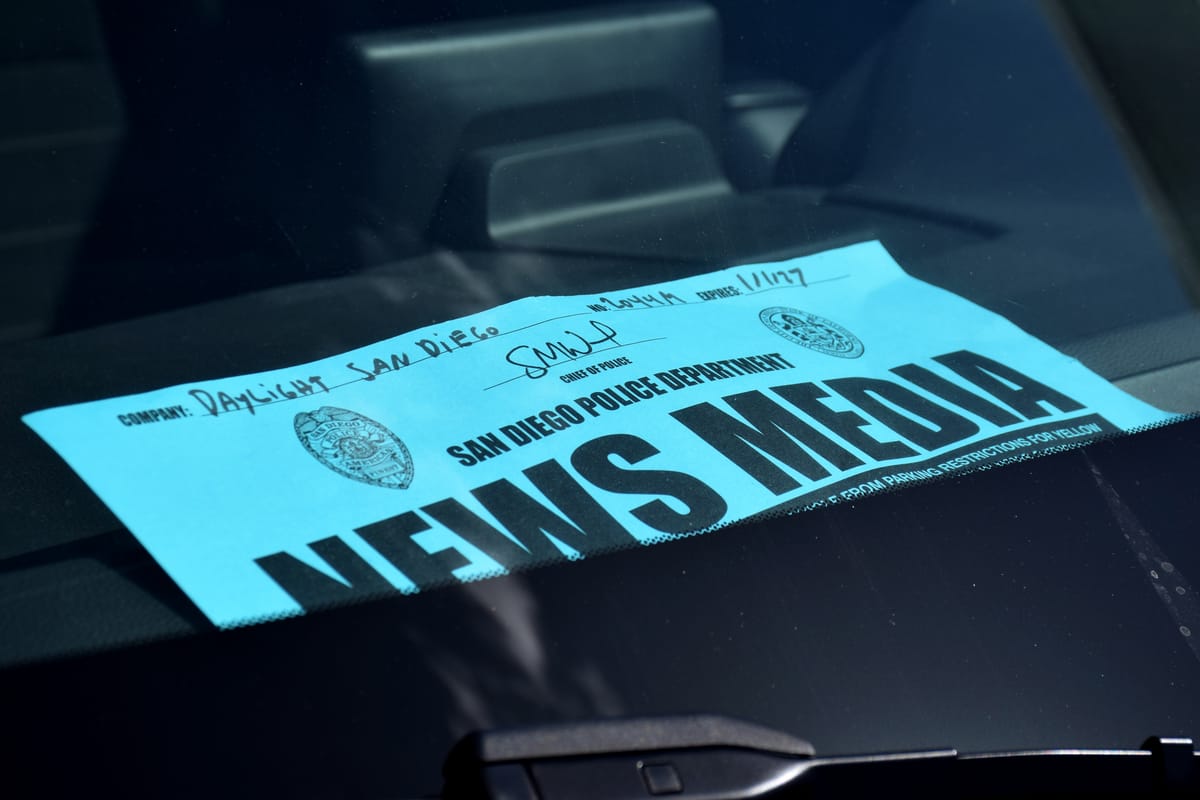
The program provided identification cards and parking placards for journalists to aid in newsgathering.
Written by Lauren J. Mapp, Edited by Kate Morrissey
The San Diego Police Department recently ended its media identification program, notifying some credentialed journalists and current pending applicants that the program would cease to exist the same day as the announcement.
Journalists in the region are concerned the move will lead to less transparency and safety for those exercising their First Amendment right to freedom of the press as well as cause delays in getting news to community members. The police department said concerns over abuse and questions about who qualifies for the program lead to the decision.
“This decision was not made lightly,” said Ashley Nicholes, communications manager for SDPD, in an interview with Daylight. “We have been determining what to do with this program for about two years.”
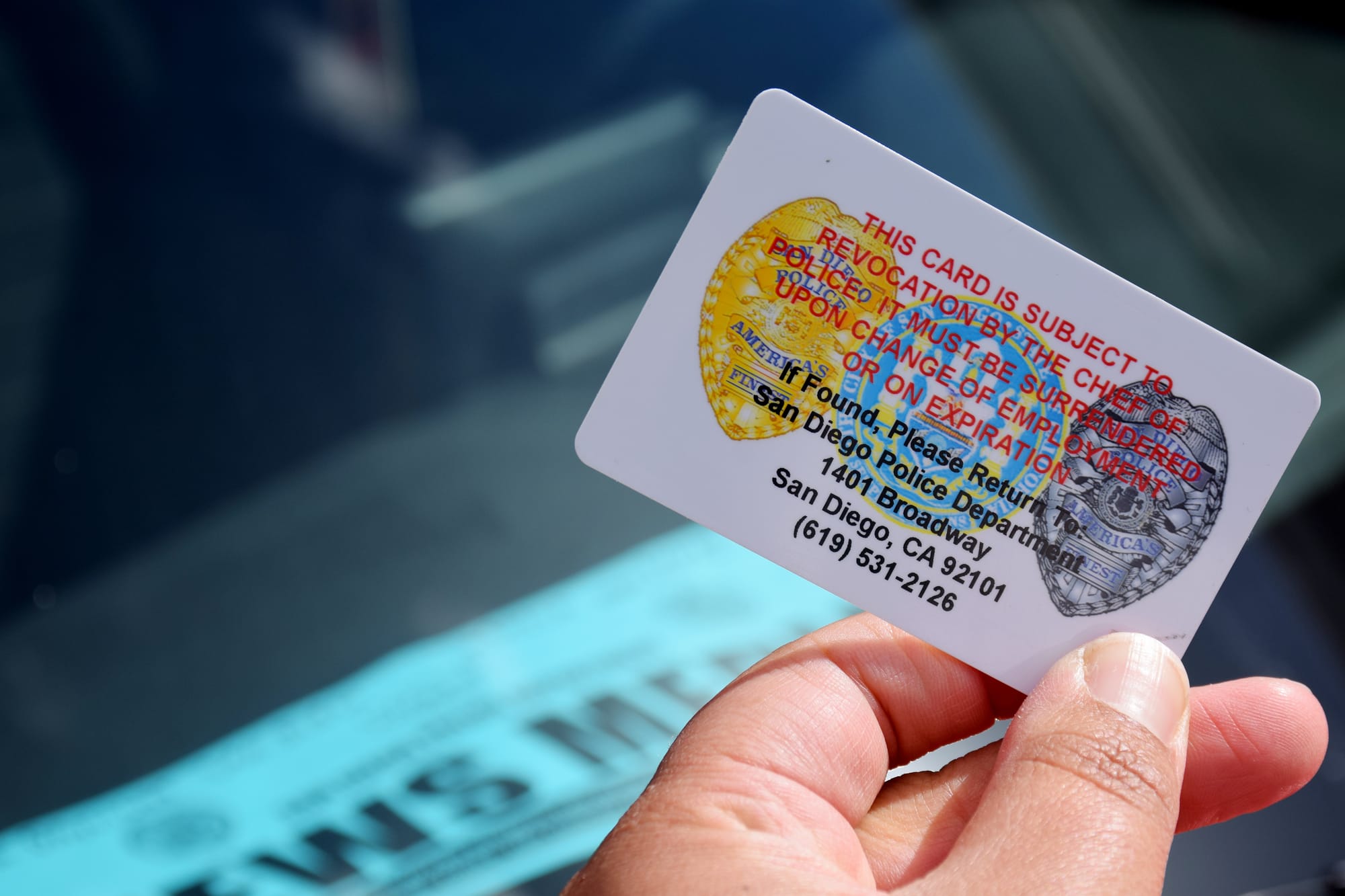
The program offered credentials for journalists in San Diego to identify themselves to police at crime scenes, courthouses, protests and other places where the roles interact as well as parking placards to allow journalists to park on the street for free and for extended periods of time in all but blue accessible and red parking zones when they were actively gathering news.
While press passes issued by a single entity create a consistent way to identify journalists during breaking news events, inewsource deputy editor of investigations Matt Hall said law enforcement agencies are not the best ones to oversee the system.
But, Hall said, not having a replacement program set before SDPD ended its credentialing process could cause issues for local journalists.
“This is not just a problem for journalism,” Hall said. “Our job is literally to get stories to the public and the people who are our neighbors and residents of San Diego, and so this curtails our ability to do that, and it raises real issues for our newsgathering.”
Journalists who currently hold active cards and parking placards do not have to turn them in, and police will continue to honor them until they expire. But the department stopped processing currently pending new or renewal applications on Feb. 13.
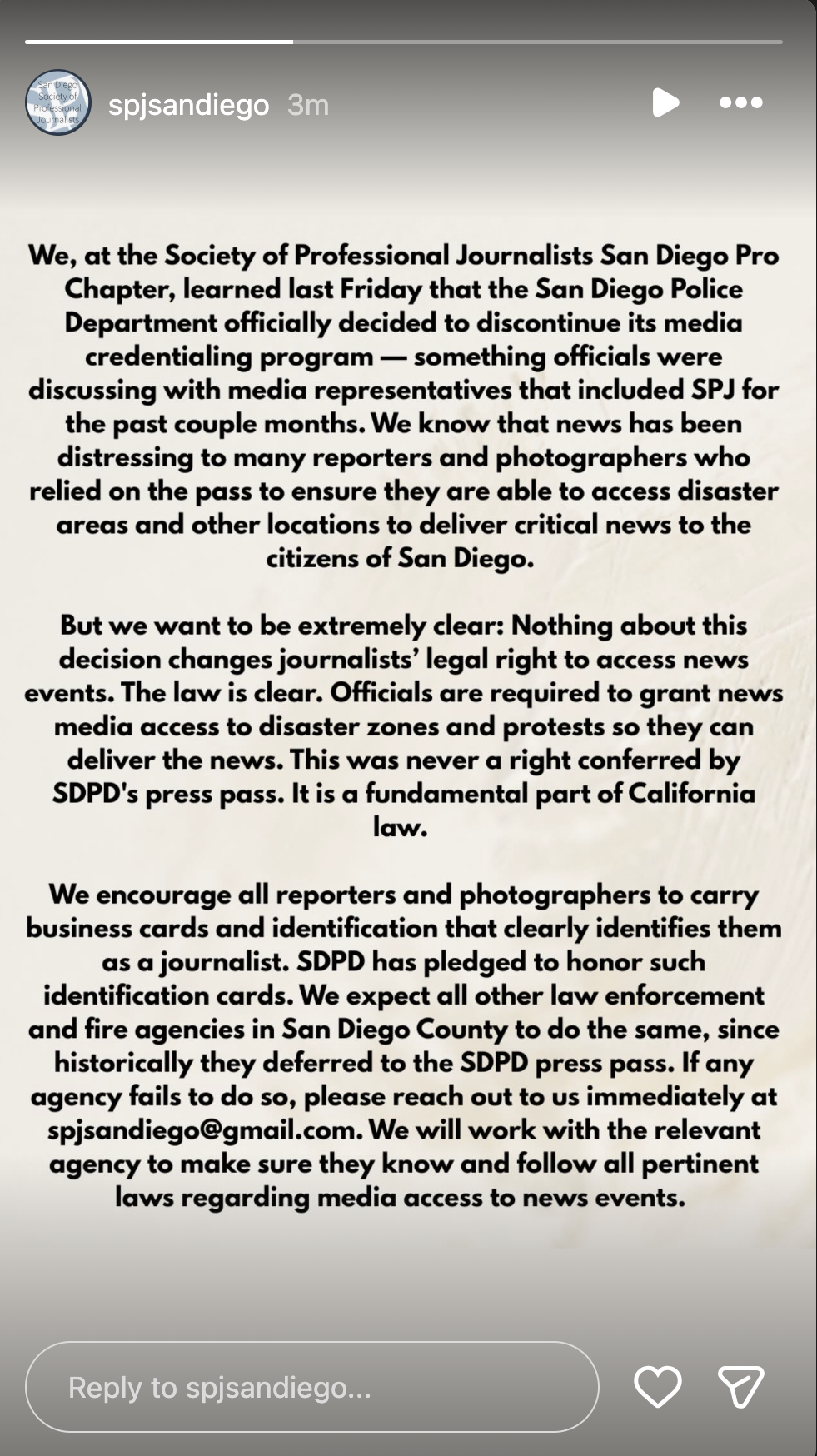
The Society of Professional Journalists San Diego Pro Chapter said via a statement posted in its Instagram story that it had been discussing the program's future with the department for a couple of months. It said the end of the program had distressed many reporters and photographers in the region.
“But we want to be extremely clear: Nothing about this decision changes journalists’ legal right to access news events,” the professional organisation wrote. “The law is clear. Officials are required to grant news media access to disaster zones and protests so they can deliver the news. This was never a right conferred by SDPD’s press pass. It is a fundamental part of California law.”
SDPD's Nicholes said press freedoms are clear under the law, especially when it comes to protests and access to spaces where police are working, including crime scenes and buildings affected by natural disasters.
If there are dispersal orders at a protest, for example, media are exempt from those and can remain on the scene if they’re carrying credentials — that don’t have to be issued by a government agency — and clearly identify themselves. Nicholes said she is working on a training bulletin and video reiterating those rights and best practices.
She said the department had been receiving questions about its process for determining who is and isn’t media. She said SDPD evaluated what other cities were doing to guide its decision-making about the program's fate.
“There are a lot of protections out there for news and media,” Nicholes said. “Who are we as the police department to say who is media?”
Nicholes declined to clarify who had questioned the department's practices.
“It has become increasingly difficult to vet who is and is not media, given the rise of freelance and social media journalism,” she said.
She added that the department has had legal challenges related to the press pass program but did not give any details.
Across the country, some other cities and counties’ law enforcement agencies continue to issue press passes, including those in Los Angeles, Chicago, New York City, Santa Clara and San Francisco. The programs have varying requirements and uses — not all come with parking placards.
In some other parts of the country, regional organizations representing local journalists distribute press passes to paid members. That includes the Pennsylvania NewsMedia Association and the South Carolina Press Association, which also issue car hang tags and windshield decals, respectively.
SPJ San Diego President Elizabeth Marie Himchak said the organization is not currently planning to create its own credentialing program.
SDPD’s decision to end its media credential program comes at a time when journalism and the First Amendment face increasing attacks in the U.S.
The U.S. Press Freedom Tracker reported 170 reports of assaults on journalists in the United States in 2025 — 160 of them at the hands of law enforcement.
Nearly 90 percent of the arrests and charges against journalists in 2025 occurred during immigration-related protests and two-thirds of them occurred in California, according to a Freedom of the Press Foundation report from December.
President Donald Trump has referred to journalism outlets as “fake news” for years, and under his second administration, he has defunded public media and barred many newsrooms from the White House and other federal government spaces. On Feb. 12, Todd Lyons, the current head of Immigration and Customs Enforcement, told Congress, “Sometimes the media is our biggest enemy.”
While a government press pass isn’t necessary for journalists to cover situations like protests, a police-issued credential may afford reporters in such situations more protection in practice.
“If journalists in San Diego are not able to obtain press passes, government actors will have to make more of these determinations while in the field, where protests, floodwaters, fires, or other circumstances may be competing for their attention,” said Matthew Halgren, an attorney at Sheppard specializing in the First Amendment.
Nicholes said SDPD took public safety into account when making the decision. Many government agencies, non-governmental organizations, businesses and events have made decisions to let people in as media based on SDPD’s identification cards when the police department didn’t conduct a full background screening before issuing them, she said. Some people have misused the credentials, she said, including people who tried to get free items at the airport.
Every year around big regional events, the department would see an influx of applications days before as people attempted to get the media passes to get free entrance and privileged parking, she said.
“People are trying to use these as official government documents, and they should not be seen as that, so we’re getting out of the business,” Nicholes said.
Hall, a former national SPJ president and two-term SPJ San Diego president who first started reporting in San Diego in 1999, said that while he doesn’t think it was productive for SDPD to announce the ending of the program on the day it was going to end, there are broader questions about journalist safety and access that now need to be addressed.
Hall said that the parking placard was especially crucial in his days covering City Hall downtown, and the passes can provide safe parking options for journalists when covering breaking news.
“Crime scenes don't always occur in well lit, safe areas,” he said. “Sometimes they occur in places that are hard to reach, and so you don't want journalists to park far away and then have to walk on an unlit road, for example, to a scene like that. Or, what about a fire scene?”
While many print or online newsroom reporters may only need to carry a phone, notebook and pen between their cars and news events, photographers and videographers often lug heavy, cumbersome equipment to their assignments, making a parking placard especially helpful, Hall said.
Paul Krueger, a former NBC 7 field producer, said the department’s decision could significantly disrupt breaking news and courts coverage — particularly because of the loss of parking placards.
Krueger, who retired in 2020 and now freelances covering City Hall and local politics, said he used his police-issued parking placard about three days a week during his decades in broadcast news.
Nicholes said some news organizations in the region who learned about the decision in advance requested that SDPD still give the placards to known media partners like them. But Nicholes said SDPD ultimately determined that wouldn’t be fair to freelance journalists or smaller news outlets.
“I don’t anticipate access being a huge issue,” Nicholes said. “I’ve told people please reach out to me or our [public information officers] to let us know when they are having trouble. Everybody is playing out the what-ifs situations. It’s really hard to play out the what-if scenario. There’s always going to be a time where we don’t do it exactly right.”
She also said that she let other regional media relations and public information officials know so that they would not request SDPD credentials from journalists moving forward.
People serving as freelancers, in smaller newsrooms or in non-traditional news media said the former press pass program’s structure often left them navigating additional barriers to newsgathering.
Tasha Williamson, a local activist and former mayoral candidate, said that through her social media accounts, she sometimes provides community news to the public and information to the press.
About four or five years ago, Williamson posted online that she planned to seek media credentials from SDPD while Chief David Nisleit was still at the department. Soon after, she said, the department updated its media credential requirements. The application for freelancers required a list of the newsrooms they most frequently published with.
Because she published information for free online, Williamson couldn’t include a news employer on the form.
“The change was instant, it felt like,” she said.
Williamson said she thinks that law enforcement agencies — including SDPD and the Sheriff’s Department — should not require press credentials from anyone, regardless of whether they work for large, legacy newsrooms or as independent journalists.
CopWatchers Founder Marcus Boyd said SDPD first issued him a press pass in 2018 after he started writing for the Imperial Beach Patch.com section. SDPD renewed his pass in 2020 but denied his next application following an arrest in 2022 that was later determined to be a false detainment.
Since losing his media credentials, he has been denied access to cover fire emergencies and press conferences from the San Diego Sheriff’s Department. He has also had difficulty finding parking downtown during impromptu press conferences, including ones related to SDPD’s alleged use of excessive force.
“I've found myself not being able to cover an event in a timely manner by parking many blocks away,” Boyd said.
He said that the SDPD decision to end its press pass program did not surprise him.
“The lack of transparency, rather the subject of transparency, seems to be going in the wrong direction for that agency from fully encrypting radio transmissions to now removing press access,” he said. “It’s disheartening.”
Boyd said that he would rather see the department come up with new solutions for the problems it purports to have rather than completely ending the program. He said the big issue seemed to him that the department was trying to cherry pick who could get credentials.
“They have numerous issues internally, but that doesn’t mean that we should abolish [the police],” he said. “The issues that they're referring to I don't think are valid.”
SPJ and Nicholes said reporters should carry business cards and identification that clearly identifies them as journalists. The professional organization said that SDPD has agreed to honor such identification, and added that anyone having issues with any agency in the county can email spjsandiego@gmail.com.
Nicholes admitted that members of the media may struggle to find parking in some areas and for covering some incidents and events, but she said they will have to figure it out.
Maya Srikrishnan contributed to this report.