She fled Russia for freedom in the U.S. Ten years later, she's still waiting.

Persecuted in her homeland, a mother asked for protection but ran into a perfect storm of policy changes instead.
Written by Kate Morrissey, Capital & Main
This article was produced by Capital & Main, an award-winning publication that reports from California on economic, political, and social issues. It is co-published here with permission.
When Maria Titova filed her asylum application soon after fleeing Russia to San Diego where her husband was a flight school student, she thought the process would take a matter of months.
That was the beginning of 2016. She's still waiting.
While she waits, she is becoming more and more afraid that a perfect storm of policy changes, systemic roulette and the government's lack of understanding of how trauma impacts its survivors will end up sending her back to Russia, where she fears for her life and the lives of her husband and children.
“It seems that whole system that was established to protect people is now working against people,” Titova said.

Nearly a decade passed before an asylum officer with U.S. Citizenship and Immigration Services interviewed Titova and her husband about the political persecution she'd experienced in Russia when she took a stand against her country's forceful takeover of Crimea in 2014. She said the wait was long enough for her mind to tuck the terrifying and traumatic memories away, and she struggled to access them during her interview.
“I spent so many years trying to forget,” Titova said. “Now I have to dig into every single detail.”
Titova's case is yet another example of the roulette that the asylum system has long been — and how changing policies over the past decade have shrunk the possibility of protection.
After the agency requested a second interview with Titova earlier this year, the asylum office said that it could not grant her protection and punted her case to immigration court, where she will face even steeper odds. The Trump administration recently moved to allow asylum officers to shift cases to immigration court without interviewing asylum seekers first.
Meanwhile, the federal government is withholding key documents from Titova's attorney, Nadia Galash, which could hinder her ability to defend her client in court.
When asked about Titova's case and the various policies that have affected it, U.S. Citizenship and Immigration Services blamed the Biden administration — even though Titova arrived before that began.
“The Trump administration is ending the rampant abuse of the asylum program by strengthening screening and vetting of aliens so that only those who truly qualify receive protection,” said Zach Kahler, spokesperson for the agency, via email.
According to Galash, Titova's case is strong. An asylum officer granted Titova's mother protection for similar persecution in Russia.
“It's very wide inconsistencies,” Galash said. “It's based on the officer, and then I think because of the bottleneck that was created, they are rushing decisions.”
The interim rule from U.S. Citizenship and Immigration Services allowing asylum officers to send cases directly to court only increases the possibility of inconsistencies, she said.

Protesting the War
In 2014, Titova lived in St. Petersburg, where she ran a design company and raised her son. The pair lived with her husband, Denis, a Ukrainian man who ended up with Russian citizenship after the fall of the Soviet Union because his father was stationed at a naval base in eastern Russia, Titova said. Denis was preparing to leave for flight school in San Diego.
That March, Russia sent troops into Crimea, taking the peninsula from Ukraine.
“I was furious,” Titova recalled. “It was surrealistic.”
She did not consider herself a political activist, but she and her social circle of artists, professors and other educated creatives all felt they had to speak up, she said. At that time, they didn't anticipate the repressive response they would face from their government, she said.
“In 2014, things were just picking up,” Titova said. “It's hard to tell the threat if you don't know what you're dealing with. It's not necessarily obvious.”
Titova decided to attend a protest, but after the situation in the streets began intensifying, she left the gathering with a couple of people, she said. Paramilitary Cossacks attacked her group on their way home.
She went to the police to report what had happened, she said. She said that once the officers realized that her group had been at the protest, they threw away the report and said they wouldn't help. But, she'd already shown them her internal Russian passport, the identification that Russians use in daily life.
Soon after, Denis left for flight school in the U.S. Weeks later, two plainclothes officers came to Titova's apartment to threaten and question her, she said. They said they would come back.
Titova worked and laid low. She took her son to visit Denis in San Diego later that summer, she said. While she was there, she became pregnant.
When she returned from her vacation and family visit, the officers visited her St. Petersburg apartment again. They were physically violent and left bruises on her shoulders, she said.
Some of the details in her memories of those terrifying encounters are sharp, and others have blurred.
“I only remember my heart pounding, to be honest,” she said. "I can describe in detail the smell, how they were dressed or the shape of their thumbs, but simple questions like, ‘How long did they question you?’ I do not know.”
She hid, staying at other people's homes, until her son’s school started back. Then, life seemed to return to a normal quiet. That fall, she decided to attend a large rally in Moscow to protest the ongoing situation in Ukraine.
“I have to answer for the world that I'm giving my kids,” she said. “Injustice was happening right in front of my eyes on a huge scale.”
Information about the rally was so widespread that Titova thought she would be safe at a gathering that large, she said. She went for a few hours, and at one point, police and plainclothes officials cut off a group of several dozen people from the main rally, Titova among them. The officials became violent, and Titova ran away, bruised from the aggression, she said.
Nothing further happened until, toward the end of the year, Titova received a phone call on a landline she used for business. The Federal Security Service, known by the initials FSB, wanted her to come to its office. At the meeting, an official threatened her, telling her that if she didn't become an informant, she would go to prison. The official described in detail the conditions for giving birth in prison and said that her children would end up in an orphanage, she said.
Titova agreed to the official's terms so that she would be allowed to leave the building. After the winter holidays, she went to the U.S. for several months and gave birth to her second son.
In a post-partum fog, she decided that she would return to Russia and live at a different address, she said. She hoped the time away would have settled the situation, and she worried about what would happen to the business that she had built and the employees who depended on it if she did not go back, she said.
But, after she participated in a small march that fall, the plainclothes officials found her new home. They took her baby from her and put him in his chair and forcefully sat her down in the kitchen, she said.
They threatened her and again told her that she would have to become an informant to avoid prison.
“All I can hear is Max crying,” Titova said of her memory of the moment. “It's extremely confusing for me.”
Again, she agreed to the officials’ terms so that they would leave. She didn't flee right away because she thought she would look too suspicious. But soon, she managed to join her husband in San Diego on Thanksgiving, she said.
The Interviews
Titova didn't have a plan when she reached the U.S., but eventually she learned that she could apply for asylum so that she wouldn't have to go back to Russia.
At first, she didn't think asylum was meant for her because she believed it was for people from war-torn countries or revolutionaries like Che Guevara.
“I did not compare myself to heroes or villains of the past,” she said. “I did not consider myself to be that important.”
But asylum is for people who cannot return to their home countries because of government persecution based on a protected characteristic such as political opinion, race or nationality.
She found a lawyer to help her fill out the application and submitted it in January 2016. She said she found out later that the attorney had filled out the application poorly — she was dealing with a sick baby and no health insurance to care for him when she went to the legal office to review the case, she said.
She didn't know then that the first Trump administration would implement a “last in, first out” policy for asylum applications in 2018, giving priority to the most recently filed applications. It also refocused asylum officers on screening people at the border and deprioritized the processing of asylum applications. Her case ended up in a ballooning backlog.
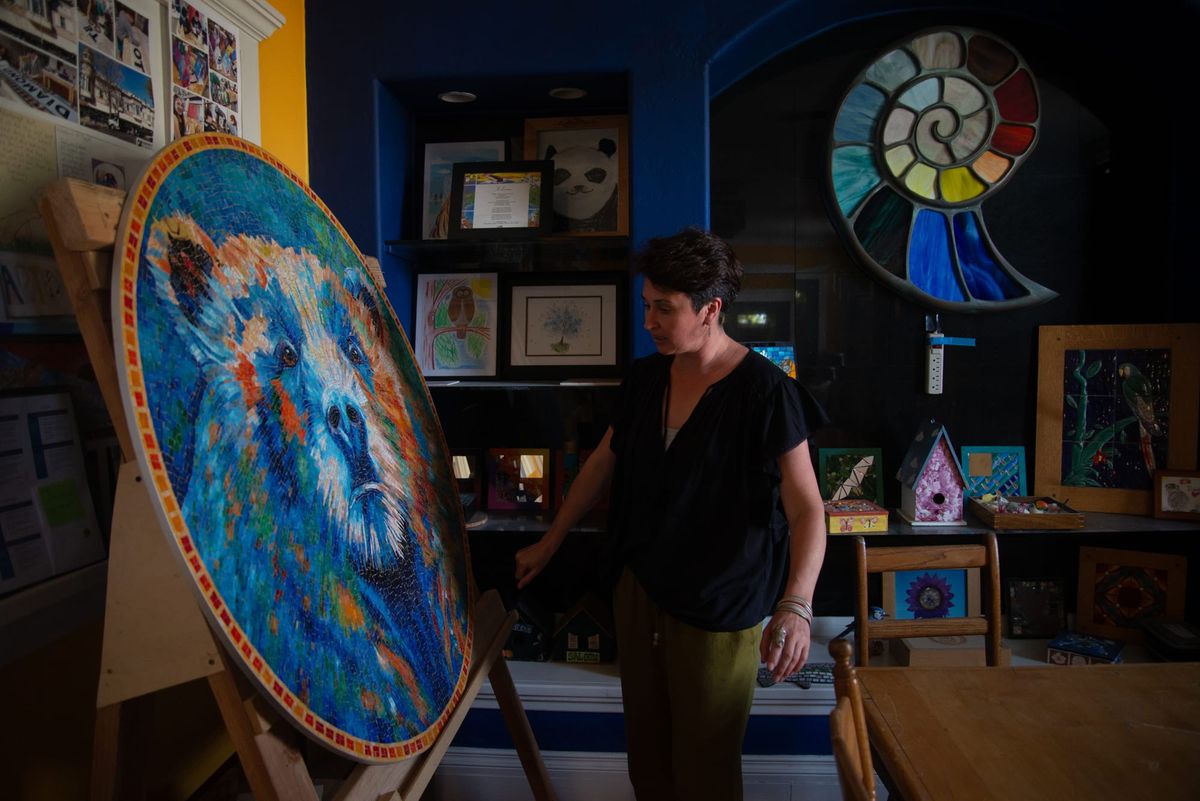
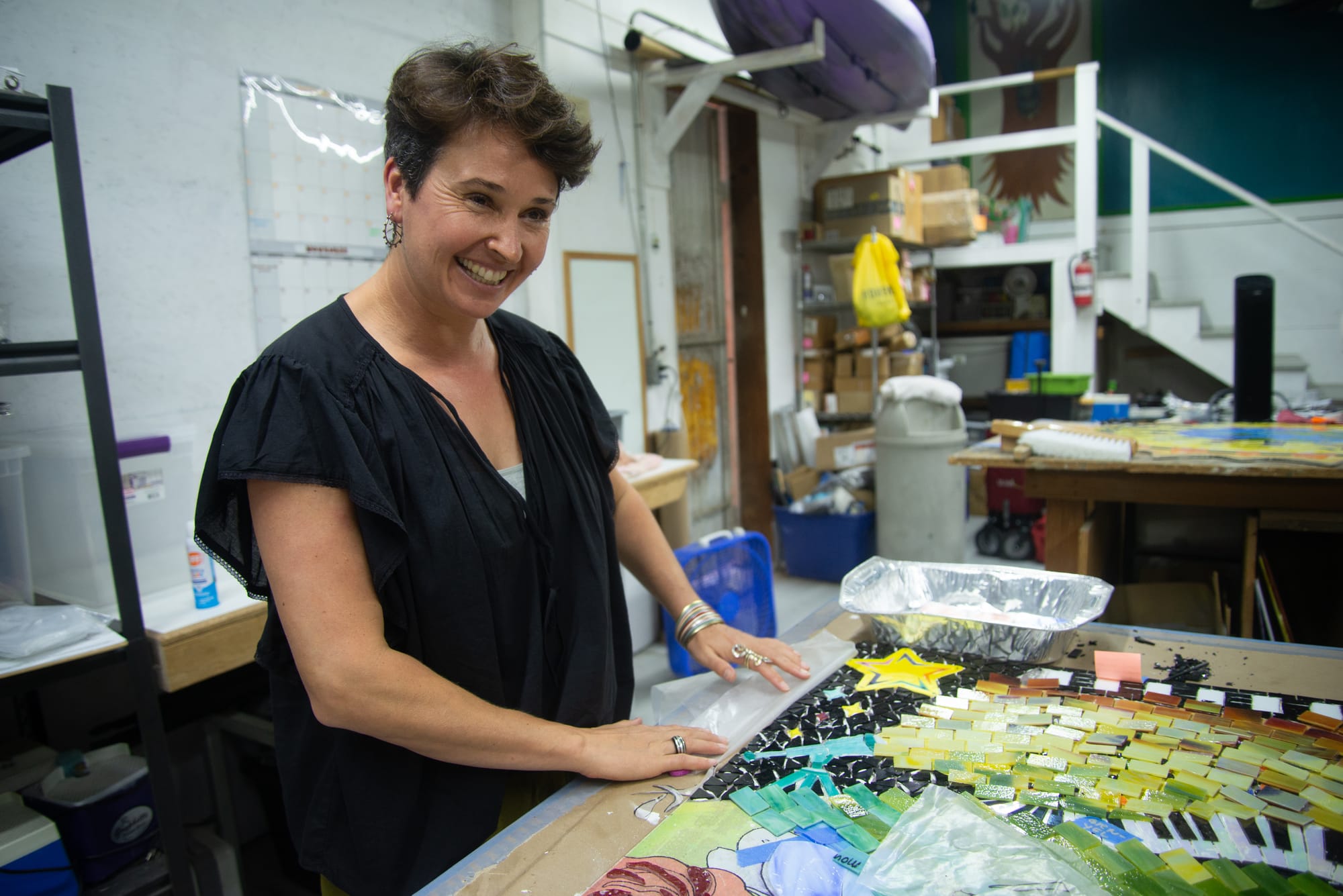
She waited and slowly built a new life in San Diego, working at a company that guides schoolchildren to design and build mosaics to improve their neighborhoods. She helped the company grow, and eventually, the company founder put her in charge.
In June 2025, the Los Angeles Asylum Office finally interviewed her. Titova went without a lawyer or interpreter. She'd been speaking English in a professional setting for a decade, she said, so she thought she would be fine telling the story on her own.
“I thought my story was explicitly simple,” Titova said.
But, she said, that interview was a nightmare.
Facing gaps in her memory and trauma that she hadn't confronted in years, Titova struggled. She said she didn't understand why the officer was fixating on certain questions, asking them over and over again. She said he particularly seemed to not understand why she had her internal passport with her when she went to that first protest even though that's a normal practice in Russia.
And, because of previous trauma in her life, she said, she didn't explain clearly that the Russian officials had physically assaulted her on multiple occasions — she incorrectly believed at the time that aggressive behavior had to do more damage than bruises to count as physical assault.
The interview itself triggered feelings of what she had experienced during the interrogations by Russian officials. She said she felt déjà vu.
Galash said that from documents she has been able to review from that asylum officer, it's clear that Titova and her husband didn't understand some of the questions that he asked and that he should've rescheduled so that they could use an interpreter.
At the end, the officer asked Titova to send in certified translations of the family's birth certificates. After she mailed in the requested documents, she heard nothing for months.
Then, the office asked her to come back in for an interview in January. This time, she took Galash with her.
In late 2025, U.S. Citizenship and Immigration Services stopped issuing asylum decisions. The administration restarted decisions except for people from a list of 40 countries in March.
Galash said the asylum officer who did the second interview was inexperienced and did not use trauma-informed interviewing techniques.
“He insisted on narrowing Maria’s testimony to his own predetermined lines of questioning and did not allow her to provide a fuller narrative,” Galash said. “The officer disregarded clear signs of trauma in Maria and proceeded in a manner that felt adversarial rather than nonadversarial, contrary to the standards required for asylum interviews.”
Galash said that after asylum decisions restarted, officers, including the one in charge of Maria's case, rushed under pressure to reduce the backlog after decisions restarted. She said many more experienced officers have left under the second Trump administration or moved to other parts of the Department of Homeland Security, leaving the agency with an institutional knowledge gap that leads to more inconsistencies. Even though Galash had corrected the previous attorney's earlier mistakes, the officer said that he could not grant asylum and referred the case to an immigration judge.
The official paperwork informing Galash and Titova of the decision has a one sentence explanation, Galash said, that the officer did not find Titova credible because of inconsistencies.
Galash filed a public records request to figure out what inconsistencies she needed to be prepared to defend against in court. Though she has filed several requests, she said the government still hasn't given her all of the needed records.
“It's literally playing blindfolded,” Titova said.
In the meantime, Titova focuses on her work, which has become her dream. She lights up when she talks about the impact that the mosaic art installation projects have on children. Her company has worked with schools across California, including students affected by the 2025 wildfire in the Pacific Palisades neighborhood of Los Angeles.
She said she tries not to think about the terror she feels about potentially having to go back to Russia or the indefinite limbo she's currently living in because the thoughts are too debilitating.
“I just want to have a chance to continue doing what I'm doing,” she said.
Copyright 2026 Capital & Main