Southeast San Diego residents reimagine land once saved by protests from freeway development

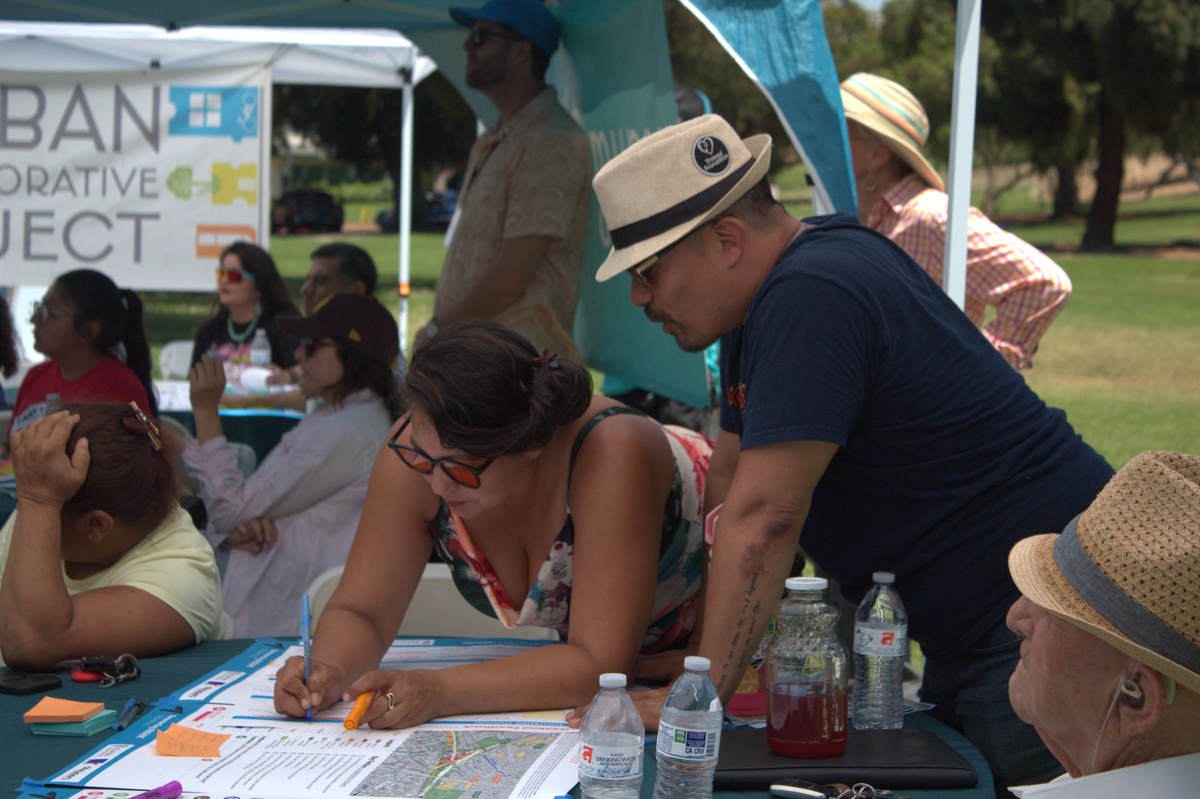
Mundo Gardens and Citythinkers gathered community feedback last week at Southcrest Park for redesigning 57 acres of freeway land near a National City and Southeast San Diego interchange.
Written by Rami Alarian, Edited by Kate Morrissey
Nearly 60 years after the San Diego Black Federation successfully stopped the construction of a highway that would have cut through Southcrest, community members have begun drafting plans to revamp the land surrounding the interchange left in its place.
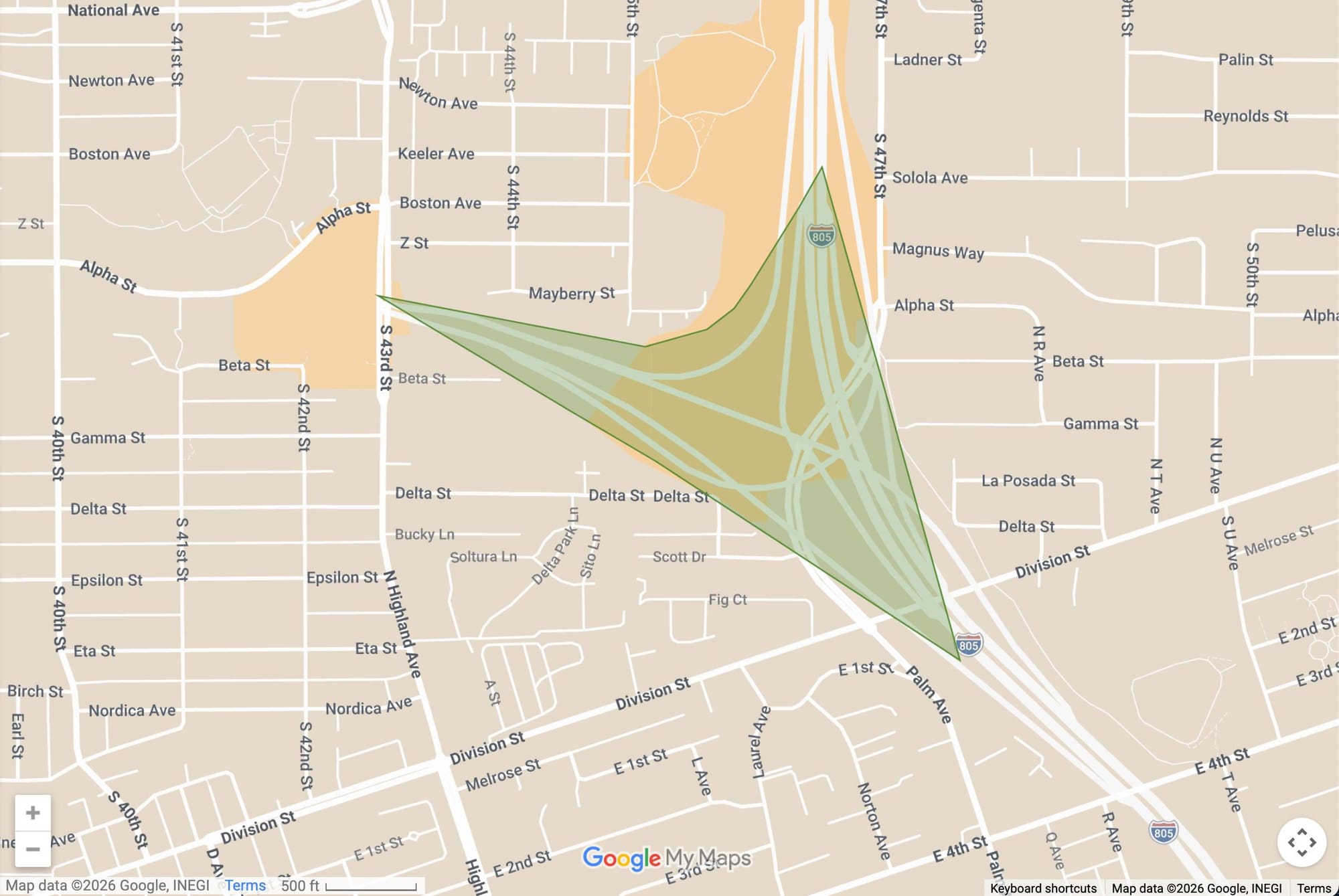
Mundo Gardens, an environmental justice nonprofit, hosted the third session of its visioning workshop series where Southeast San Diego community members have provided input for an infrastructure initiative known as Reconnecting Southeast San Diego and National City Green Corridor. Last week, over 40 people gathered at Southcrest Park to have a say in the redesign of 57 acres of land under and around the I-805 freeway and its 43rd Street exit.
“Our community is living shorter lifespans than other folks in the county,” said Janice Reynoso, the founder and president of Mundo Gardens. “We’re surrounded by freeways. There’s a lot of things that we didn’t have a say in that we didn’t deserve.”
Reynoso said the project offers an opportunity to reclaim health and wellness that the community deserves.

“We’re building on the legacy of the Black Federation when they stopped the freeway from ripping through exactly where we’re standing now,” Reynoso said. “And we are working with agencies, most importantly with the community, with artists and with native elders to get the feedback.”
Mundo Gardens received $2 million in grant funding in 2023 to move forward with planning the project through community feedback.
During Saturday's event, Mundo Gardens, with the help of local urban design firm Citythinkers presented three proposals on how to use the triangular area of land under the 43rd Street entrance and exit ramps.
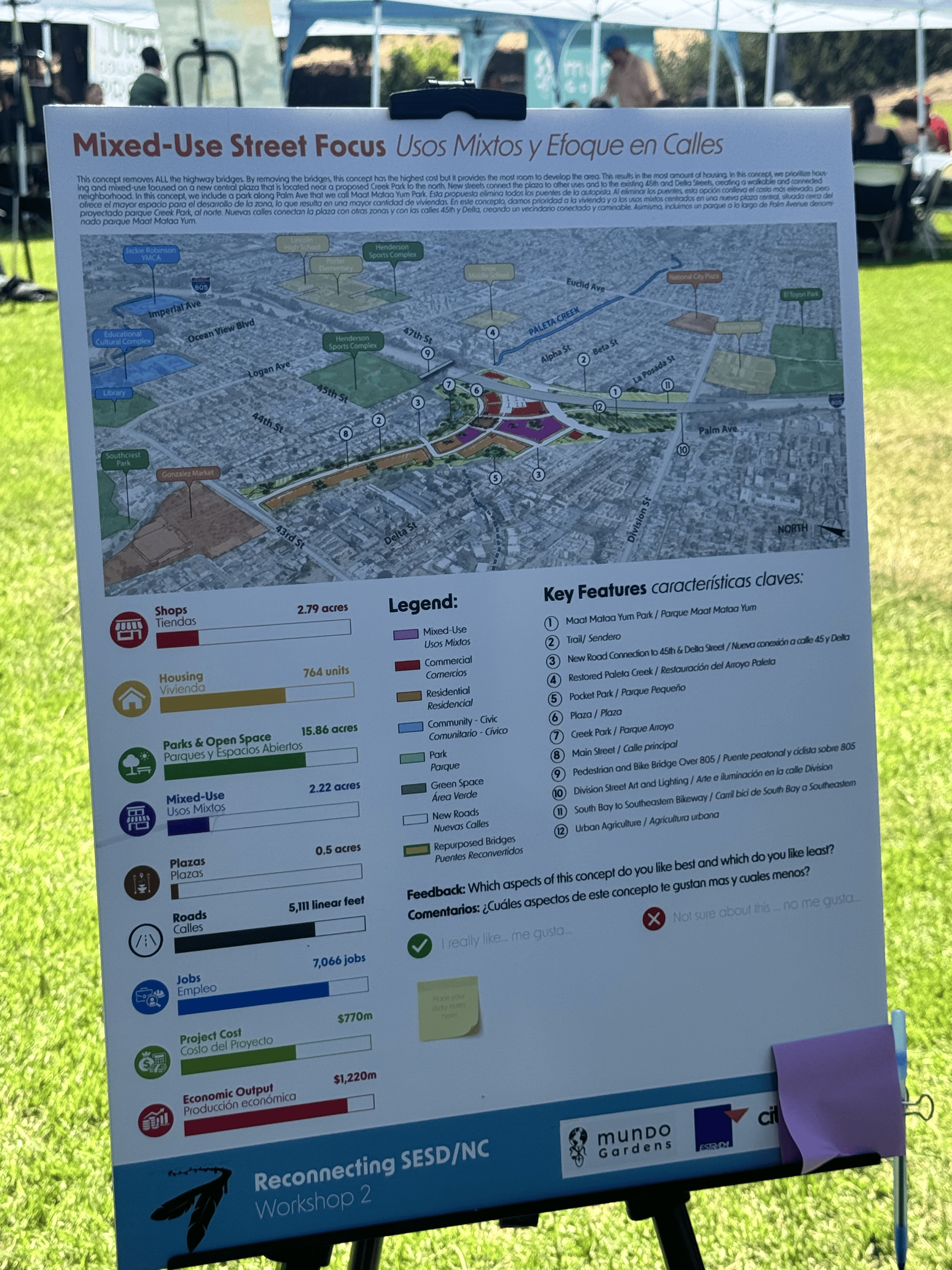
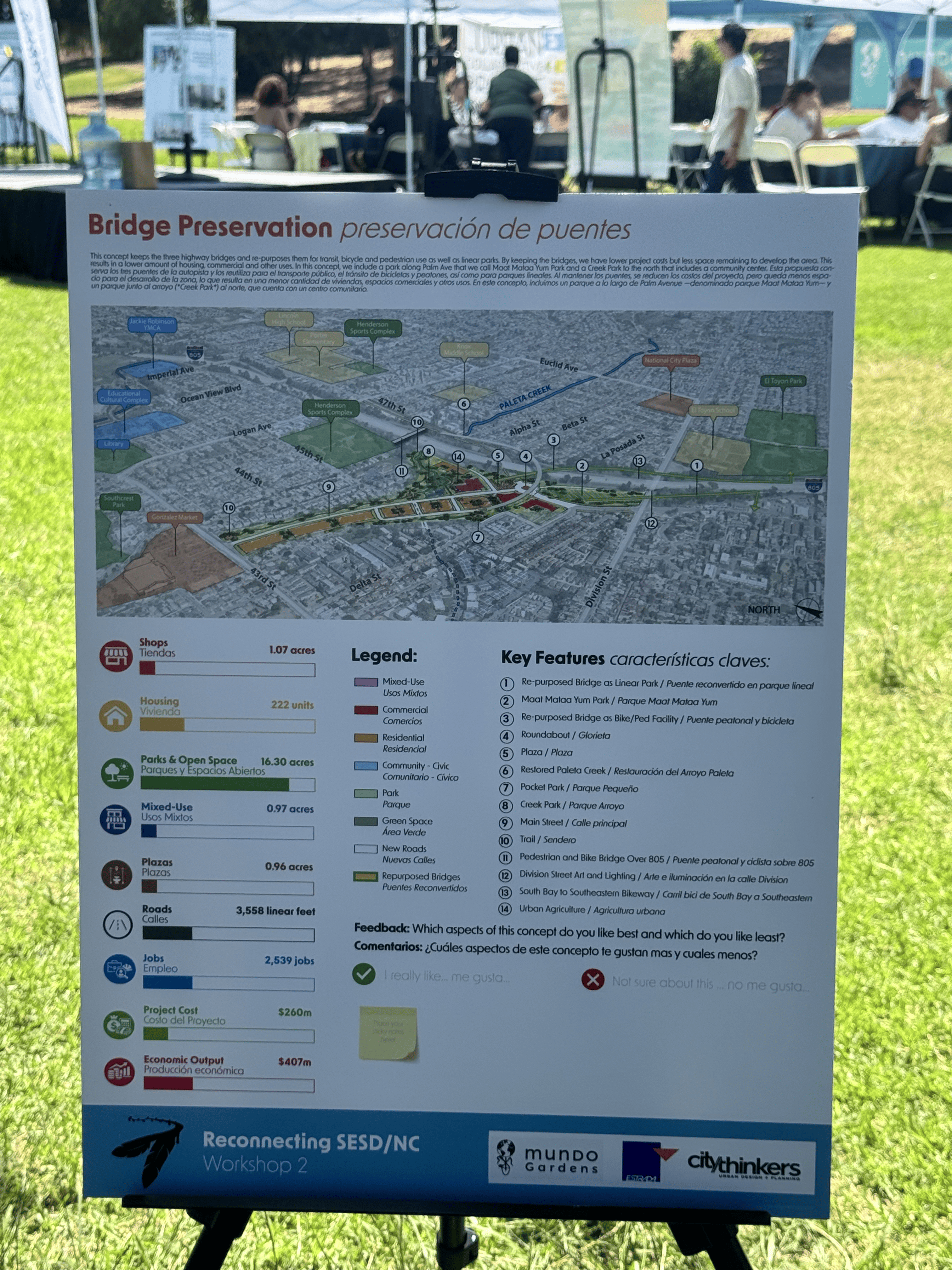
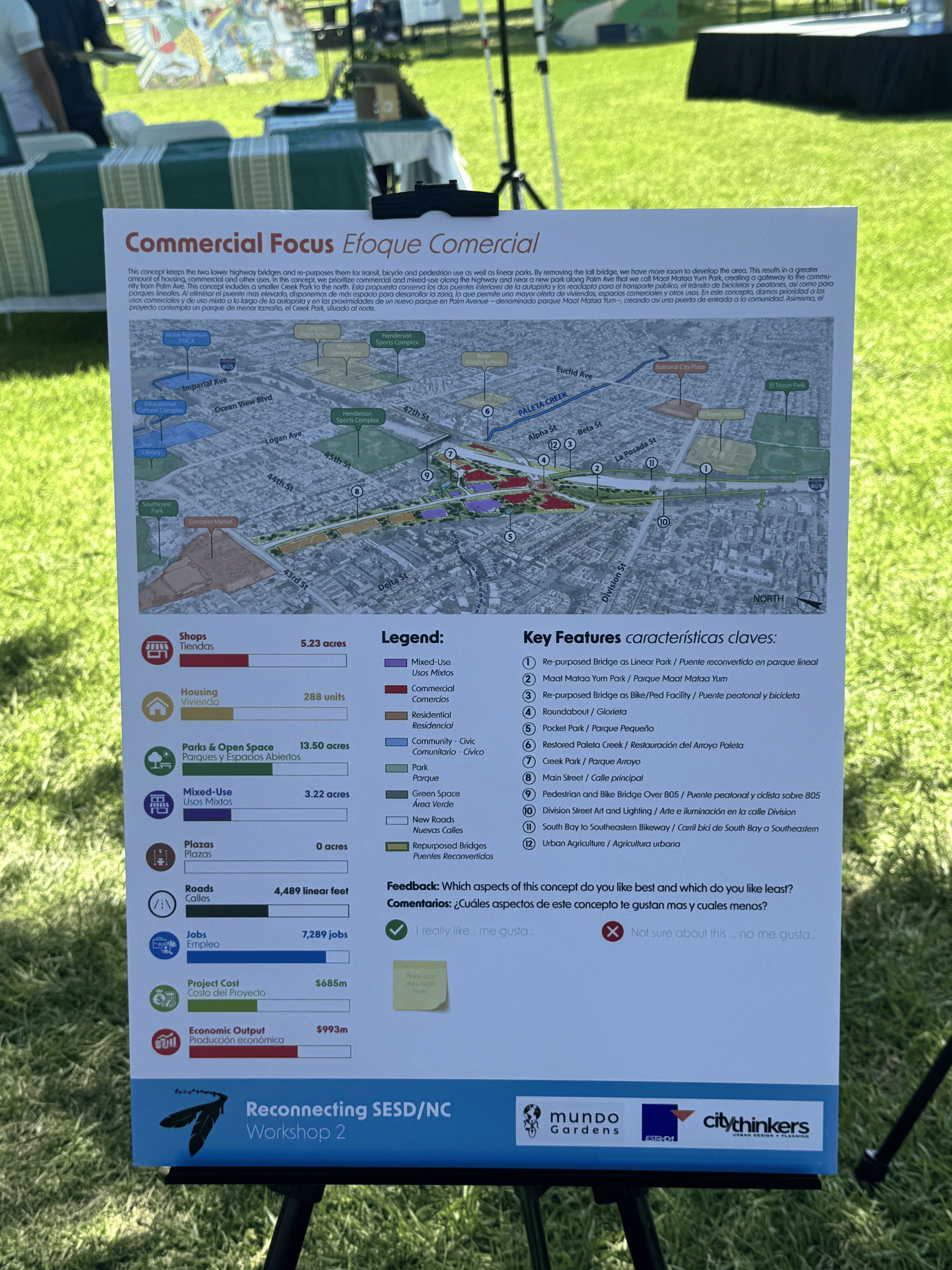
Three poster boards show different land-use proposals, each with their own key features and combination of housing, shops, parks and mixed-use spaces. Rami Alarian/Daylight San Diego
The first proposal, titled “Mixed-Use Street Focus,” removes the entrance and exit ramp bridges to the I-805, leaving the most room for housing out of the three concepts and significant room for park space. Citythinkers predicted this proposal would cost the most, with a $770 million price tag due to the removal of the highway bridges. But the plan also offers the highest anticipated economic output, according to Citythinkers, at over $1.2 billion.
The second proposal, named “Bridge Preservation,” repurposes the highway bridges for pedestrians, transit and bicycles, leaving the least room for commercial and housing space but offering over 16 acres of park and open space, the most of any proposal. This proposal would cost the least due to minimal removal of existing infrastructure.
The final proposal, the “Commercial Focus” concept, prioritizes mixed-use and commercial infrastructure with a fairly even mix of housing, mixed-use and shop space. This proposal keeps two lower highway bridges and repurposes them for pedestrian, bicyclist and public transit usage as well as parks. The construction would cost roughly $685 million while offering an estimated 7,289 jobs, the most out of the three proposals.
Each proposal took ideas from community feedback gathered during previous workshops.
“Community feedback is central to any good planning process,” said Diego Velasco, the founder of Citythinkers. “I think that if you don’t work with a community, then you risk repeating the same mistakes of bringing in different projects into an area that might actually do more harm than good.”
Diego led attendees of the most recent workshop through writing what they liked and didn’t like about each proposal on sticky notes and reading them aloud. Then he had attendees choose their preferences between low, medium and high density housing and discuss the pros and cons of each.
Zenia Torres, who attended the previous visioning workshops by Mundo Gardens, said she felt grateful for the chance to learn from new perspectives during feedback exercises at each workshop she’s attended.
Teresa Valenzuela, a community member who attended the event, said the proposals should add electric wheelchair charging stations and more accessible infrastructure.
“I know what it feels like to be stranded on the road,” Valenzuela said.
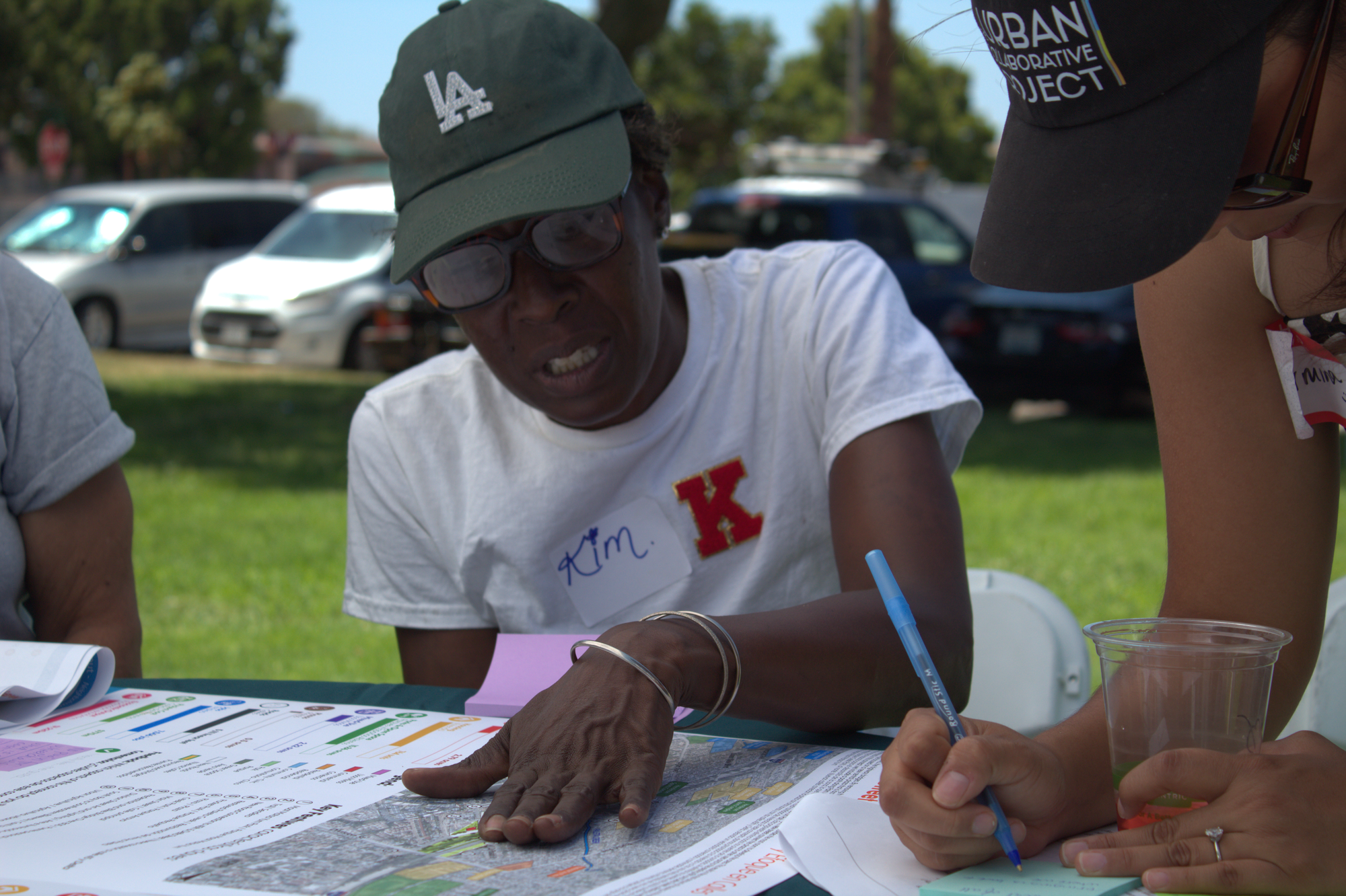
Torres said that planning infrastructure like this shouldn’t feel complicated and that communities should think more inclusively. She said suggestions like Valenzuela’s should not shock the system.
“I think the beauty of having events like this allows us to broaden our perspective, but also our empathy for others,” Torres said.
Kasimu Harley, a Black Federation member who protested State Route 252 in the ‘70s, invited to speak during the event, said organizers protested further construction of the highway because of the displacement it caused. Harley, a student at the time for the protests, said he acted as a mouthpiece for the cause.
“When you think back in the day, it was just a great collaboration between Brown and Black communities,” Harley said.
Caltrans backed down from the project midway through construction after the Black Federation shared how much the project reduced tax revenue — but not before the demolition of roughly 280 homes.
“It was almost a little too late for that area, but for the rest of this, I mean, look around,” Harley said. “If the freeway had come through here, it would have further devastated the community.”
Harley said seeing how far the protest has come felt surreal.
Velasco with Citythinkers said despite any land constraints, residents have provided input that has helped prioritize certain concepts within the proposals, with connectivity as one of the major themes.
“Southeastern San Diego and Barrio Logan are now disconnected from each other, disconnected from the community resources that residents have a right to and really want to connect to,” Velasco said.
Velasco said this unconnected infrastructure has made residents unable to safely and comfortably walk, bike or drive to necessary services including schools, parks, community centers, recreation centers, health clinics and grocery stores.
Reynoso said the Mundo Gardens project lessens some of the harm done by divisive infrastructure.
“We know that a lot is possible,” Reynoso said. “We’ve seen the work of our elders in the civil rights movement, in the Chicano movement, get us to where we are now, and now we’re continuing the work.”
When asked what she wanted people outside of the event to know, she had three words: “Join the movement.”