U.S. has deported hundreds of children to cities in southern Mexico

Human rights organizations said the minors lack the resources to go home safely and that some may have died trying.
Written by Kate Morrissey, Capital & Main
This article was produced by Capital & Main, an award-winning publication that reports from California on economic, political, and social issues. It is co-published here with permission.
The United States has deported hundreds of Mexican children who crossed the border without their families on flights to southern Mexico, where many have gotten stuck without the resources to go home safely.
Multiple organizations that monitor and support children who are migrating without parents or guardians raised alarms over the issue in a hearing with the Inter-American Commission on Human Rights on Aug. 3. The organizations said they have confirmed more than 350 cases, but it's not clear how many children in all have ended up by themselves in Mexico's southern cities.

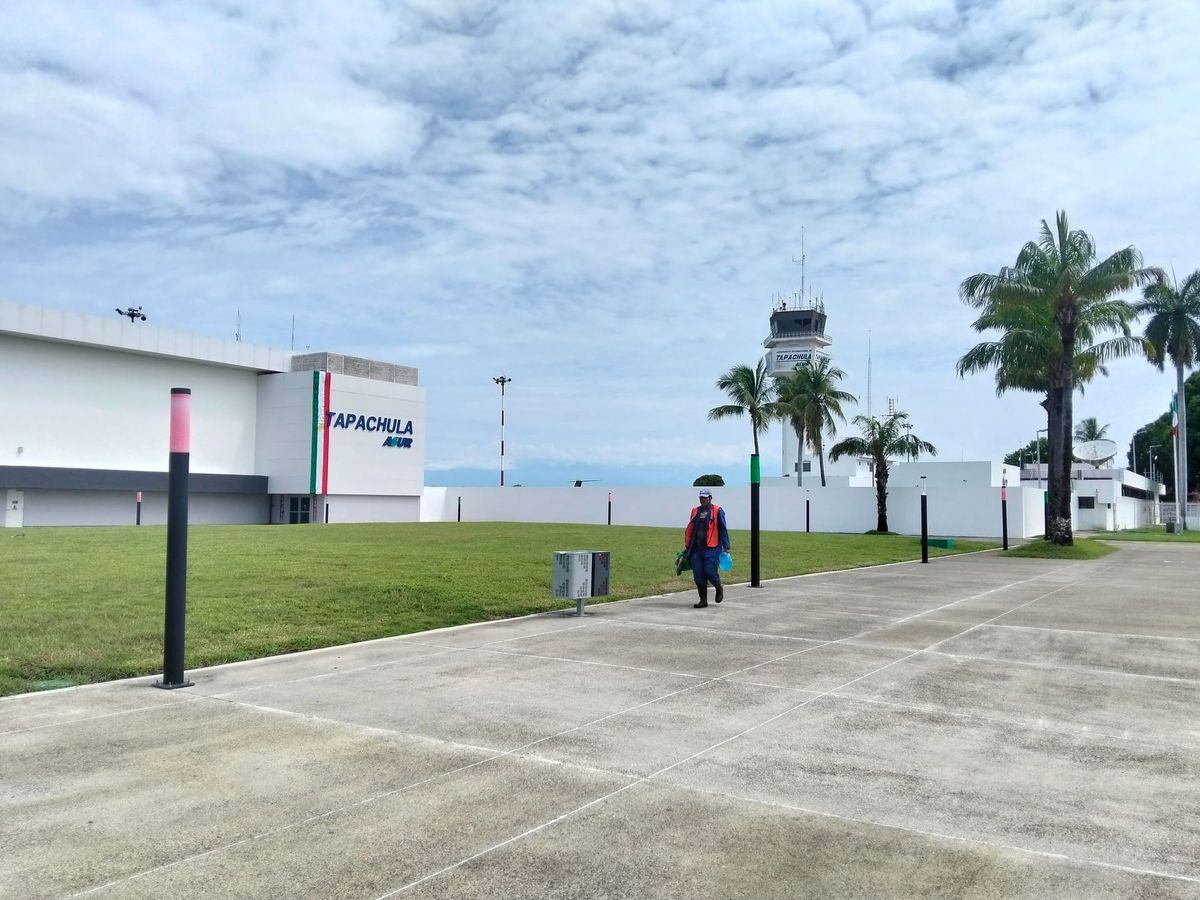
Though the U.S. began deporting Mexican adults and families to Tapachula and Villahermosa soon after President Donald Trump returned to office, flying unaccompanied children south appears to be a more recent change.
The policy, which organizations said they discovered in December of last year, has resulted in disappeared children — along with concerns that some may be dead.
“It doesn't make sense to send a minor 2,000 miles from their family member, ever,” said Savi Arvey, director of policy, refugee and immigrant rights at Human Rights First. “That's just never appropriate.”
Immigration and Customs Enforcement, the U.S. agency responsible for deportations, did not respond to a request for comment from Capital & Main.
Many children deported by plane to southern Mexico live in northern border towns, where, recruited by criminal organizations to assist in leading other migrants to the U.S., they have crossed and returned many times in what is known as circuit migration, according to Derechos Humanos Integrales en Acción, an organization that works to reintegrate these children in the border city of Ciudad Juárez.
These children have a particular set of needs and vulnerabilities because they come from areas where a lack of economic resources pushes them into working for criminal organizations, according to the testimony from civil society organizations at the international human rights hearing.
Before Trump returned to office, U.S. border officials deported Mexican children who cross without parents or guardians rapidly at the land border, where they go into the care of Desarrollo Integral Familiar, commonly known as DIF, which serves as the country's child welfare services agency, said Blanca Navarrete, director of Derechos Humanos Integrales en Acción.
Local offices known as Procuradurías de Protección de Niñas, Niños y Adolescentes, or offices for the protection of girls, boys and adolescents, which are part of DIF, are responsible for helping the children return to their families and reintegrate in their communities.
In the border state of Chihuahua, Derechos Humanos Integrales en Acción has had an agreement for roughly nine years with the local protection office to support children reintegrating from circuit migration, Navarrete said. The organization assists the children with exams to get certificates for primary and secondary school so that they can continue with their education and offers scholarships to help. Its staff also give psychoemotional support and referrals for children needing help with addiction and substance abuse.
More than 200 children are currently participating in the organization's program, Navarrete said.
But in Tapachula and Villahermosa, both cities with scarce resources for supporting even their own residents, the local protection offices aren't used to serving this particular profile of needs, according to Rosalba Rivera, who works on issues relating to children with IMUMI, a Mexico City-based nonprofit that supports migrant women and children.
“There's no justification, from our point of view, for sending them all the way there,” Rivera said in Spanish. “On the contrary, it seems to be a type of punishment, because they're not attending to the causes of the problem, the reason why these adolescents were or are dedicated to what they're dedicated to.”
In the southern Mexico cities of Tapachula and Villahermosa — and more recently in Mérida on the Yucatán Peninsula — the children end up in shelters called centros de asistencia social, or social assistance centers, which are more accustomed to caring for children migrating north from other countries, Rivera said. Because some of the deported children worked for different criminal organizations, the centers have to separate those who might consider themselves rivals, according to Rivera's colleague Sandra Mejia, an attorney with IMUMI.
Many families do not have the money to pay for their children to return home, so some have languished for months in the southern cities.
Mejia said some of the children don't have families to go home to, and others’ families are themselves involved in criminal organizations, complicating the process of determining what would be safest for those children.
Arvey from Human Rights First said that some families are able to get their children as far north as Monterrey on flights, but then the children have to figure out the rest of the journey to Tamaulipas, the border state where many are from. She said cartels have even paid for some children’s flights in order to re-recruit them.
“Now this is just making the security situation worse,” Arvey said. “It's also making it more likely they'll be re-recruited instead of reunited with family and accessing services like with DHIA.”
Both Derechos Humanos Integrales en Acción and IMUMI have watched with growing concern the increasing number of reported disappearances of deported children from the children's centers in the south.
“They've found some, and some we don't know exactly what happened to them,” Rivera said. “But what's certain is that there's no restoration of their rights, nor in all of the cases has there been a safe family reunification.”
Navarrete said her organization has received information that suggests the possible deaths of three children who had traveled north to return to their communities, but she hasn't been able to confirm the details or circumstances.
“We're worried because the authorities haven't said anything or announced any investigation,” Navarrete said.
Mexico's child welfare agency, DIF, did not respond to a request for comment from Capital & Main.
At the Aug. 3 hearing, representatives from several organizations sitting on one side of the room listed questions they wanted answered by the Mexican government, including what is in the agreement with the U.S. that has allowed deportations of unaccompanied children by plane to the south and how many children overall the policy has affected.
“It's a concern about another opaque agreement,” Arvey said. “We know the U.S. and Mexico have these opaque, unwritten agreements supposedly about sending third country nationals to Mexico. This is another agreement between the two governments with no transparency and putting vulnerable people at harm.”
Commissioners with the international human rights tribunal also asked questions, including how Mexico is addressing the root causes of the children's need to join the criminal organizations to begin with, as well as whose responsibility it is to protect the children once they've arrived in southern Mexico.
Mexican officials sitting on the other side of the room said that Mexico offers consular services to children in U.S. custody and that the country has set up the program México Te Abraza, or Mexico Embraces You, to receive and support deportees.
“The Instituto Nacional de Migración offers information, orientation, protection, security, attention and dignified treatment to repatriated Mexican nationals when they return to our country,” said César Villanueva, who directs the Human Rights and Democracy Office in Mexico's foreign affairs department. “Beyond the law of migration and its rules, the institute has a solid legal framework with mechanisms for the protection of girls, boys and adolescents.”
But, the Mexican officials did not address the civil society organizations’ questions about the unaccompanied children sent away on deportation flights.
“Our fear has come to pass,” Navarrete said during the hearing. “We've heard the information provided by the Mexican state about how protocols for repatriated children and adolescents should operate in a general manner, but we haven't heard the responses to why norms aren't being implemented or why the absence of specific protocols for adolescents at high risk or with vulnerabilities.”
She told Capital & Main that even though the deportation flights started with a U.S. decision, she's focusing on holding Mexico accountable for what happens to its citizen children after they arrive in the south. That, she said, is entirely Mexico's responsibility.
“What worried us was the lack of answers by the state of Mexico at the hearing,” Navarrete said. “The majority of the questions are still in the air.”