Activists cover César E. Chávez Parkway signs in Barrio Logan

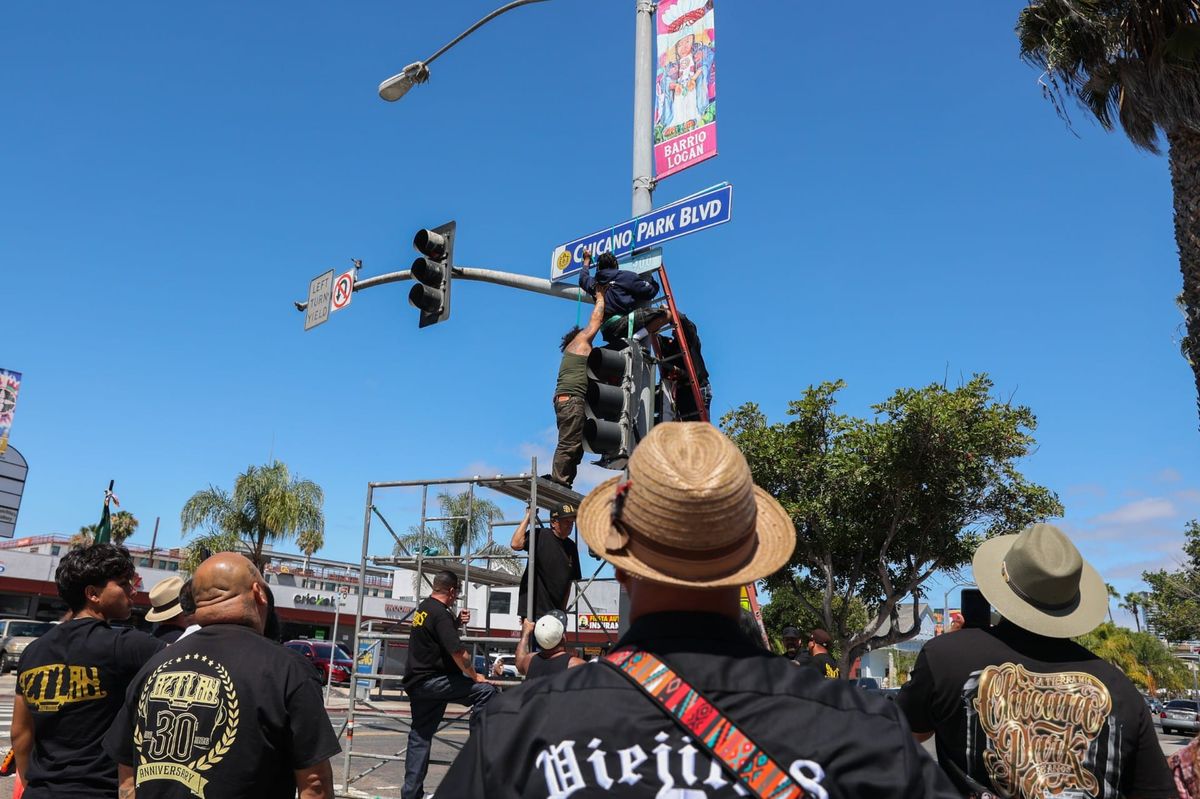
In a ceremony last Sunday, a group put up temporary signs to rename César E. Chávez Parkway after sexual misconduct revelations involving the labor leader.
Written by Lauren J. Mapp, Edited by Kate Morrissey
Author’s note: This story includes mentions of sexual abuse. To access sexual assault kits and other support, visit the California Attorney General online, or contact the RAINN National Sexual Assault Hotline by calling 800-656-HOPE or texting “64673.”
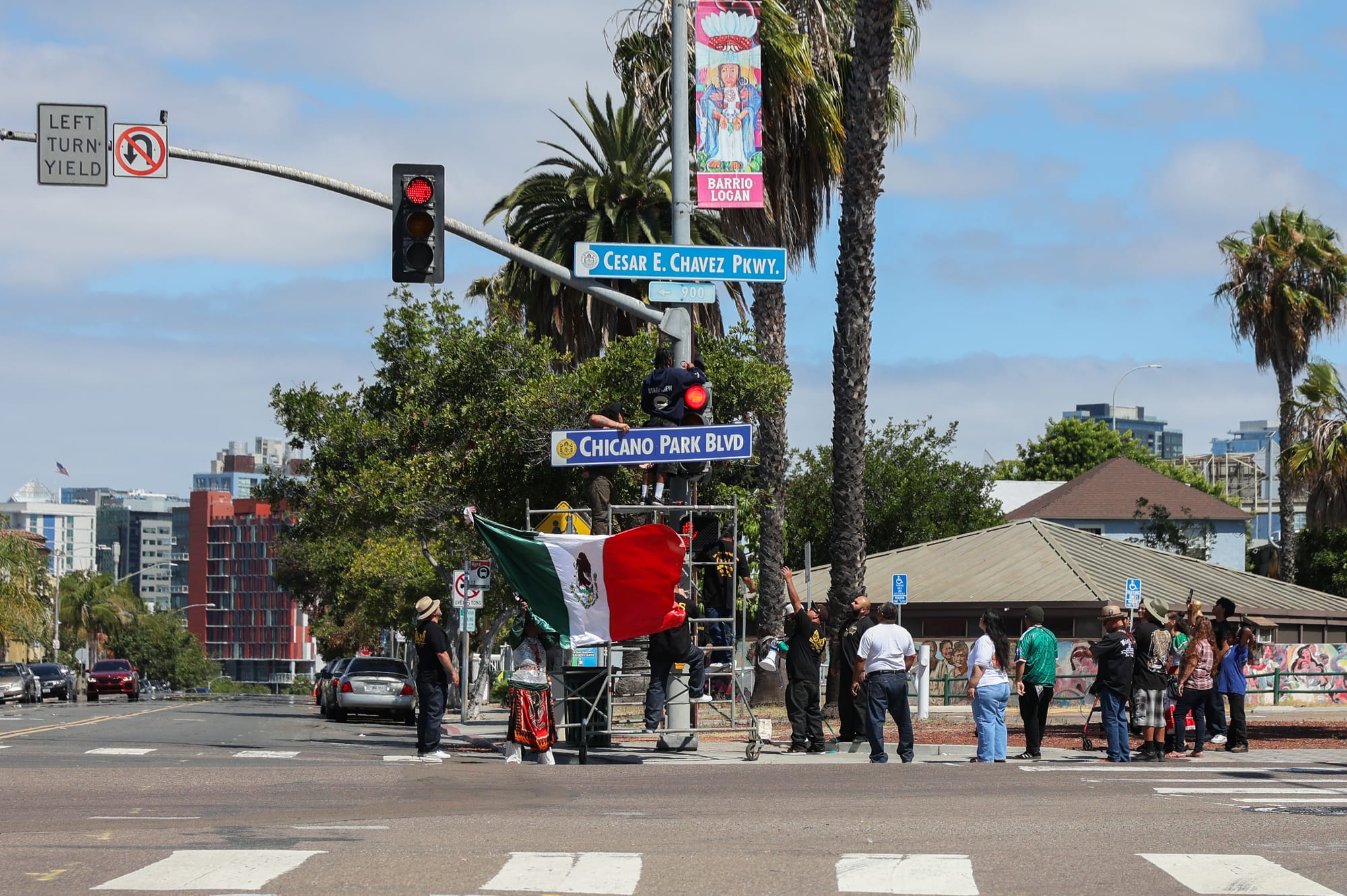
A small crowd gathered at a street corner in Barrio Logan last Sunday as a group of community activists climbed scaffolding to hang street signs for the newly renamed Chicano Park Boulevard.
Community members from the Chicano Park Steering Committee, Chicano Park Museum and Cultural Center, Low Rider Council and La Vuelta Barrio Logan covered the César E. Chávez Parkway signs with temporary ones bearing the street's new name. They took action after sexual abuse allegations against the deceased labor leader came out in March, prompting governments to rename holidays, streets and public buildings that bore his name.
The San Diego City Council unanimously voted on May 12 to rename the Barrio Logan street. The council also followed the state’s lead to rename March 31 from César Chávez Day to Farmworkers Day, a move passed by California legislators only a week after the allegations were made public.
Chicano Park Museum and Cultural Center board member Juan “Wicho” Flores called the sign placement a largely symbolic move by the community as it waits for the city to install new permanent signs.
“The city has been dragging their feet on making the changes,” Flores said. “The approval had already been set some time back. Days were given, and then they were rescheduled, and eventually the community just felt that it was time to do it, whether we had the full support from the city or not.”
In an emailed statement, a city of San Diego spokesperson said the city is coordinating with Caltrans. Workers will remove the sign placed by the community when they start installing official Chicano Park Boulevard freeway and street signs on Monday.
“Unfortunately, some members of the community created and illegally install (sic) their own street sign at the corner of Logan Avenue without the City’s permission,” the statement read. “Replacing or removing City street signs is prohibited by law. The illegal sign was not built to City standards or properly installed, so it cannot remain there. The City will replace the illegal sign at the same time all the other signs on that street are installed.”
The city renamed the road running from Commercial Street through to the San Diego Bay from Crosby Street to César E. Chávez Parkway in 2002. The Mexican American labor and civil rights leader was one of the co-founders of the United Farm Workers union.
While once lauded for his non-violent campaigns to improve working conditions for migrant farmworkers in the United States, an investigation by The New York Times earlier this year brought to light allegations of Chávez sexually abusing girls and women.
After reviewing hundreds of pages of union documents, confidential emails, photographs and board meeting audio recordings, The Times found evidence of years of alleged abuse and grooming, including of girls as young as 8 or 9.
Dolores Huerta, who co-founded the union, told The Times that Chávez raped her in 1966. She said she chose not to file a police report at the time because she feared the backlash could kill the movement.
“I am nearly 96 years old, and for the last 60 years I have kept a secret because I believed that exposing the truth would hurt the farmworker movement I have spent my entire life fighting for,” Huerta wrote in a Medium statement on the day The Times article was published. “I carried this secret for as long as I did because building the movement and securing farmworker rights was my life's work. The formation of a union was the only vehicle to achieve and secure those rights and I wasn't going to let Cesar or anyone else get in the way.”
Activist Bbbiggz, who helped install the new signs, told Daylight in an Instagram message that last Sunday’s ceremony honored the history of Chicano Park, “paying tribute to the elders and the understanding that we operate independently as a community.”
“The correction of the name was long overdue because it was always supposed to be Chicano Blvd.,” he said. “This is a demonstration of what community is supposed to look like. We have been here since before the streets had names.”
As a 51-year-old Chicano who has lived in Barrio Logan for most of his life, Flores said seeing the community take steps to change the street’s name filled him with pride, and it represented a renewed commitment to the neighborhood's history and identity.
“To me it means family, culture, community, and most importantly, respect for the people in the community, not just the current residents, but all those that have come before us, that have laid the groundwork with their advocacy and movement to progress our community into a better place, while not losing the identity of our cultures,” he said.