For local house DJs, the genre is more than sound – it’s a culture rich with civil rights history

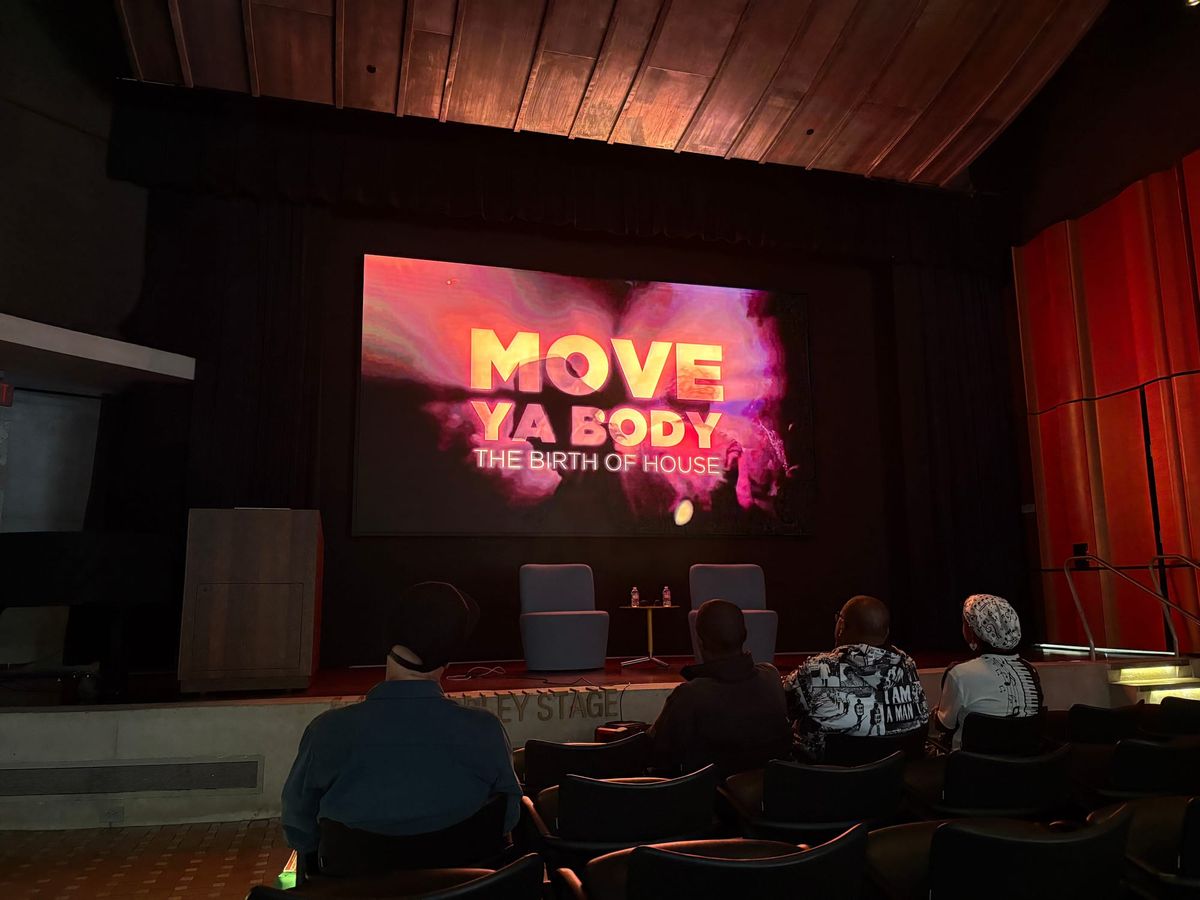
The Central Library screened “Move Ya Body: The Birth of House” for the first time in San Diego as part of its “More Than Rhythm” series about Black music.
Written by Jenna Ramiscal, Edited by Kate Morrissey
A blend of kick drums and synthesizers filled the Central Library’s Neil Morgan Auditorium last week as a group of about 20 music enthusiasts took their seats for the San Diego premiere of a documentary about the emergence of house music in Chicago.
The documentary, “Move Ya Body: The Birth of House” details the rise of house music through the lens of Vince Lawrence, one of the genre’s pioneers. This screening was the first in the library’s new film series titled “More Than Rhythm” which seeks to explore the history and evolution of Black music through movies and discussion.
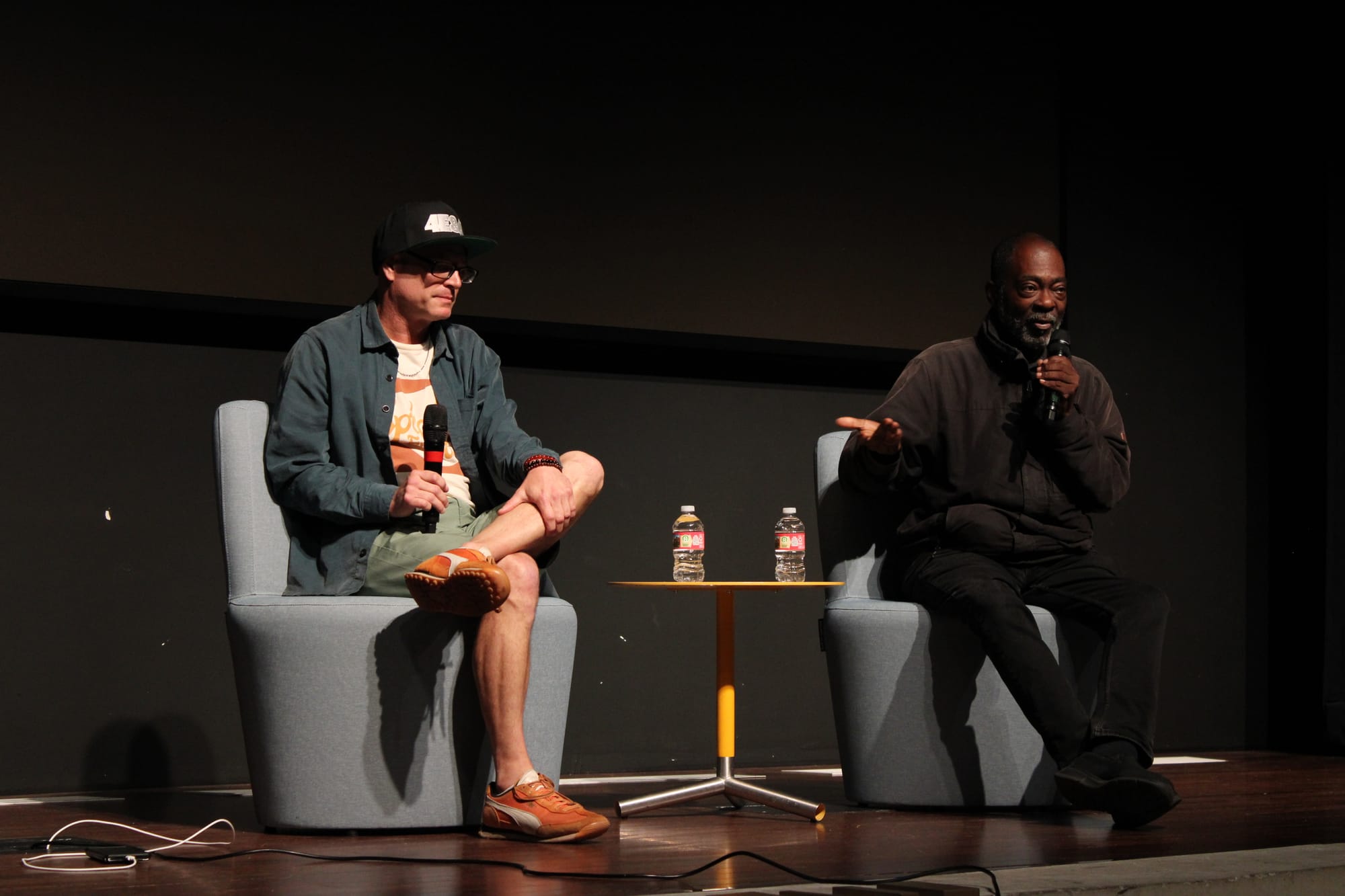
Local DJs Craigmac and Matthew Brian led a panel after the hour-and-a-half film to discuss their experiences with house. The DJs bonded with fellow househeads, a term to describe someone who loves house music, and other DJs in the audience.
“House music is my way of life,” Craigmac said. “It's its own culture. All my life I've been doing house music.”
Craigmac, who grew up in Chicago and considers himself part of the second generation of house, has been DJing for over 40 years. Brian, who has been DJing for over 30 years, plays for House Music Fridays at the Air Conditioned Lounge in North Park every week.
“Let's be honest about it — true-form house music, it fits a demographic of people, not too many young,” Craigmac said. “So an event like this with a movie telling the history of house, the birthplace of house, would open it up to a whole new generation of people to understand where it came from.”
Alemayehu Bogale, who was born in Chicago in 1998 and lived there until 2020, said the film showcased familiar streets and also opened his eyes to the rich civil rights history that’s integrated into the creation of house music.
The first 30 minutes of the movie show that it’s impossible to understand house without first learning about the redlining and segregation that happened in 1970s Chicago.
“House music was so influenced by the history of the time,” Bogale said. “If you've been to Chicago, the segregation there is super apparent. It's just like one of the first things you see. If you go far enough on the Red Line, the racial demographics change completely.”
Black queer individuals in particular sought to find a release from the oppression they felt, according to the film. For a while, they used disco as their outlet for finding joy.
That changed in July 1979 when rock DJ Steve Dahl led a riot to destroy disco records in a moment known as Disco Demolition Night. At Chicago's Comiskey Park — the old White Sox stadium — over 50,000 people, the majority of them White, destroyed thousands of disco records.
The riot, oversaturation of the disco sound and prejudice against the marginalized communities that pioneered it contributed to the decline in disco’s popularity, according to the film.
Craigmac called Dahl’s anti-disco riot a necessary evil. From disco's ashes, house music was born as an underground movement through the work of young, Black people and the queer community. Craigmac was a teenager at the time.
“House music is disco's revenge,” Craigmac said. “When they blew up all the disco records, young kids from the South Side of Chicago said, ‘Huh, okay, well, we associate disco with being Black.’ The only non-Black disco records were the Bee Gees and commercial disco. Black people will always find a way to get creative and turn nothing into something.”

Craigmac said the film left out several influential house figures including Farley "Jackmaster" Funk, Steve "Silk" Hurley and Jesse Saunders — all from the first generation of house. He said these figures inspired teenagers like him to love and appreciate house culture.
“The good thing about house, you got all the different communities – Latinx, Black, LGBTQ+ — everybody comes together, and there's no fighting and no backbiting,” said Jimmy Lovette Jr., a househead and attendee at the screening. “You’re all one. You’re all together. It's a natural high.”
Mark Hanson, also known as DJ Mark E Quark, said that the sounds from the synthesizer, drum machines and sampling all play an important role in DJing house. However, the community, spirit and soul in the room top all of those elements.
“It's how I met all my friends — all my lifelong friends have come from house,” Hanson said. “It’s really served a strong foundation in my life.”
Craigmac said that when mainstream music companies try to produce house, they prioritize making profit over the spirit and soul of the music.
There’s a split in the music industry with commercialized dance music, like EDM, on one side and the underground movement for real house music and its culture on the other, Brian said.
“I'm seeing a lot of younger people throwing undergrounds with vinyl DJs, and making it more about the music, more about the environment and the community,” Brian said. “ It's really about the music, and you're seeing a lot more of that again.”
Craigmac said that he hopes the younger generation will continue to learn about the racial history of house and show love for the genre.
“With all things comes evolution,” Craigmac said. “Will house music ever die? Hopefully not. Hopefully it will evolve and reinvent itself in some kind of way, but still the integrity of it will stay with it when it evolves. That's my only hope and wish.”