National City hosts first Philippine Independence Day celebration

Generations of Filipino Americans emphasized the importance of preserving traditions through arts, language and culture.
Written by Jenna Ramiscal, Edited by Kate Morrissey
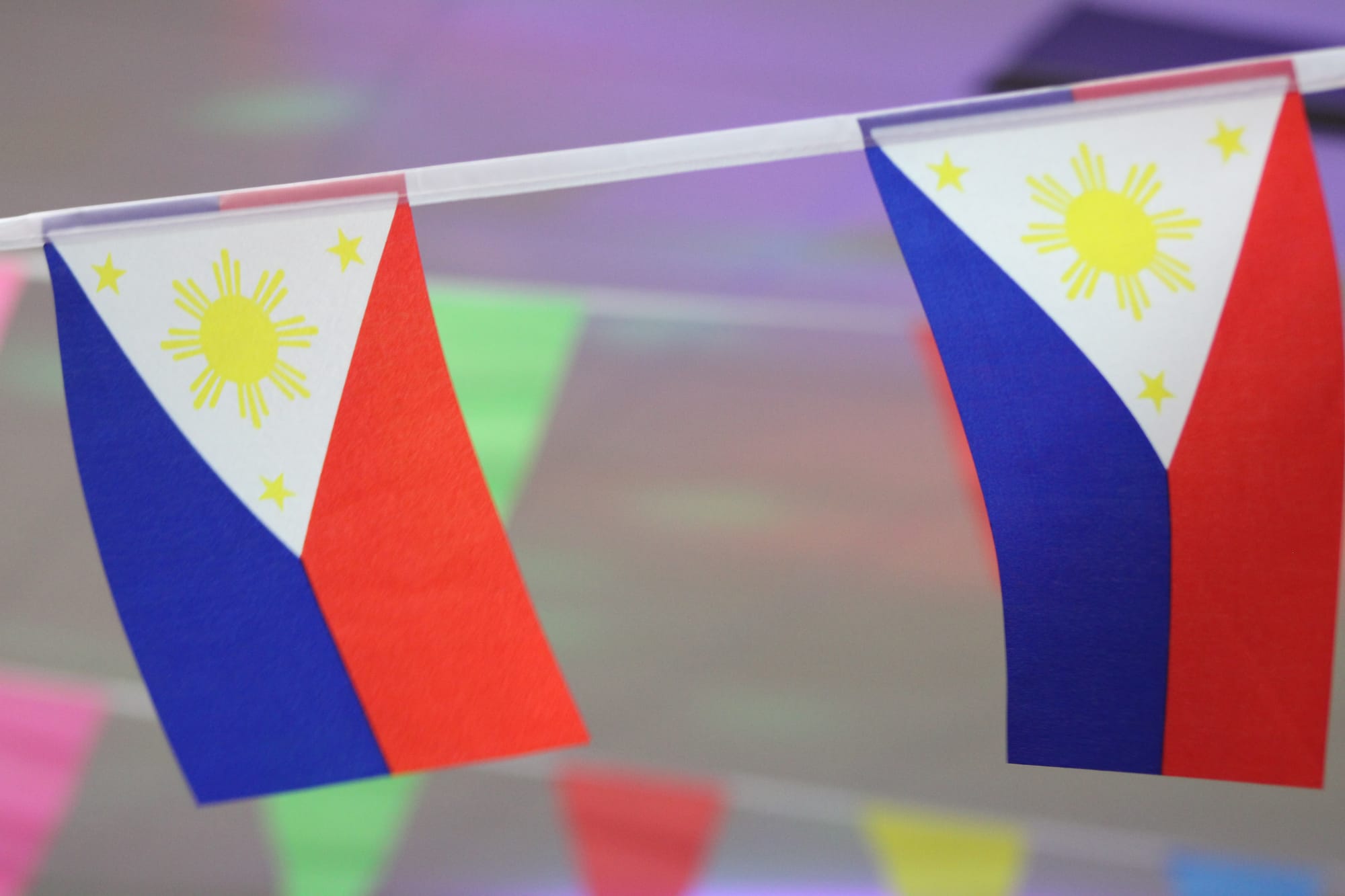
Miniature Philippine flags hung across the ceiling of South West Lodge in National City as a crowd of around 100 people wearing intricately embroidered traditional Filipino attire gathered on Friday for Kalayaan Pista, Freedom Festival, in honor of Philippine Independence Day.
June 12 marked the archipelago’s 128th anniversary of independence from Spain.
The night-time celebration featured over three hours of performances all in Tagalog, the most widely spoken dialect in the Philippines. Community members clapped to the beat of Filipino folk dancing, gasped in awe during a demonstration of traditional martial arts and cheered during the fashion show and vocal performances. Generations of Filipino American families were in the crowd, from lolas and lolos, grandmas and grandpas, tias and tios, aunties and uncles, to their anak, children.
“Ang hindi magmahal sa sariling wika ay higit pa sa hayop at malansang isda,” Celso Macaspac, owner of Mabuhay Entertainment Productions and one of the event organizers, said to the crowd in Tagalog. He who does not love his own language is worse than an animal and a foul-smelling fish.
He was quoting a famous saying from José Rizal, an influential Filipino leader who fought against Spanish colonial rule. The core message of the quote is about preserving one's culture and heritage — which is exactly what the event sought to do through song, dance, clothing and food.
Melanie Azcuna, founder of Buy Filipino and one of the event organizers, said this is the first time the National City community has held a large-scale celebration for Philippine Independence Day.
“Arts and culture is something that we can celebrate, and it's something that we can enjoy together. Doing things to see other people, talk to other people, make new friends, celebrate old friends, reconnecting — anything is good to me,” Azcuna said. “This is very special and dear to me, because it's our independence day, and it's our first one.”
Despite having less than two months of planning time, Macaspac pushed for the event to happen.
He said he was driven by his patriotism for both the Philippines and the United States. He started his 25-year-long U.S. naval career at Subic Bay in Luzon, Philippines in 1976 — back when that was the largest navy installation in the Pacific. This month also marked his 26-year anniversary as a mobile DJ in San Diego.
Macaspac kicked off the celebration playing “Hawak Mo Ang Beat” by DJ Mojo as guests trickled into the venue dancing and clapping to the viral, upbeat song.
After Macaspac awarded selected guests who have helped him throughout his military and entertainment careers, the celebration transitioned into its lineup of performances.
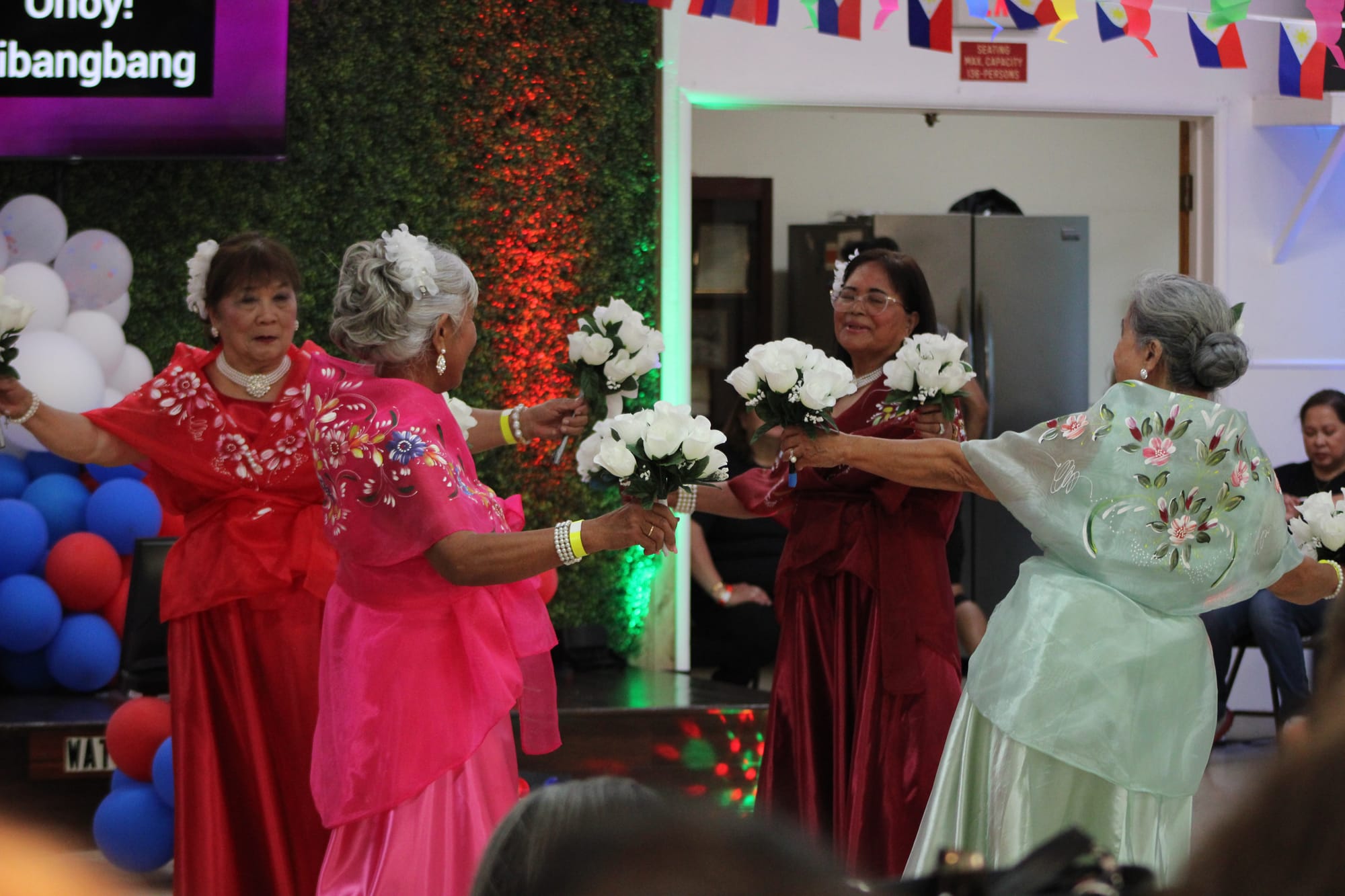
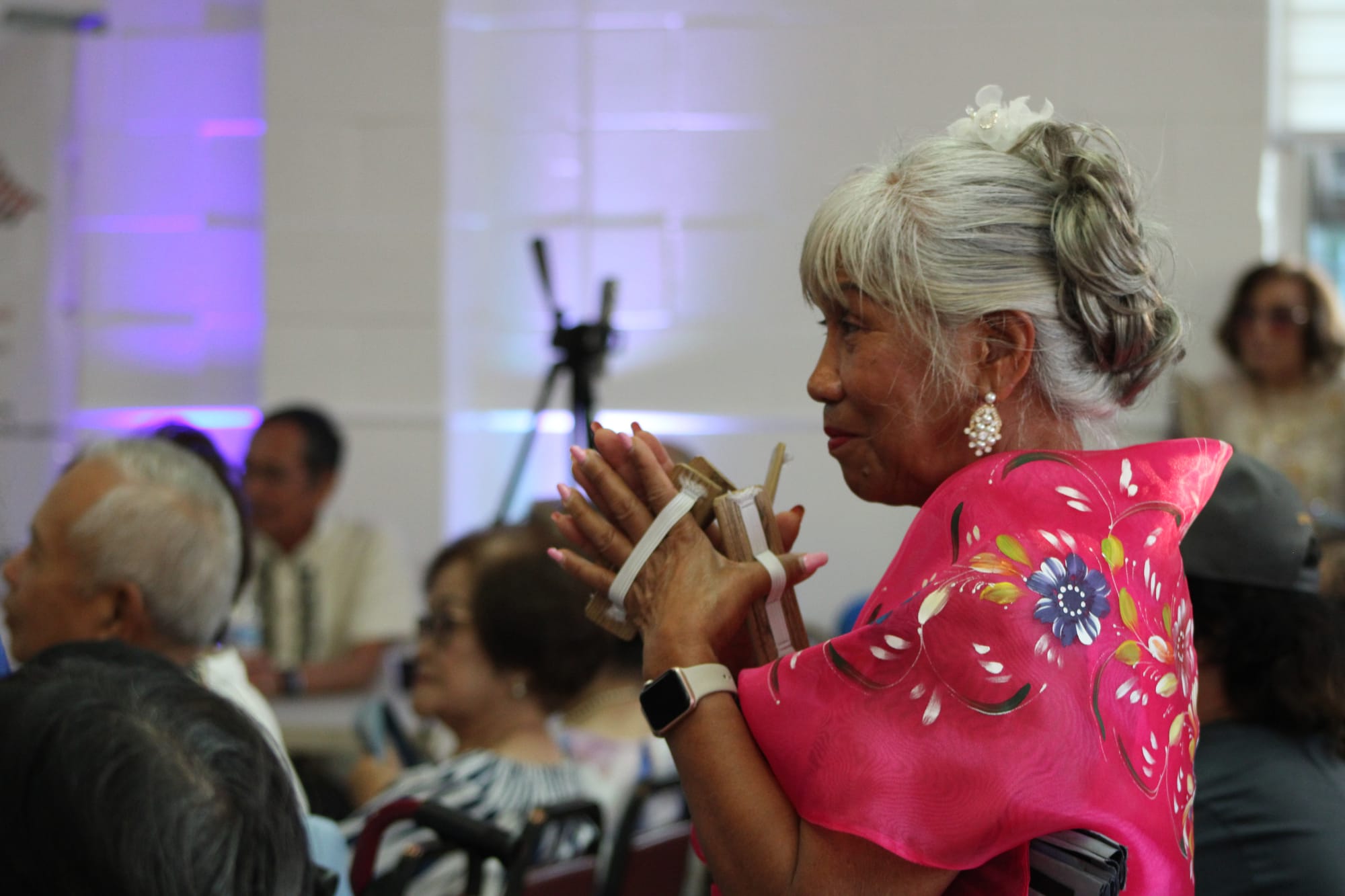
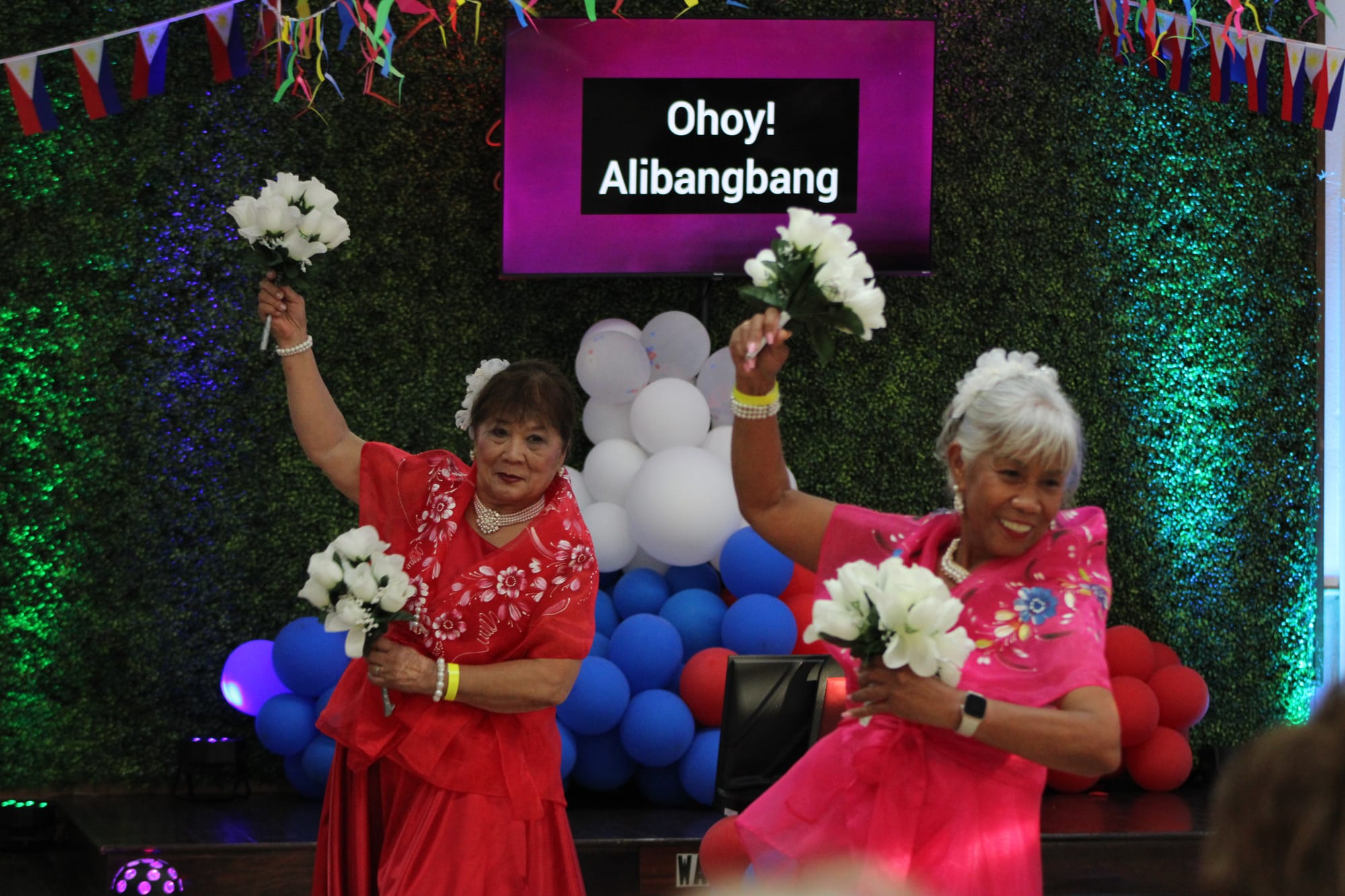
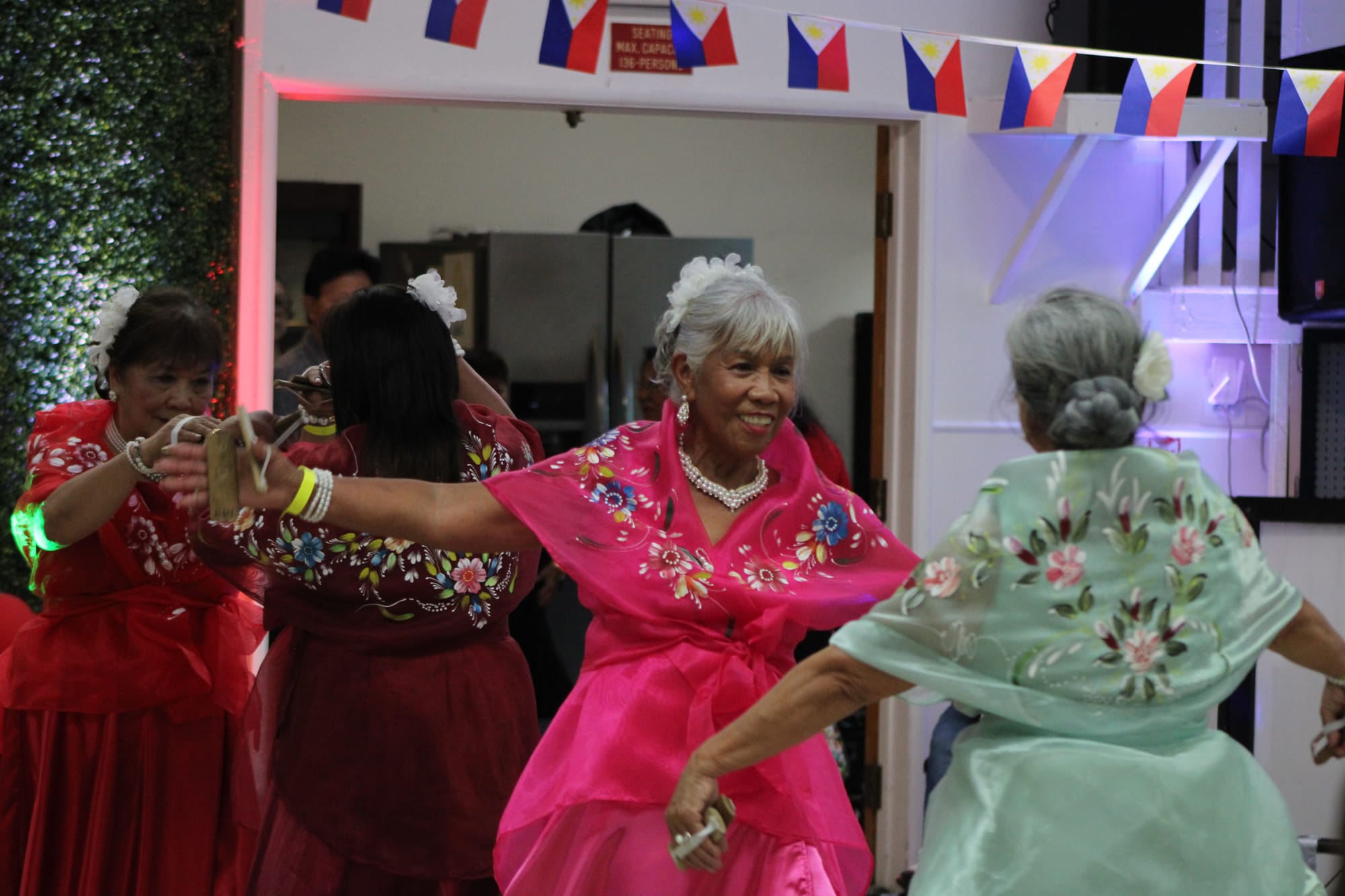
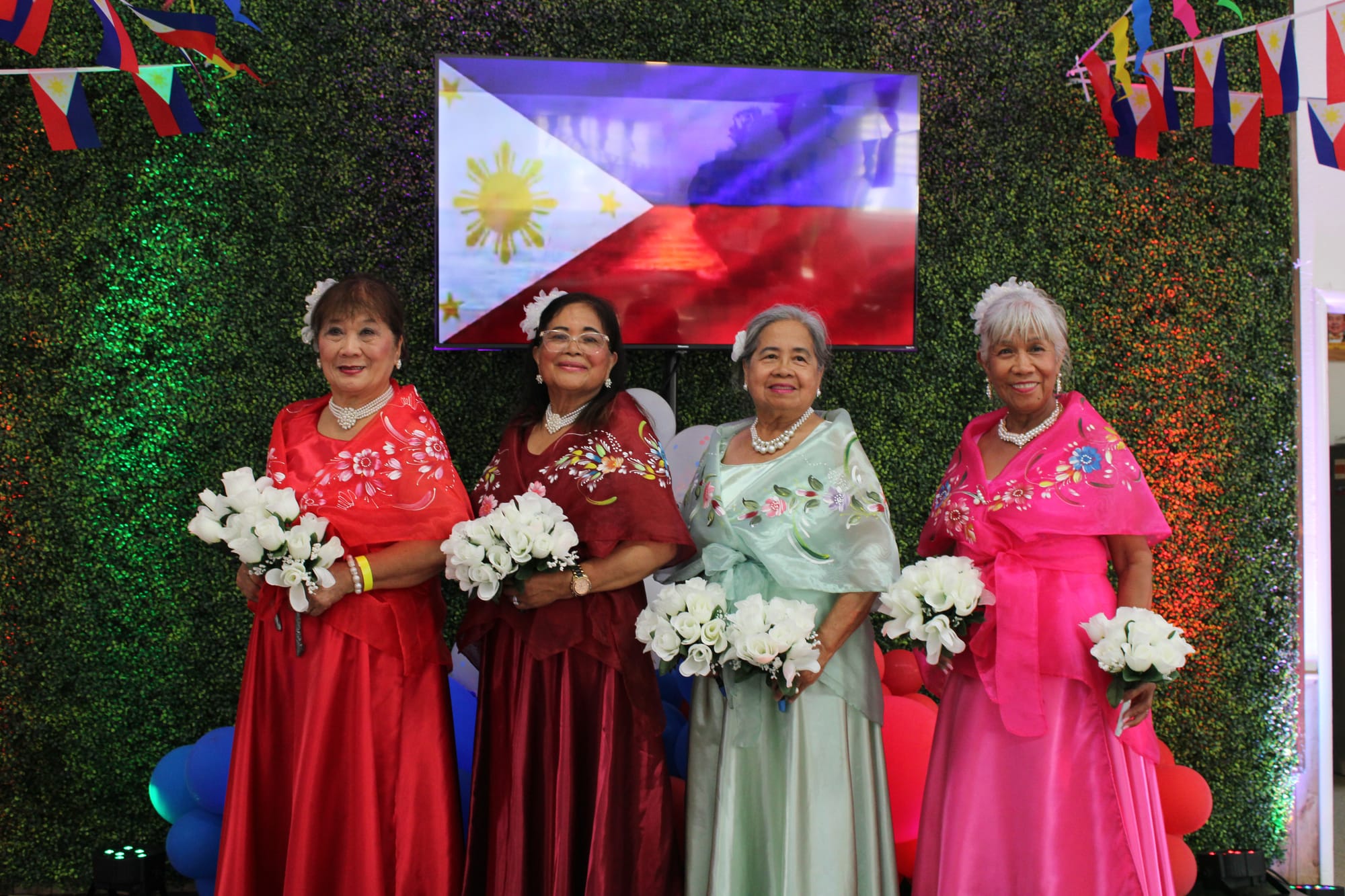
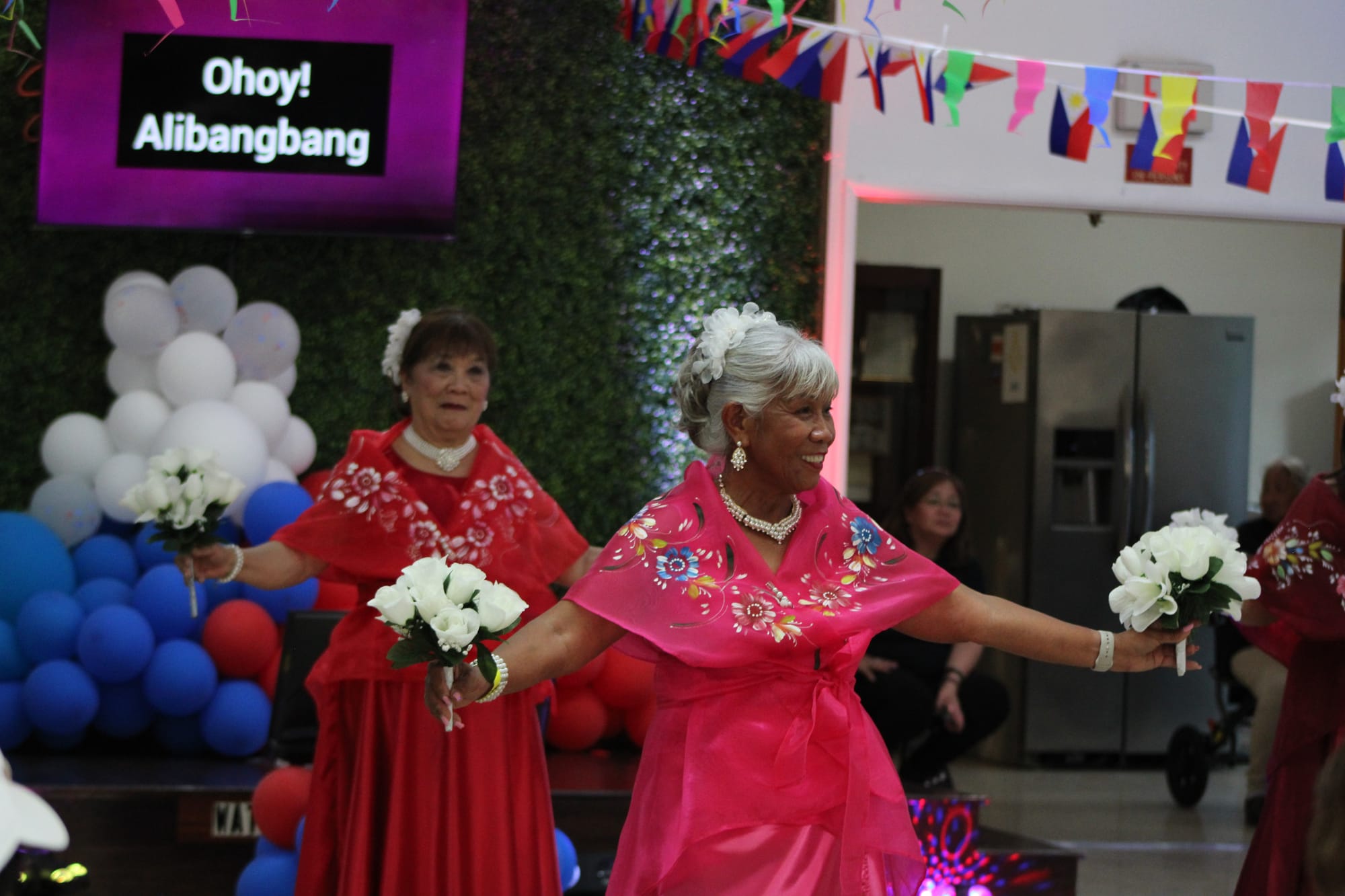
Filipino Friends Cultural Dancers seniors perform ohoy alibangbang in National City on Friday, June 12, 2026. Jenna Ramiscal/Daylight San Diego
Filipino Friends Cultural Dancers, a local Filipino folk dance organization, performed four traditional dances with both junior and senior dancers. The seniors performed “Ohoy Alibangbang,” dancing with bouquets of flowers in hand.
“We are Filipino. Even though we are now American, we don't forget our native land, and we love the Philippines,” said Ruric Delima, a performer and choreographer with the dance company. “We want to preserve the cultural heritage. I am a very proud enthusiast of preserving Filipino culture and heritage through dances.”
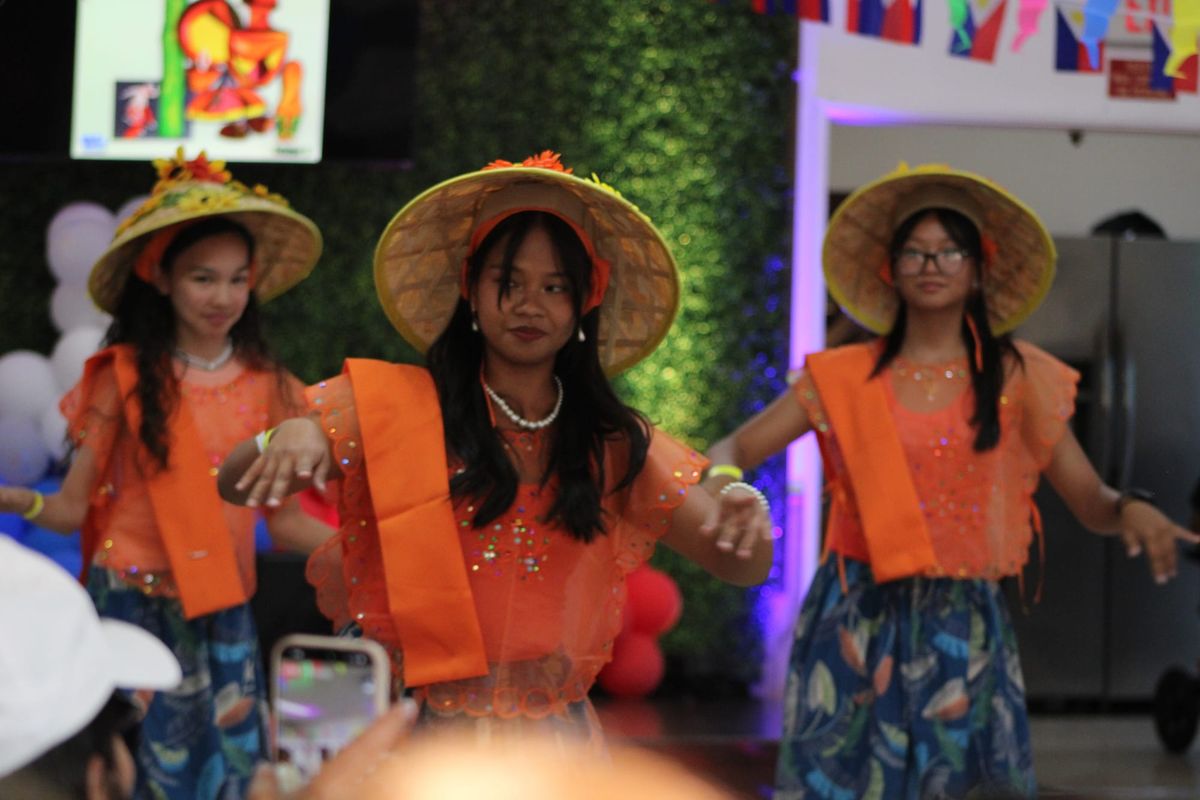
The children performed polka sa nayon, a ballroom-style polka dance, and salakot, a hat dance.
“It makes my grandma happy. She said she likes to see us dance, and seeing us dance makes her smile,” said Jurgenne Carylle Delima, who moved to the U.S. at 8 years old. “And we get to show our culture. I don’t think our traditional dances are widely known. Being able to dance and show our culture is very fun.”
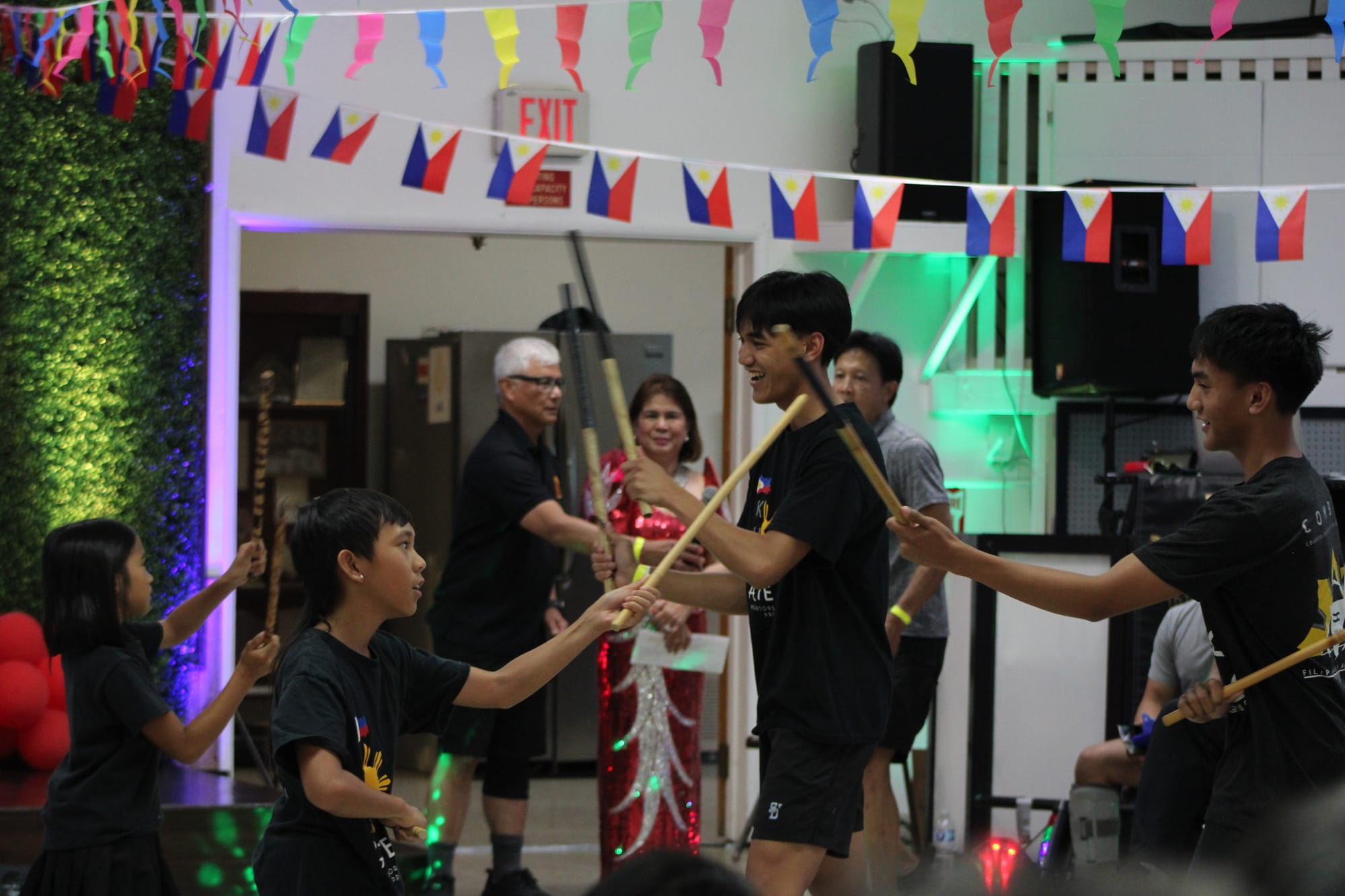
After the folk dancing, Greg Cerezo from Filipino Kali Academy, a 15-year-old martial arts organization based in Point Loma, called his students to the center of the venue. A small group of students, one as young as 5 years old, demonstrated kali, an indigenous Filipino martial art that involves sticks and blades.
“When the Philippines was colonized by Spain, Filipinos were forbidden to train with any blades,” Cerezo said. “So what we did was we used the stick. We trained with the stick to disguise the blade.”
Cerezo said teaching kali to the younger generation helps them stay in touch with their cultural roots and fight against colonial erasure.
While the performances went on, the savory smell of lechon kawali, fried lumpia and pancit filled the air. When hungry, guests would walk up to a window that peeked into the venue’s kitchen to order from Kusina, a catering company serving Filipino foods and desserts. Outside, other food vendors filled the parking lot, selling combo plates and sweet treats to community members.
Sarah Valdivia was born in San Diego and didn’t get to experience what life is like in the Philippines.
“It's nice to be able to come to a community center and meet people in town and just be here to celebrate ourselves,” Valdivia said. “There's something that's so different about Filipinos and their camaraderie.”
Her mother, Ligaya Valdivia, said she tried her best to raise her daughter surrounded by Filipino culture and traditions.
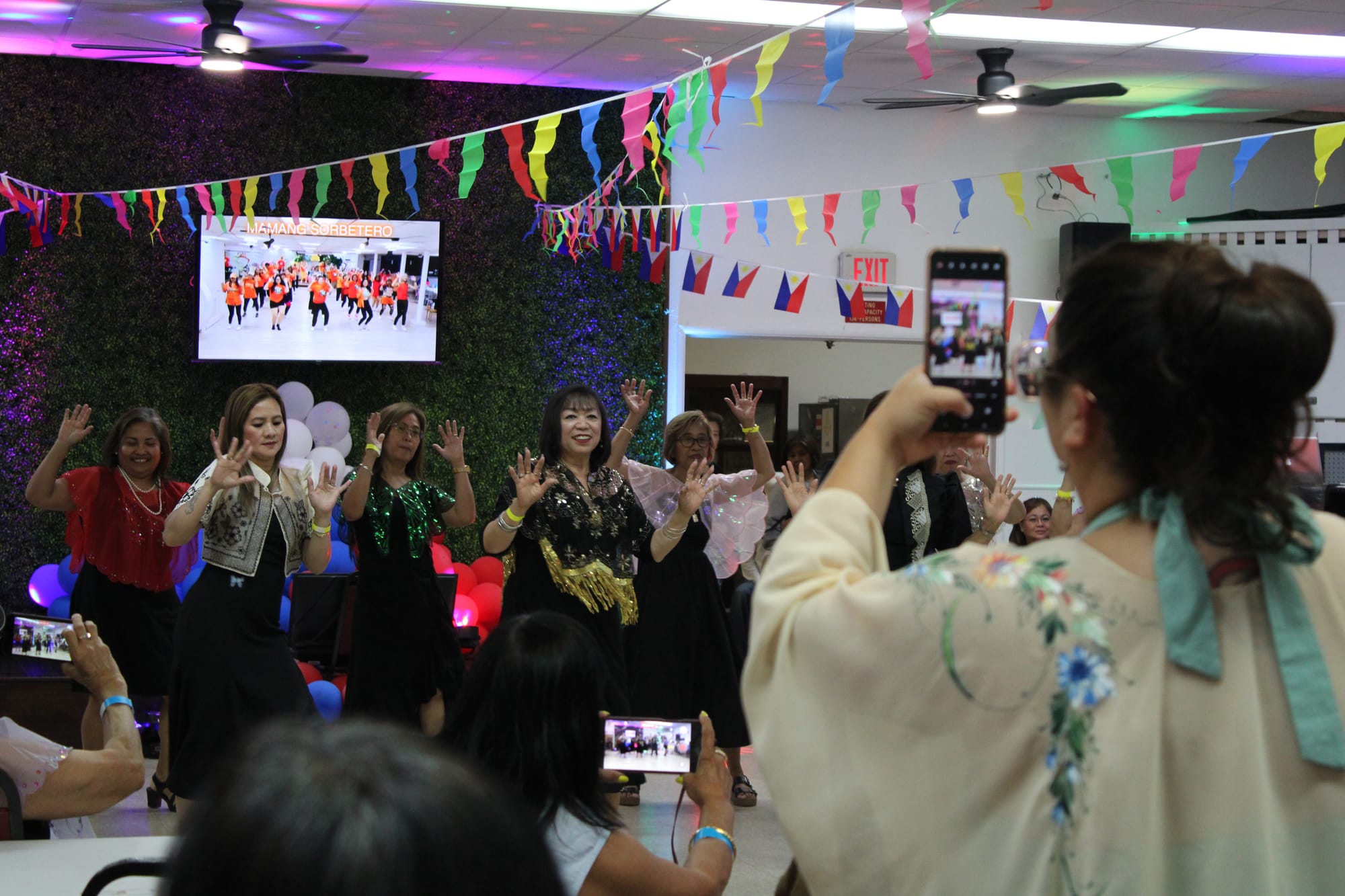
As part of the dance group Women of Worship, Ligaya Valdivia performed a popular Filipino 70s line dance that represents the joy of seeing a street ice cream vendor to “Mamang Sorbetero” by Celeste Legaspi.
The upbeat energy continued on throughout the night with other performances, open floor dancing and karaoke.
Macaspac and Azcuna both said that while this may be the first big celebration for Philippine Independence in National City, it will not be the last. They hope to make Kalayaan Pista into an annual tradition.